Did Iran Shoot Down a US F-35 Lightning II? A Data-Driven Analysis of Conflicting Claims
Recent reports have sparked intense debate across defense circles: claims suggest that an American F-35 Lightning II may have been struck by Iranian fire. The initial trigger for this narrative comes from reporting by CNN, which, while cautious in tone, appears to subtly indicate that an incident involving the aircraft did occur.
However, the same report also notes that the aircraft managed to land safely at a nearby airbase and that the pilot survived. Simultaneously, Iran released a video allegedly showing the engagement.
This creates a familiar fog-of-war scenario: two narratives, two perspectives, and a fragmented truth somewhere in between.
This article breaks down all available data points to reconstruct the most plausible reality.
The Iranian Video: What Does It Actually Show?
A careful examination of the Iranian-released footage reveals three key observations:
1. Aircraft Identification
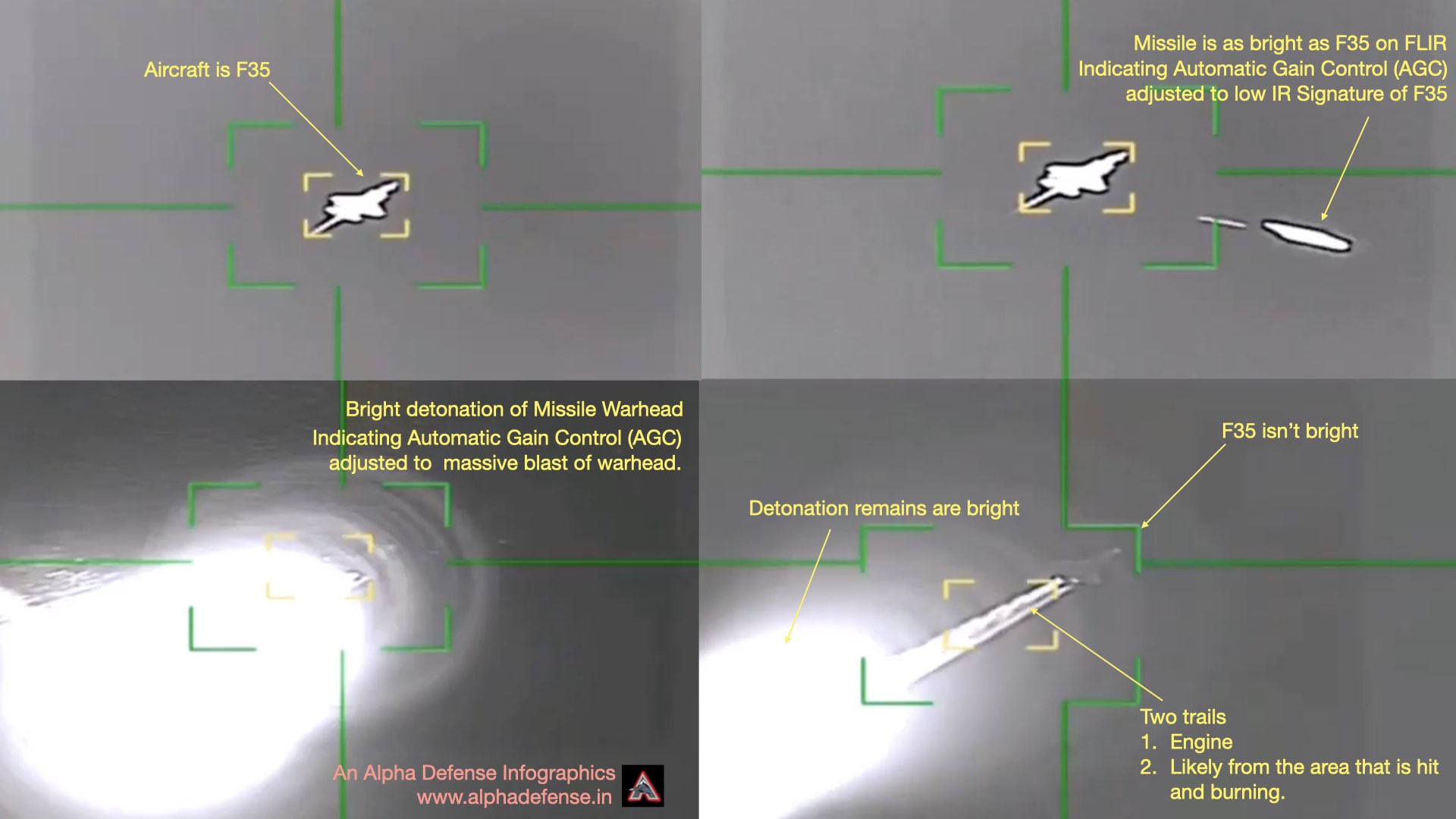
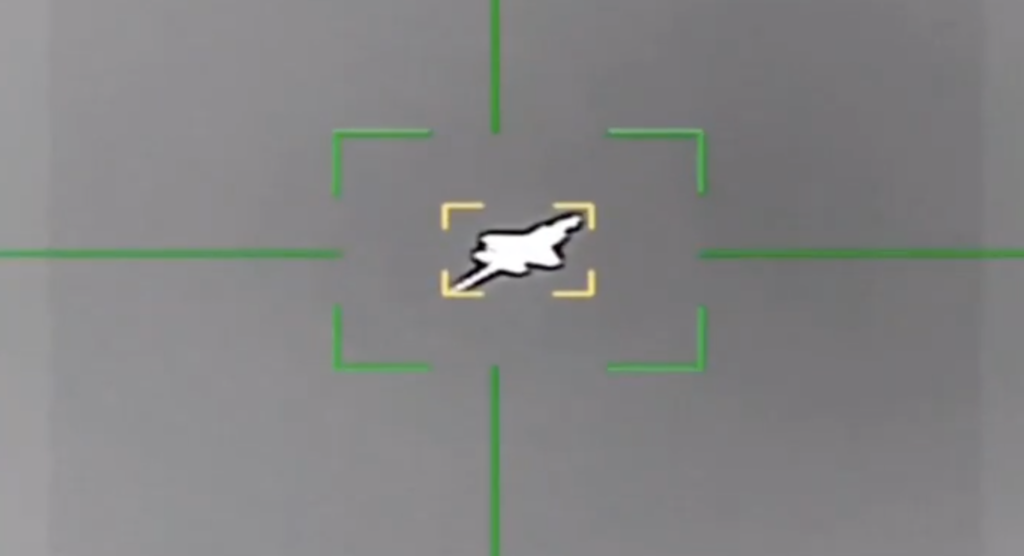
The aircraft visible in the footage strongly resembles an F-35 Lightning II, based on its infrared signature and shape.
2. Sensor Type: FLIR Imaging
The video appears to be captured using Forward Looking Infrared (FLIR) imaging. In simple terms, this is a thermal view where objects are represented based on their heat signatures.
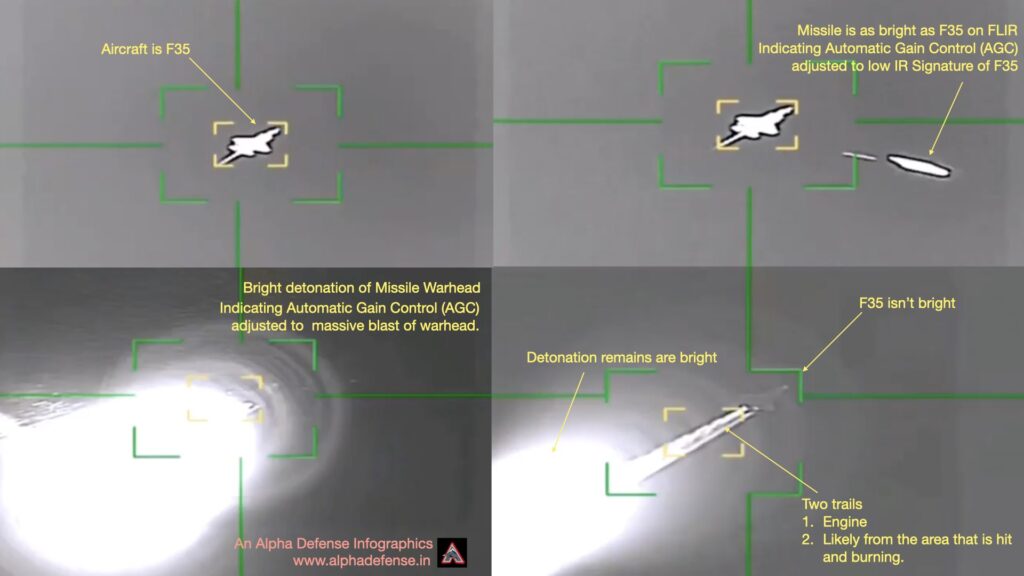
- Both the missile and the aircraft appear exceptionally bright, indicating strong infrared emissions.
- This detail becomes critical when evaluating authenticity.
3. Strategic Editing
The video is carefully edited, ending just before the decisive moment of impact.
- The missile appears to approach the aircraft.
- The clip cuts before confirming destruction.
This editorial choice is important, it shifts interpretation onto the viewer, rather than conclusively proving a kill.
What Does the CNN Report Actually Say?
A deeper reading of the CNN report reveals a nuanced narrative:
- It acknowledges that an aircraft was “hit” by Iranian fire.
- However, no details are provided about the weapon system used.
- A spokesperson from United States Central Command confirmed that:
- A fifth-generation fighter was operating over Iran.
- The aircraft was forced to conduct an emergency landing.
- The pilot survived.
- An investigation is ongoing.
This suggests damage, but not necessarily destruction.
Was the Video AI-Generated? Evaluating the Claim
Some analysts argue that the Iranian footage may be AI-generated, citing inconsistencies in infrared brightness.
The Argument
- Typical FLIR imagery of the F-35 shows a more subdued thermal profile.
- The Iranian video appears unusually bright.
The Counterpoint
This conclusion may be premature. Two critical technical factors must be considered:
1. Imaging Conditions
- Reference images are often captured at night and from long distances.
- The Iranian footage appears to be at a different range and possibly different atmospheric conditions.
2. Dynamic Range and Thermal Spikes
- After a missile impact or near-impact, thermal intensity spikes dramatically.
- This can temporarily alter the dynamic range of the sensor, causing:
- Sudden brightness shifts
- Temporary suppression of other heat sources
In fact, when the video is slowed down frame-by-frame, there are indications of thermal bloom consistent with a nearby explosion, not necessarily a direct hit.
Most Likely Scenario: Hit, Survived, Landed
Putting all data points together:
- The aircraft was likely engaged by Iranian air defense.
- It may have sustained some level of damage.
- The pilot successfully executed an emergency landing.
- The aircraft likely requires a Battle Damage Assessment (BDA).
Key Unknowns
- Was the aircraft severely damaged or lightly hit?
- Will it be repaired and returned to service, or written off?
These answers will only emerge with time.
The Bigger Picture: Losses in Modern Warfare
It is important to contextualize this incident.
In any conflict:
- Hardware losses are inevitable
- Even advanced platforms like the F-35 Lightning II are not invulnerable
The real metric of success is not whether an aircraft was hit, but:
Did the mission objectives succeed?
If the aircraft completed or contributed to its mission, then even a damaged platform does not equate to operational failure.
Overall – The Event in Nutshell
The available evidence does not support the claim that an F-35 was shot down. Instead, it points toward a more complex and realistic scenario:
- Engagement occurred
- Damage is plausible
- Survival and recovery are confirmed
As with many modern conflicts, information warfare runs parallel to kinetic warfare. Both sides shape narratives to serve strategic goals.
The truth, as always, lies not in isolated claims, but in careful, technical analysis of all available data.