– By Aditya Baghel
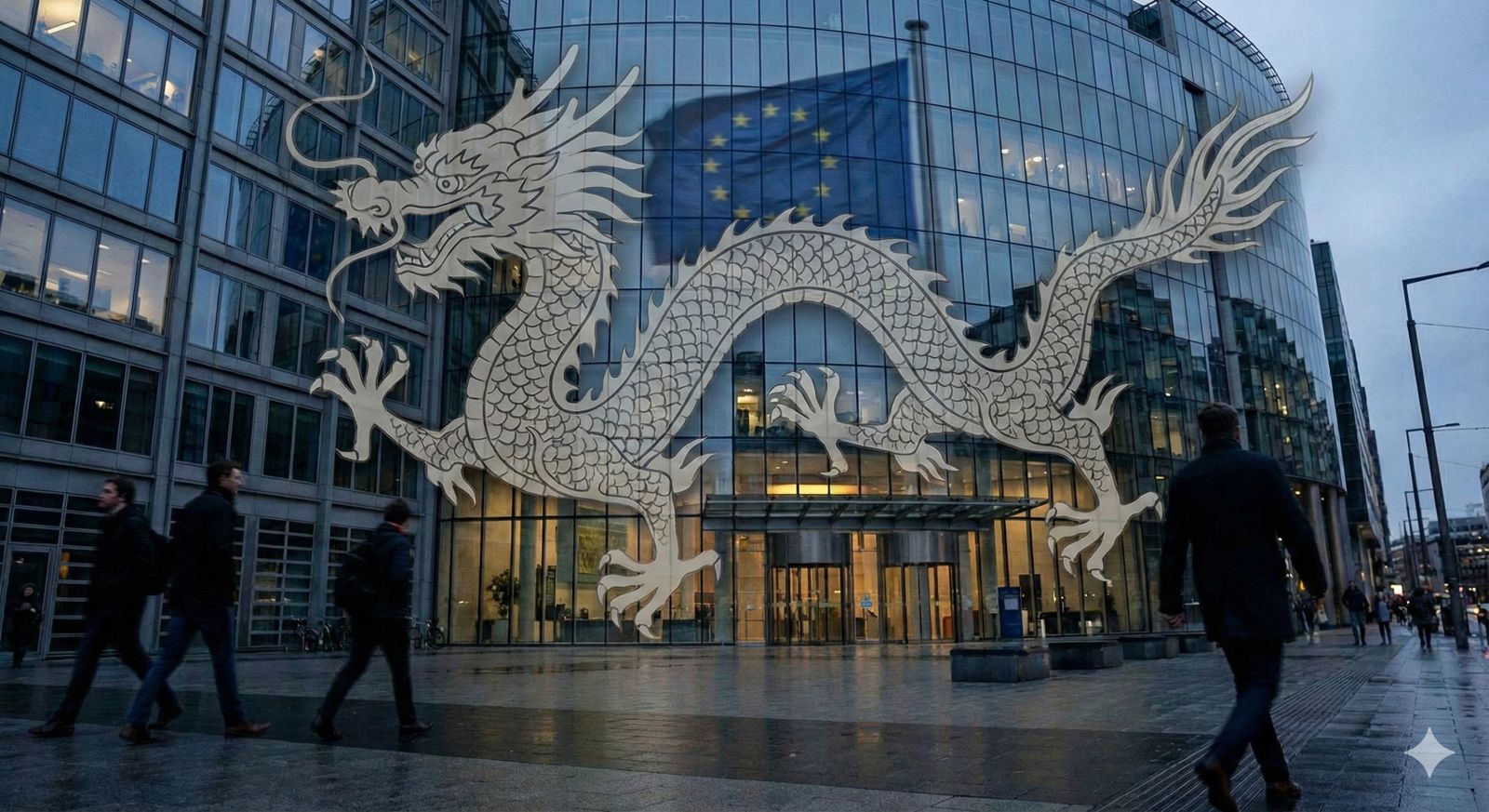
For decades, Europe viewed China primarily through the lens of economic opportunity—a vast market for German cars, French luxury goods, and Dutch machinery. That era is definitively over. In 2024 and 2025, a cascade of arrests, indictments, and intelligence warnings has revealed a stark new reality: Europe has become a primary theater in Beijing’s global intelligence offensive.
From the corridors of the European Parliament to the research labs of top-tier universities, Chinese state operations are infiltrating the continent with a scale and aggression that has alarmed Western security services. This is no longer just about stealing industrial secrets; it is a geopolitical strategy to reshape the global order.
I. The Surge: A Timeline of Infiltration
The “wake-up call” has been a series of high-profile incidents that shattered the illusion of purely commercial relations. The scope of these operations highlights a multi-pronged attack vector: political influence, military technology, and diaspora repression.
1. The Heart of Democracy: The Bundestag and EU Parliament
Perhaps the most shocking revelation was the arrest of Jian Guo in early 2024. A longtime aide to a prominent far-right Alternative for Germany (AfD) politician in the European Parliament, Guo is accused of acting as a “double agent”—ostensibly working for a European representative while reporting on dissidents and legislative decisions to China’s Ministry of State Security (MSS).
This signaled that Beijing is not just watching from the outside but has successfully placed assets inside the legislative machinery of the EU to influence policy and monitor anti-China sentiment.
2. The UK Parliamentary Researcher Case
In the UK, the arrest of a parliamentary researcher (along with another individual) under the Official Secrets Act sent shockwaves through Westminster. The accused had links to the China Research Group and access to senior MPs.
It demonstrated a strategy of “elite capture”—targeting young, ambitious individuals in policy circles to cultivate long-term assets who can influence national strategy from within.
3. The Tech Heist: Maritime and Military Secrets
German authorities also arrested three German nationals accused of procuring sensitive maritime technology—specifically specialized lasers and sensors—to ship to China for military use.
This aligns with China’s “Military-Civil Fusion” strategy, where civilian technology is acquired to modernize the People’s Liberation Army (PLA), bypassing arms embargoes.
4. The Belgian Influence Network
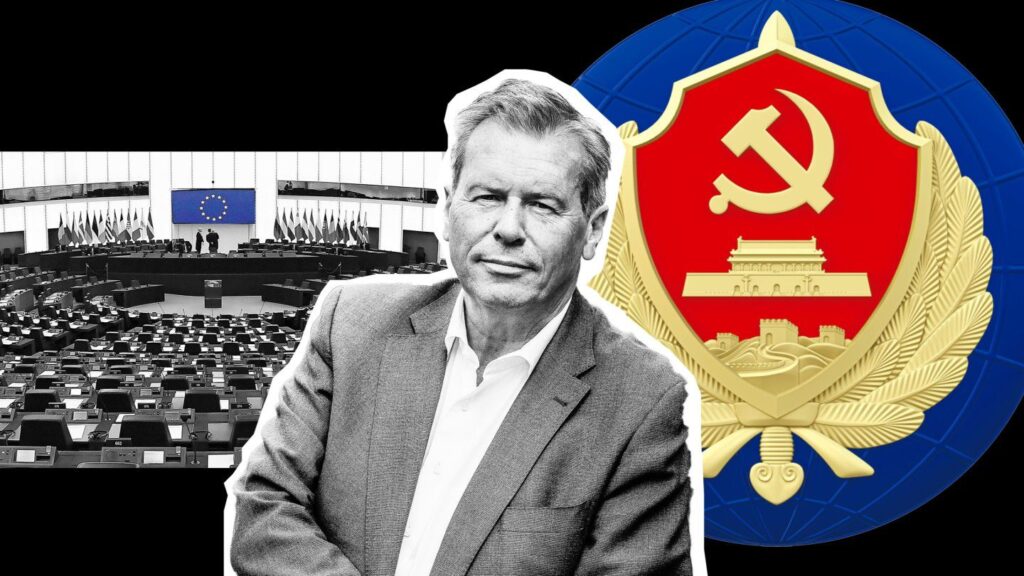
In Belgium, former Senator Frank Creyelman was exposed for allegedly operating as a Chinese intelligence asset for years. Leaked texts revealed his handlers instructing him to influence European discussions on issues ranging from crackdown on democracy in Hong Kong to the persecution of Uyghurs.
II. The Geopolitical Angle: Why Now?
The intensification of these operations is not random; it is a calculated response to shifting geopolitical tectonic plates.
1. The “De-Risking” Threat
The EU’s shift from “unrestricted engagement” to “de-risking” (reducing economic dependency on China) poses an existential threat to Beijing’s economic growth model.
Beijing needs intelligence on which supply chains Europe plans to cut (e.g., chips, critical minerals, EVs) to preemptively secure its interests or prepare retaliatory sanctions.
2. The Transatlantic Wedge
China views the EU as the “swing state” in its rivalry with the United States.
Operations are designed to sow division between Brussels and Washington. By courting specific political factions (often on the far-right or far-left) and engaging in influence operations, Beijing aims to prevent a unified Western front against its policies.
3. The Russia Factor
Since the invasion of Ukraine, China has provided economic and “dual-use” support to Russia.
Beijing is aggressively monitoring European unity regarding Ukraine aid. They need to know if European resolve is cracking, as a Russian defeat would leave China isolated against the West.
III. The Counter-Strike: Europe’s Intelligence Response
Europe has been historically slow to react, hindered by a fragmented intelligence landscape where 27 different nations often fail to share data effectively. However, the mood has shifted from “caution” to “active defense.”
1. Public Attribution and “Naming and Shaming”
Agencies like MI5 (UK), BfV (Germany), and DGSI (France) have broken with tradition by publicly warning about Chinese espionage.
Ken McCallum (MI5 Chief) stated that Chinese agents were approaching 20,000 people in the UK via professional networking sites like LinkedIn to steal secrets.
By going public, agencies aim to “inoculate” the public and businesses, making them harder targets to recruit.
2. The “De-Risking” of Science and Academia
Universities in the Netherlands, Germany, and Sweden have begun restricting Chinese PhD students from accessing sensitive dual-use technologies (like quantum computing and AI).
The EU is rolling out stricter screening tools for foreign researchers to ensure they aren’t tied to the PLA or the “Seven Sons of National Defence” (a group of Chinese universities with deep military ties).
3. Investment Screening
The EU has tightened its Foreign Direct Investment (FDI) screening mechanisms.
Recent investigations into Chinese subsidies for electric vehicles and wind turbines are partly intelligence-driven, using economic security tools to counter Chinese state-backed market distortion.
4. Legal Overhauls
The UK passed the National Security Act 2023, updating archaic espionage laws to cover “foreign interference” and “trade secrets,” making it easier to prosecute agents who don’t fit the traditional Cold War spy mold. Germany is currently debating similar updates to its criminal code to better address “influence peddling.”
IV. Future Outlook: The “Grey Zone” War Intensifies
As we look toward 2026, the conflict will likely evolve in three key areas:
1. Cyber-Physical Hybrid Attacks: We will see more attacks like the APT31 campaigns, targeting not just government emails but critical infrastructure (ports, energy grids) to create leverage.
2. Transnational Repression: As the Chinese economy slows, dissent may rise. Beijing will likely intensify its “Fox Hunt” operations on European soil, harassing the Chinese diaspora to silence critics abroad.
3. The Battle for the “Global South” in Europe: China will use its influence in Southern and Eastern European nations (often through debt or infrastructure investments) to block EU consensus on anti-espionage measures.
Europe is no longer a playground for Chinese intelligence; it has become a battleground. The era of separating trade from security is over. As the EU builds its “economic security” doctrine, the shadow war between European counter-intelligence and Beijing’s Ministry of State Security will define the continent’s geopolitical future for the next decade.