The landscape of strategic warfare is undergoing a major transformation. Recent conflicts have highlighted a lethal evolution in missile technology: the deployment of active countermeasures. Much like Russian strategic missiles employing decoys and electronic warfare suites to penetrate advanced air-defense networks, the ability to trick, jam, and bypass interception systems is rapidly becoming the new baseline for credible strategic deterrence.
In a quiet but highly significant development, India is actively advancing its own capabilities to ensure that its strategic assets remain survivable and effective against increasingly sophisticated missile-defense systems. Internal procurement data from the Strategic Systems Electronics Division indicates that India is aggressively developing the “MITHYA System“, an advanced, self-powered active electronic countermeasure suite engineered specifically for strategic missile platforms.
The Update: What is the MITHYA System?
The MITHYA System represents a significant technological leap for India’s strategic delivery architecture. Designed for long-duration operational timelines, it is an active electronic countermeasure system currently under development for integration with strategic missile platforms.
Key Features
Self-Powered Resilience
Unlike legacy systems that depend heavily on the missile’s primary power architecture, MITHYA is designed as a fully self-powered unit. It operates using an internal Lithium-ion (Li-ion) secondary battery integrated with a dedicated Battery Management System (BMS), allowing the system to function independently during critical mission phases.
Deployable Electronic Warfare Capability
The system incorporates a deployable antenna architecture and is designed to function as an expendable electronic warfare package. During flight, it can dynamically mask, jam, or spoof hostile radar systems during the missile’s most vulnerable operational windows.
The “A5C” Connection
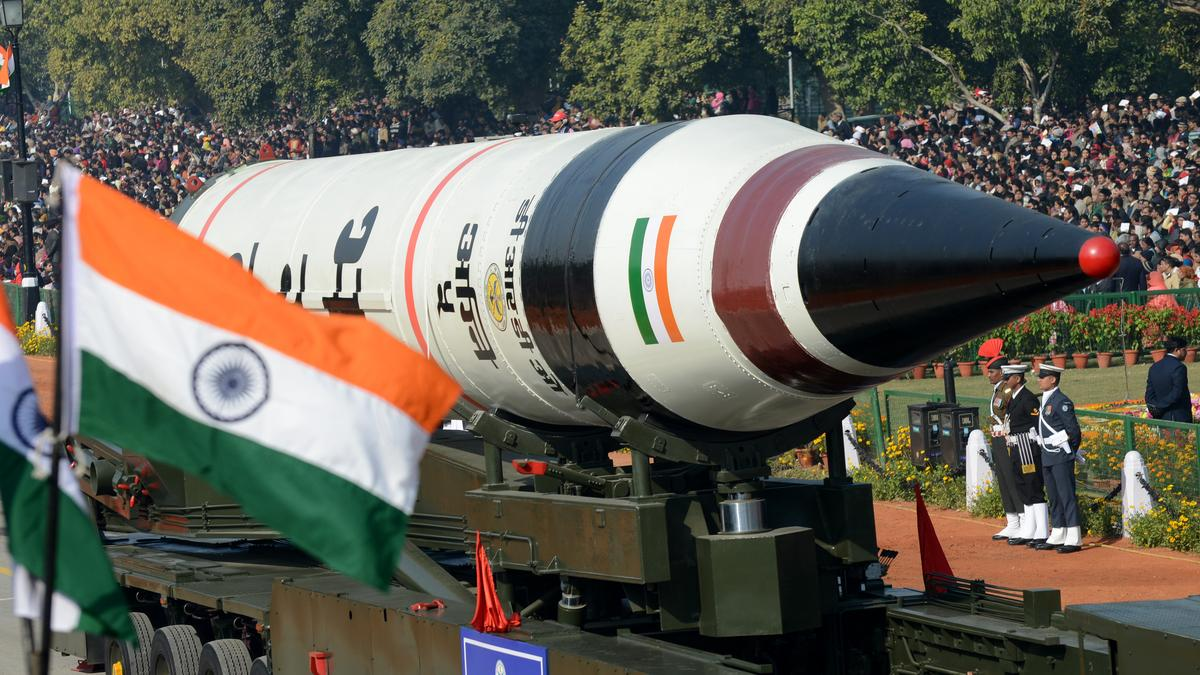
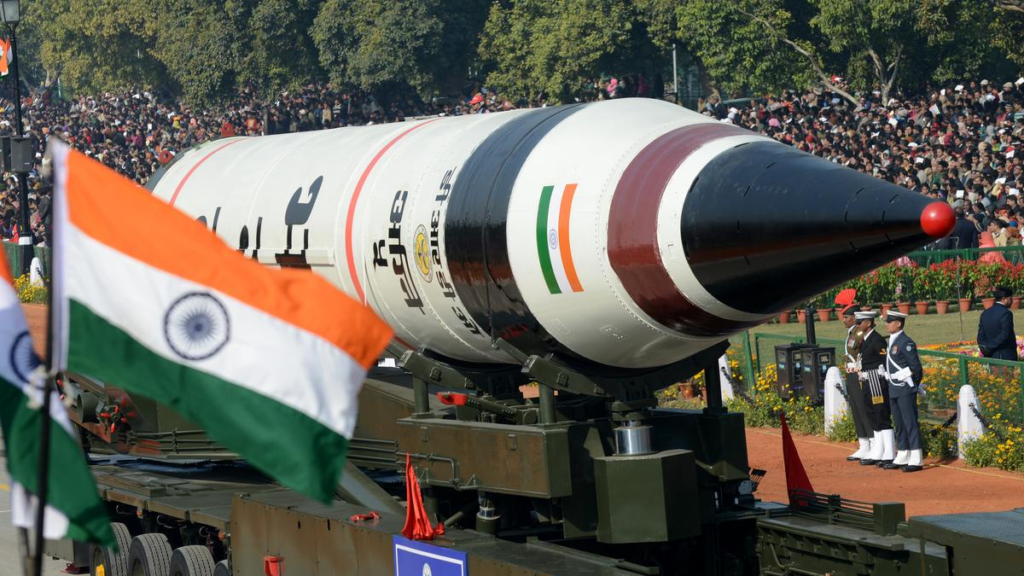
The project is reportedly linked to the “A5C” platform, a nomenclature strongly associated with India’s premier long-range strategic missile ecosystem, including advanced variants of the Agni-V series. What appears to the 3rd variant of the baseline Agni 5.
Moving Toward Physical Trials: The Dummy Unit
To transition from design validation to operational deployment, engineers are utilizing a specialized “MITHYA System Dummy Unit, Guide & Pyro Assembly” to qualify the new Li-ion BMS configuration and deployment mechanism.
The objective is to ensure that the electronics, deployment assemblies, and interface systems can survive and operate under the violent acceleration, vibration, and thermal conditions experienced during missile launch and flight.
According to the technical specifications, the dummy unit replicates the operational physics of the final system with high fidelity.
Technical Specifications
Structural Design
The dummy housing is machined from high-grade Aluminium Alloy AA6061 with dimensions of:
291.6×70×105 mm
The internal surfaces feature a specialized chromate conversion coating compliant with MIL-DTL-5541F, while the exterior receives clear anodization as per MIL-A-8625 standards for environmental protection and durability.
System Integration
The assembly integrates:
- A dummy RF (Radio Frequency) module
- Fixed connectors for antenna mating
- An antenna folding and holding mechanism
- Interfaces for digital activation modules
- DC-DC converter integration provisions
Guide & Pyro Assembly
A dedicated Guide & Pyro Assembly incorporating a pyro fixture, piston frame, shear pins, and copper/rubber O-rings is being evaluated to validate the physical ejection and deployment sequence of the countermeasure package during flight.
Why This Matters: The Race Against Interception
Modern strategic missiles no longer operate in uncontested environments. Advanced ballistic missile defense (BMD) systems combine long-range radars, interceptor missiles, networked sensors, and sophisticated tracking algorithms to engage incoming threats.
In such an environment, predictable ballistic trajectories become increasingly vulnerable.
By integrating an active electronic countermeasure suite like MITHYA, a strategic missile no longer relies solely on speed, altitude, or maneuverability for survivability. Instead, it actively contests the defensive network attempting to track and intercept it.
The system can potentially:
- Blind or degrade hostile radar performance
- Generate false tracking signatures
- Spoof targeting systems
- Create electronic confusion during terminal engagement phases
- Reduce interception probability through active penetration aids
As global defense establishments observe the growing effectiveness of penetration aids and electronic warfare systems in modern conflicts, India’s accelerated push to qualify the MITHYA system reflects an important strategic reality:
Tomorrow’s deterrence is no longer defined only by payload delivery capability but by the ability to ensure that the payload cannot be stopped.