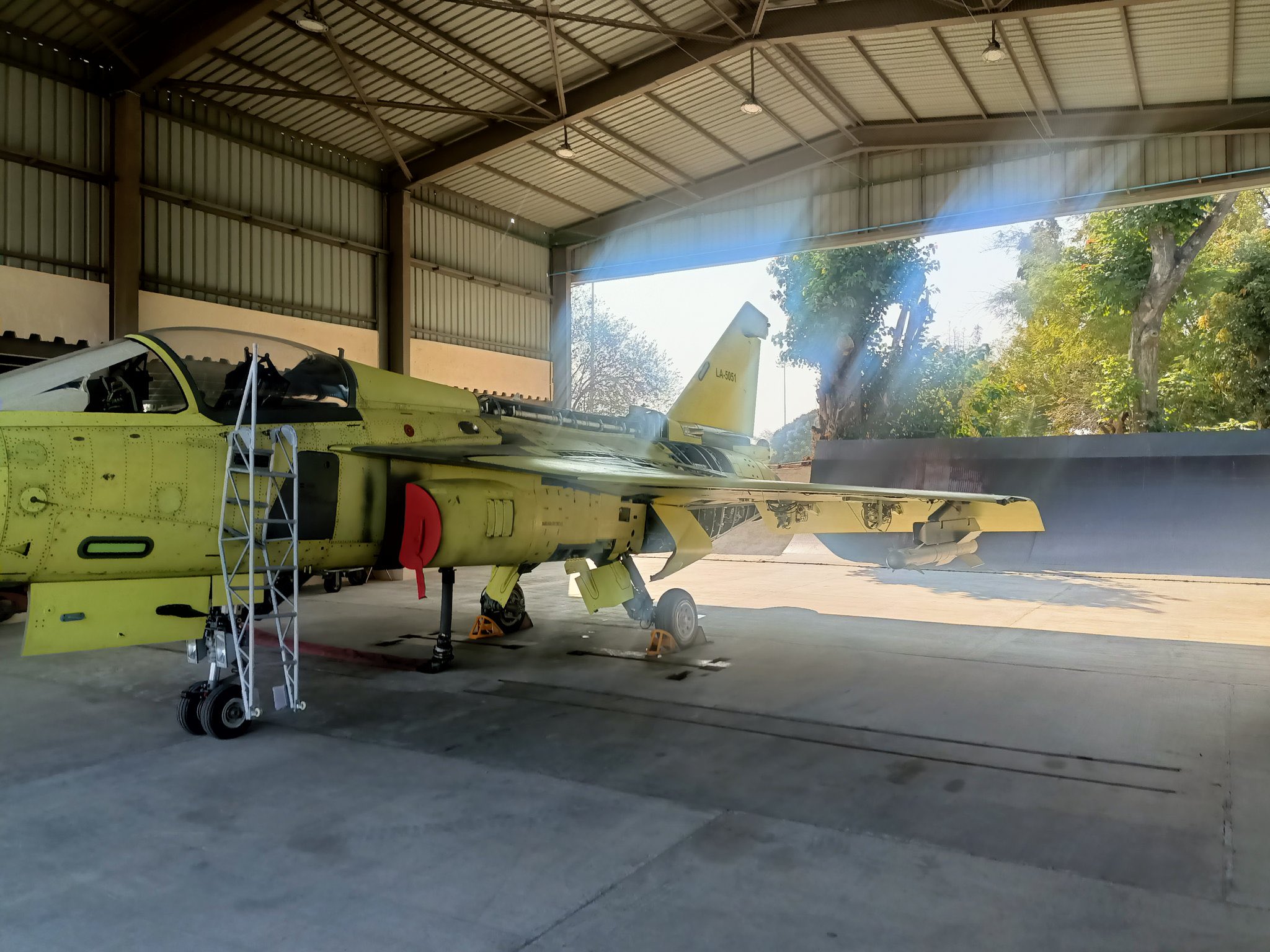
The appearance of LA-5051, the 19th LCA Tejas Mk1A airframe, marks a visible milestone in India’s most closely watched fighter aircraft programme. Captured post-coupling inside HAL’s production facility, the image has quickly circulated across defence circles, reigniting debate around production pace, delivery timelines, and Indian Air Force (IAF) acceptance criteria.
But beyond optics, what does LA-5051 actually indicate about the Tejas Mk1A programme?
This article breaks down the facts, timelines, revised production plans, and risks, separating structural progress from operational readiness.
LA-5051: What “Post-Coupling” Actually Means
LA-5051 represents a structural milestone, not a combat-ready aircraft.
Post-coupling indicates:
- Major fuselage sections joined
- Wings mated with the central fuselage
- Aircraft structurally complete for systems integration
What it does not mean:
- Engine installed and cleared
- Avionics fully integrated
- Mission systems certified
- Aircraft cleared for delivery
In simple terms, HAL has built the body, but the fighter is not yet complete.
Still, the fact that LA-5051 is the 19th Mk1A airframe confirms that airframe production is no longer HAL’s primary bottleneck.
Tejas Mk1A Contract: Baseline Timeline
To understand the significance of LA-5051, the baseline must be clear.
Contract Snapshot
- 83 LCA Tejas Mk1A aircraft
- 73 single-seat fighters
- 10 twin-seat trainers
- Contract signed: February 2021
- Original delivery plan:
- First deliveries: ~2024
- Completion: ~2029
- Implied production rate: ~16 aircraft per year
That baseline has already slipped.
Revised Production Claim: 24 Aircraft Per Year
HAL now claims it can produce 24 Tejas Mk1A aircraft annually, a significant jump from earlier projections.
Why this matters
- At 16/year → programme completion stretches uncomfortably
- At 24/year → HAL can:
- Recover lost time
- Support follow-on orders
- Keep production lines alive into the 2030s
Reality check
- Structural production appears aligned with this claim
- Engines, avionics maturity, and certification cadence remain the pacing factors
LA-5051 supports the argument that airframes are stacking up faster than they can be cleared for delivery.
| Financial Year | Old Plan (~16/year) | Old Plan – Cumulative | Revised Claim (24/year) | Revised Claim – Cumulative |
| 2021–22 | 0 | 0 | 0 | 0 |
| 2022–23 | 0 | 0 | 0 | 0 |
| 2023–24 | 0 | 0 | 0 | 0 |
| 2024–25 | 16 | 16 | 0 | 0 |
| 2025–26 | 16 | 32 | 24 | 24 |
| 2026–27 | 16 | 48 | 24 | 48 |
| 2027–28 | 16 | 64 | 24 | 72 |
| 2028–29 | 16 | 80 | 24 | 96 |
| 2029–30 | 3 | 83 | 24 | 120 |
March Delivery Claims and the IAF’s “Comprehensive Review”
HAL has indicated that aircraft may be ready for delivery around March, but with an important caveat:
The Indian Air Force plans to conduct a comprehensive review before accepting aircraft.
This phrasing is critical.
What the IAF is likely to examine
- AESA radar performance and reliability
- Electronic warfare suite completeness
- Mission computer software maturity
- Weapon integration and datalink stability
- Overall compliance with contracted configuration, not interim standards
After years of accepting partial capability aircraft, the IAF appears far less willing to compromise.
What LA-5051 Ultimately Symbolises
LA-5051 does not prove that Tejas Mk1A deliveries are finally back on track.
What it does prove:
- HAL can build airframes at scale
- Production infrastructure is functional
- Claims of 24/year are structurally plausible
What it does not yet prove:
- Systems maturity
- Contract-compliant readiness
- On-time induction into frontline squadrons
The image of LA-5051 is significant but not for the reasons social media hype often suggests. It represents an important manufacturing milestone rather than an immediate breakthrough.
The true inflection point for the Tejas Mk1A programme will come as the IAF completes its review, aircraft are accepted without waivers, and deliveries begin to align with stated production rates. Achieving these steps will convert manufacturing progress into frontline capability.
Until then, LA-5051 serves as a marker of how far the Tejas Mk1A has progressed, while also underlining the importance of execution in this final, most critical phase. The programme is clearly closer to maturity what remains is to translate that progress into consistent, dependable induction.
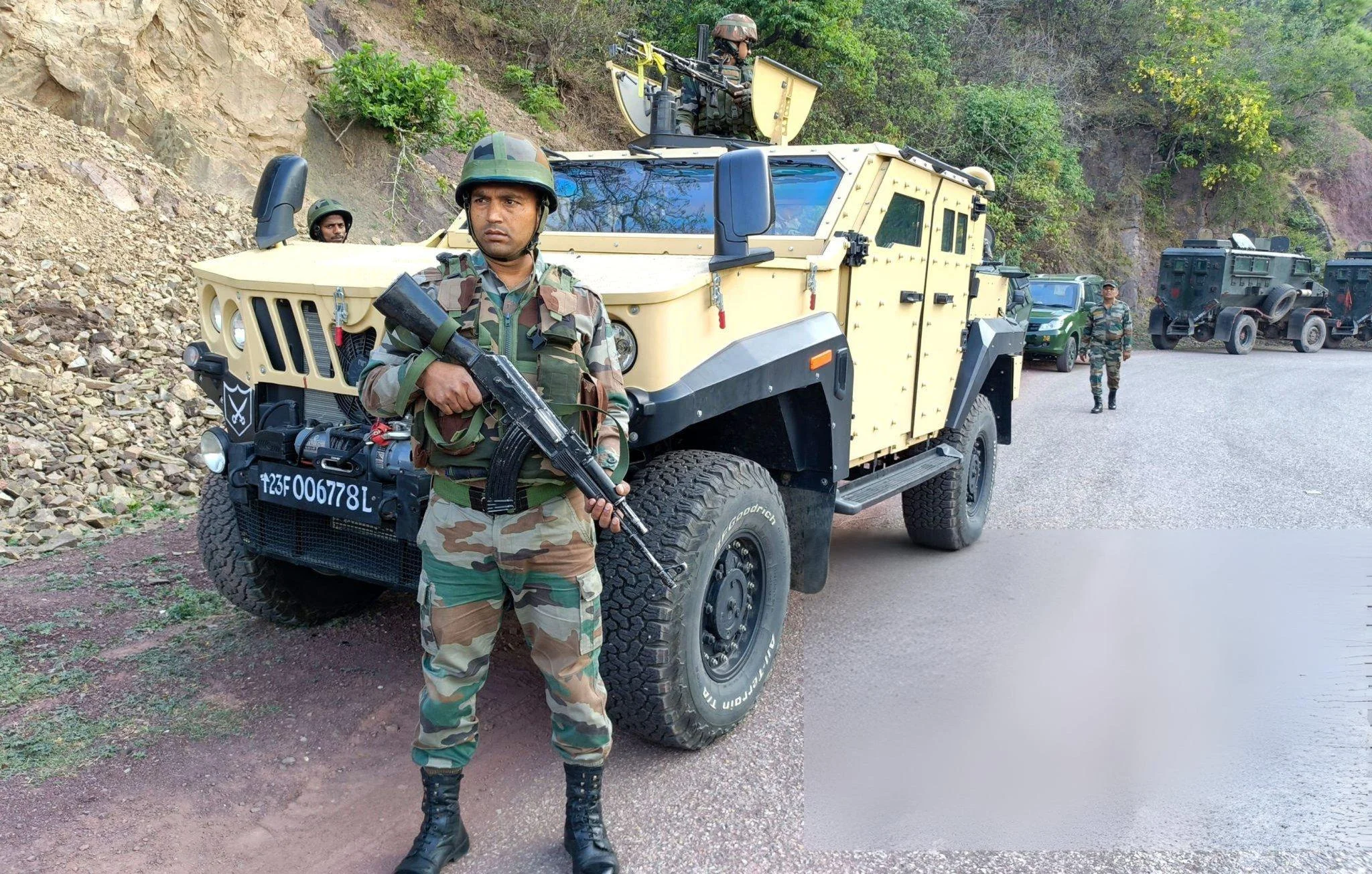

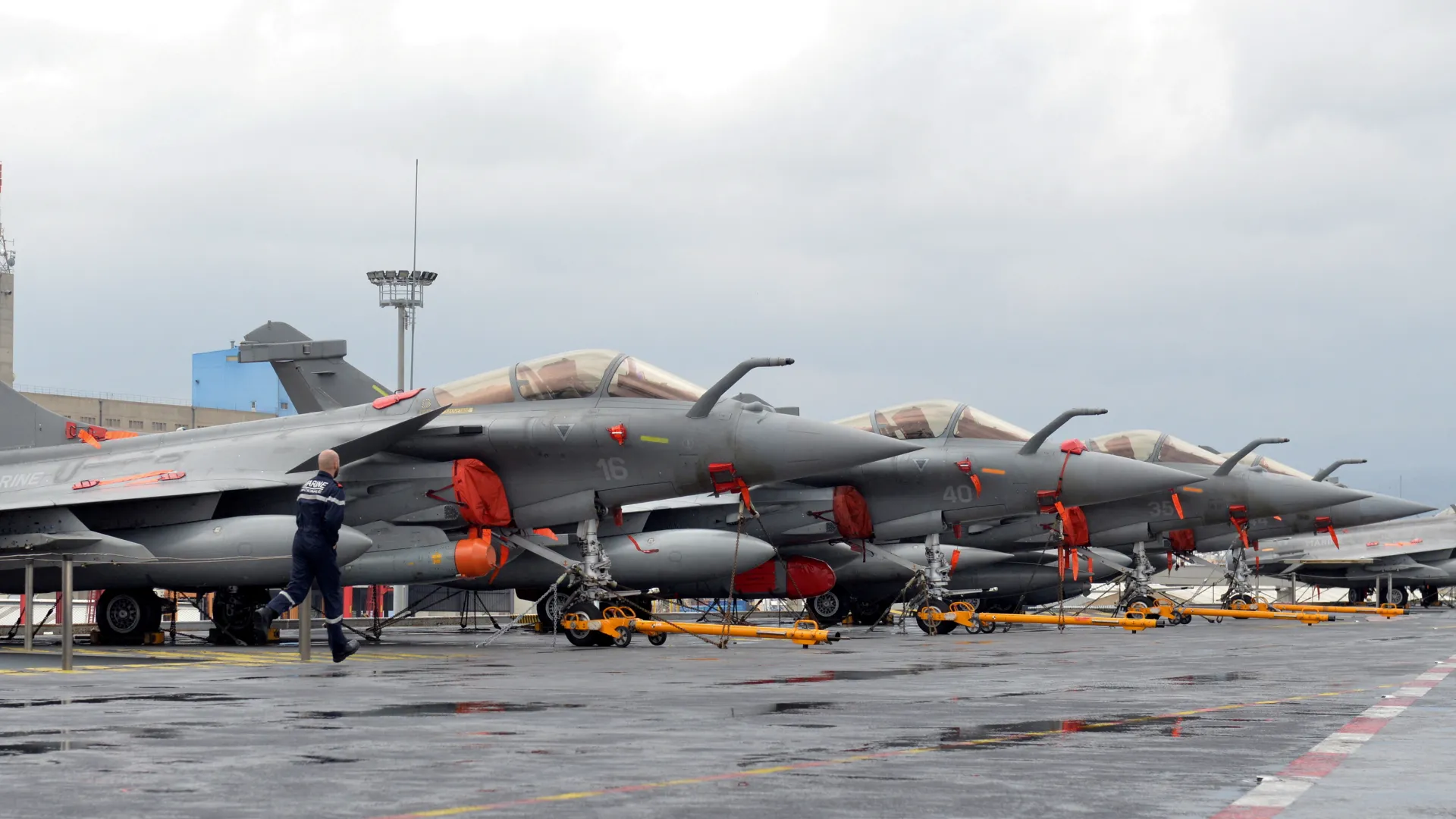
The following queries need to be answered by HAL before handing over the first Tejas Mk1A.
1. Has the Lightning Test been conveyed on any one complete aircraft.
2. Has the engine R/I time been checked and is it within 45 minutes.
3. Has full 50 psi pressure refuelling been achieved during TRS on a 3 drop tank configuration.
4. How many landings are the tyres been cleared for? Minimum 70 landings?
5. What is the DFCC R/I time and can it be done in 10 minutes? Does it require a GSE?
6. Do the batteries R/I require a GSE?
7. What is the time taken to transfer an engine from AN 32 to the mk 1A on a detachment?
8. What is the Op TRS time for sameand changed configuration including gun loading?
9. Is the CEP less than 50 m for A2G weapons?
10. What is the design MTBF, MTTR and MMH/FH FOR Mk1A?.
HAL,IAF,DRDO all are INDIAN they will come together and solve the problem,so many stories is written about LCAMK1A but no body knows the reality.