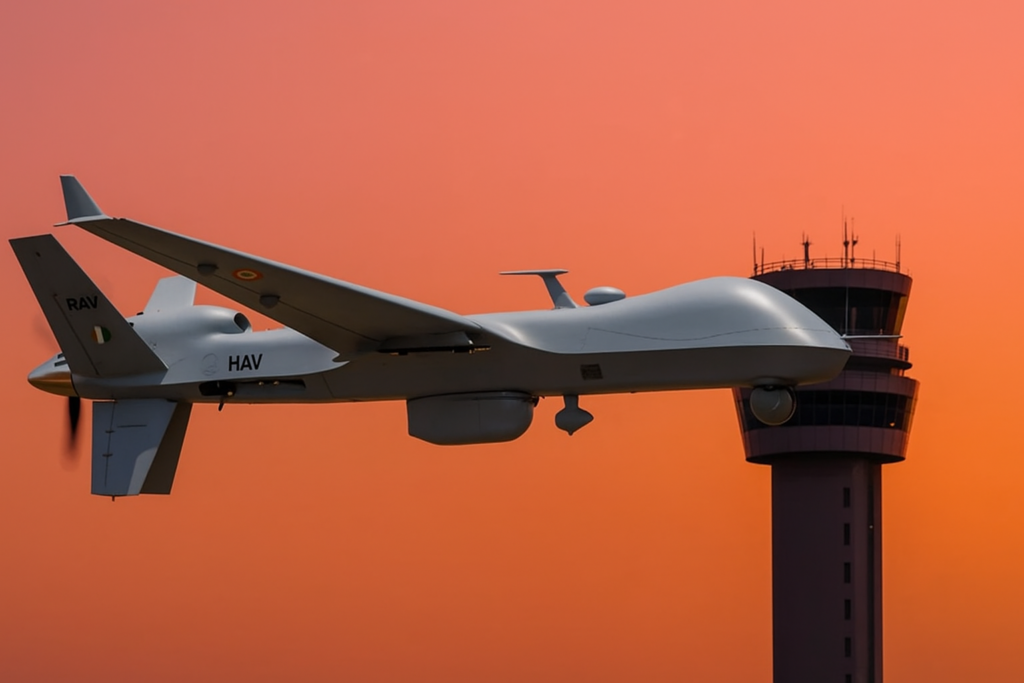
The need of DRDO HALE comes from Indian armed forces, who operate across a wide range of terrains, where altitude often defines operational success. From high mountains to vast maritime zones, persistent surveillance becomes critical. These conditions make turboprop-powered High Altitude Long Endurance (HALE) UAVs essential for modern military operations. India currently operates two US-origin HALE UAVs on lease, with the lease now being extended. An order for 31 additional units has also been placed. However, this number falls short of India’s growing operational needs. This capability gap is where DRDO’s indigenous HALE RPAS programme becomes vital, aiming to deliver a sovereign, scalable, and long-term unmanned solution.
The EoI issued by ADE–DRDO signals a decisive shift in India’s unmanned aviation strategy. DRDO is not seeking to import a finished drone. Instead, it aims to create a long-term Indian development and production partner. This partner will design, build, test, certify, and sustain a HALE-class UAV. The programme focuses on capability creation, not quick procurement.

Core Platform Specifications of the DRDO HALE
The DRDO HALE RPAS falls into the 6-ton class, placing it alongside global systems like the MQ-9 Reaper. The aircraft will operate at altitudes near 40,000 feet. It uses a single turboprop engine in a pusher configuration. The design includes a 25-metre wingspan and a 20-metre fuselage. Composite materials form most of the structure to maximise endurance and efficiency.
System Architecture: Airborne and Ground Segments
ADE has defined the DRDO HALE RPAS as a complete system-of-systems. The airborne segment includes the airframe, propulsion, avionics, flight controls, sensors, data links, and weapons. The ground segment consists of the Ground Operating System, Ground Support System, and handling equipment. The DcPP must integrate both segments into a single operational framework.
Mission Payloads and Operational Role
The platform is designed primarily for ISTAR missions. It will carry payloads such as SAR, MPAR, EO/IR, and electronic intelligence systems. These include ELINT, SIGINT, and COMINT suites. ADE has also planned for weapon integration. The HALE RPAS will carry precision munitions like TARA-450 and SAAW, expanding its strike role.
Development and Initial Production Quantities
During the development phase, ADE plans to build five HALE RPAS aircraft. The programme also includes two ground systems. Additional airframes will support structural and qualification testing. These aircraft will validate loads, lightning protection, and environmental resilience. The Indian Navy is expected to act as the lead user once development concludes.
Division of Responsibilities Between DRDO and Industry
DRDO will retain ownership of the design and intellectual property. ADE will also control certification and airworthiness oversight. The industry partner will execute manufacturing, integration, and testing activities. This includes tooling, composite fabrication, subsystem integration, and flight testing. The DcPP will function as the industrial backbone of the programme.
Facilities, Infrastructure, and Human Capital Requirements
The EoI demands serious aerospace infrastructure. The partner must operate CATIA-based PLM systems and composite autoclave facilities. It must maintain cold storage for prepregs and precision machining capabilities. Large integration hangars are mandatory. The programme also requires certified UAV pilots, flight test crews, and experienced quality teams.
Programme Timeline and Strategic Patience
This HALE RPAS effort spans nearly a decade of development. The first flight is expected around four years after contract award. Full mission and weapon validation will take close to eight years. The DcPP must also commit to 30 years of lifecycle support. The programme prioritises maturity and reliability over speed.
Likely Indian Industrial Players and Strategic Direction
The structure of the EoI points toward Indian private industry leadership. Solar Industries stands out due to its past interest in complex defence platforms and weapon integration. They have the needed infrastructure and airfield for the testing. This frees up DRDO’s already loaded Chitradurga site for other UAV testing. Tata Group has explored HALE concepts derived from manned aircraft platforms. Adani Defence and HAL may reuse lessons from Israeli UAV programmes. However, ADE has clearly framed this as a fully Indian initiative, not a licensed derivative.
Strategic Significance for India’s Future Air Power
This HALE RPAS programme goes beyond a single platform. It aims to secure India’s autonomy in high-altitude unmanned operations. The project will reduce reliance on foreign suppliers. It will also create a permanent Indian HALE-UAV industrial base. The selected DcPP will shape India’s unmanned air power for decades.
what about endurance??