Introduction: The End of the Stealth Era?
-By Aditya Baghel
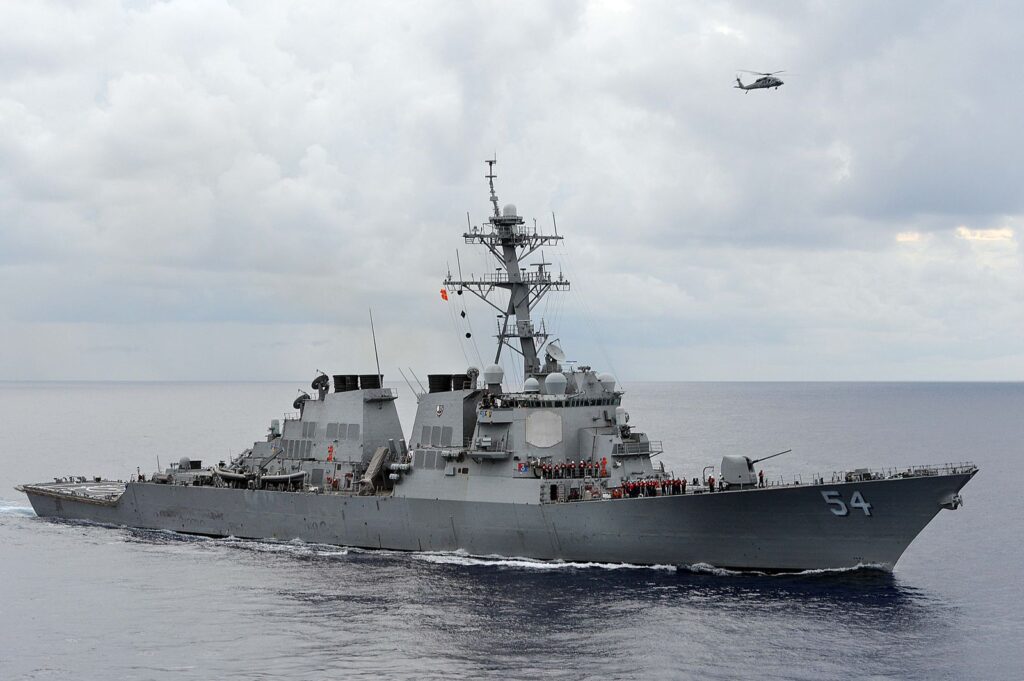
For the past thirty years, U.S. naval doctrine has been defined by a specific philosophy: rapid technological integration, multi-mission versatility, and, increasingly, stealth. The Arleigh Burke-class destroyer—the veritable backbone of the American surface fleet—epitomizes this era. These ships are swift, packed with advanced sensors, and designed to punch above their weight while minimizing their radar signature.
However, a new strategic proposal, championed by the incoming Trump administration and defense officials like Pete Hegseth, suggests that this era is over.
The United States is proposing a pivot of historic proportions: the creation of a “Golden Fleet,” anchored by a new class of massive, heavily armored warships explicitly branded as “battleships.” This isn’t nostalgia for the WWII era of big guns. It is a calculated, high-stakes strategic response to a singular threat: the People’s Liberation Army Navy (PLAN) of China and its dominance in missile technology.
This article examines the strategic thinking behind this radical shift, outlining why the U.S. is moving from stealth to armor, and how these maritime giants are intended to reshape future diplomacy and warfare in the contested waters of the Pacific.
- The Strategic Context: The “Glass Cannon” Problem
To understand why the U.S. is considering building 30,000-ton behemoths, one must first understand the problem they are meant to solve: China’s Anti-Access/Area-Denial (A2/AD) strategy.
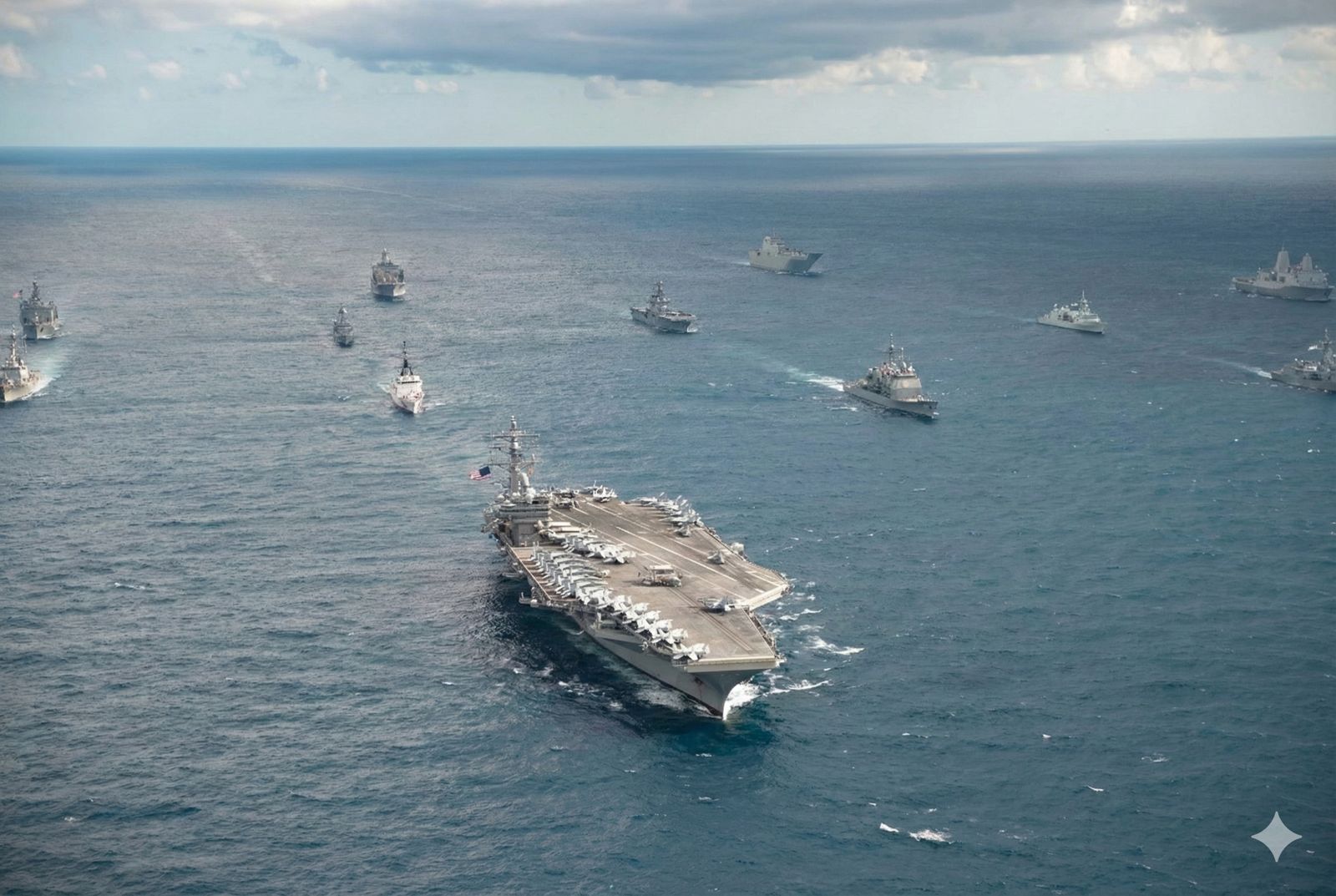
Over the last two decades, Beijing has recognized it cannot match the U.S. Navy ship-for-ship in open ocean combat. Instead, they have turned the South China Sea and the Western Pacific into a “missile kill zone.” China has built thousands of long-range ballistic and cruise missiles—such as the DF-21D and DF-26 “carrier killers”—designed to overwhelm U.S. fleet defenses through sheer volume.
The Vulnerability Gap Current U.S. ships, like the Arleigh Burke destroyer or Ticonderoga cruiser, rely on “soft kill” (electronic jamming) and “hard kill” (interceptor missiles) to survive. They are structurally “thin-skinned.” If their high-tech defenses fail and a modern anti-ship missile connects, the resulting damage could easily mission-kill or sink the vessel.
American naval strategists have grown increasingly concerned that in a conflict over Taiwan,
U.S. destroyers would run out of interceptors before China ran out of attacking missiles. The “Golden Fleet” strategy argues that the current fleet is composed of “glass cannons”—deadly, but too fragile for a sustained saturation attack.
- The “Golden Fleet” Concept: The Battleship Reborn
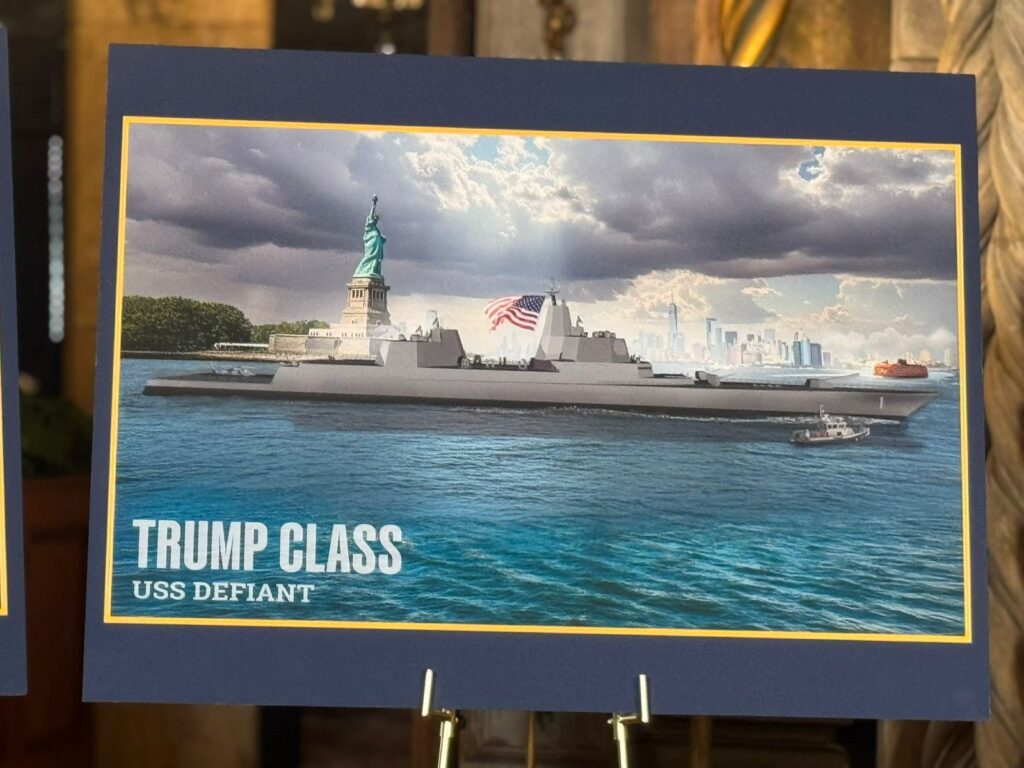
The proposed solution is a complete reversal of modern naval trends. The new strategy calls for
a shift from evading damage to absorbing it, and from defensive interception to offensive saturation.
The proposed shift in U.S. naval design centers on moving away from relatively fragile, multi-mission destroyers toward massive, heavily armored “battleships” displacing between
15,000 and 30,000 tons. This return to capital-ship proportions—unseen since the Iowa-class era—prioritizes physical survivability, utilizing thick steel plating and advanced armor schemes to ensure the vessel remains operational even after sustaining direct missile hits. By dramatically increasing hull size, these ships transform into “floating magazines” or arsenal ships, capable of carrying hundreds of Vertical Launch System (VLS) cells compared to the 96 found on modern destroyers. Crucially, this larger footprint provides the necessary space for oversized missile tubes capable of launching long-range hypersonic weapons, allowing the Navy to strike distant targets within minutes and providing a powerful counter to China’s regional missile dominance.
- The Strategic Pillars of the New Doctrine
Why make this shift now? The reasoning rests on three strategic pillars designed to change the calculus of escalation in the Pacific.
Pillar A: Shifting from Defense to Offense (“Killing the Archer”)
Current doctrine is defensive: wait for the enemy to fire missiles, then try to shoot them down. This is a losing mathematical game against China’s industrial capacity.
The battleship strategy centers on offensive capability. With long-range hypersonic missiles, these ships are designed to strike mainland China—taking out missile transporter-erectors, command bunkers, and radar installations. The doctrine shifts from “catching the arrows” to “killing the archer,” forcing China to defend its own shores rather than just attacking U.S. ships.
Pillar B: Deterrence by Denial and Punishment
The presence of a heavily armored ship changes the enemy’s targeting requirements. If China knows it takes three or four missile hits to sink a U.S. battleship versus one hit for a destroyer, they must allocate significantly more of their arsenal to take out a single American asset. This complicates PLA war planning and increases the “cost” of initiating a conflict.
Pillar C: Visual and Psychological Intimidation
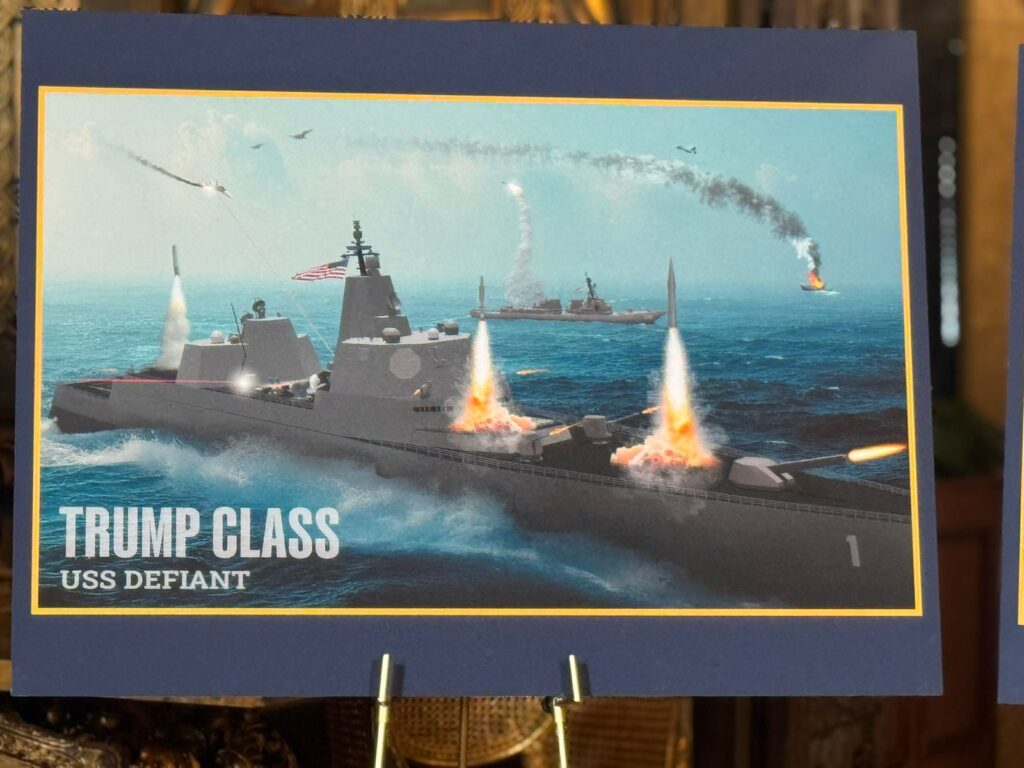
There is a distinct psychological element to the “Golden Fleet” concept, termed “Peace Through Strength.” The administration argues that modern stealth ships, with their cluttered antennas and utilitarian designs, fail to project power visually.
A 30,000-ton battleship bristling with weapons is designed to be an undeniable symbol of American resolve. The strategy posits that in gray-zone diplomacy in the South China Sea, the physical presence of a massive, intimidating warship is a better deterrent against Chinese coercion of smaller nations like the Philippines or Vietnam than an invisible stealth platform.
Perhaps the most controversial aspect is the plan to re-arm surface ships with nuclear-tipped cruise missiles (the SLCM-N program). By placing nuclear capability on these battleships, the
U.S. complicates Chinese targeting. Beijing could never be certain if a salvo fired from a battleship was conventional or nuclear, theoretically raising the threshold for China to attack the ship in the first place.
- Implications for the Future of Pacific Diplomacy
If realized, the “Golden Fleet” would fundamentally reshape the Indo-Pacific seascape by replacing vulnerable destroyers with resilient battleship groups. Currently, U.S. Freedom of Navigation Operations (FONOPs) rely on “thin-skinned” ships that risk being sidelined or sunk in a high-intensity conflict. By deploying armored battleships, the U.S. creates a far more durable presence in the South China Sea, providing a formidable “anchor” that is significantly harder for rival forces to intimidate or push around.
Beyond tactical strength, these ships serve as a vital psychological bridge to regional allies like Japan, South Korea, and Australia. These nations are increasingly concerned that current U.S. assets cannot survive China’s massive missile “saturation” attacks. A fleet built specifically for high-stress survivability sends a clear, long-term signal of American commitment to the “first island chain.” It reassures partners that the U.S. can weather the storm and will remain a permanent, unshakeable power in the Pacific.
A High-Stakes Gamble

The transition to the “Golden Fleet” battleship concept is not merely a procurement decision; it is an admission that the previous thirty years of naval assumption—that stealth and sensors could defeat massed firepower—has failed in the face of Chinese military modernization.
This strategy is a massive gamble. It bets that in the 21st century, thick armor and overwhelming offensive volume are superior to radar evasion and defensive agility. If successful, it could restore unchallengeable U.S. primacy in the Pacific. If it fails, the U.S. may pour untold billions into massive targets that are still vulnerable to next-generation weaponry.
Regardless of the outcome, the proposal signals a new, more aggressive phase in the great power competition for control of the world’s most vital oceans.