The evolution of modern aerial warfare is increasingly defined by the fusion of aerodynamic prowess and computational intelligence. At the heart of India’s ambitious Advanced Medium Combat Aircraft (AMCA) project lies a critical piece of indigenous technology: the Integrated Flight Control Computer (IFCC). This system serves as the primary “brain” for the aircraft, translating pilot inputs and sensor data into precise aerodynamic actions within a high-stakes, multi-domain environment.
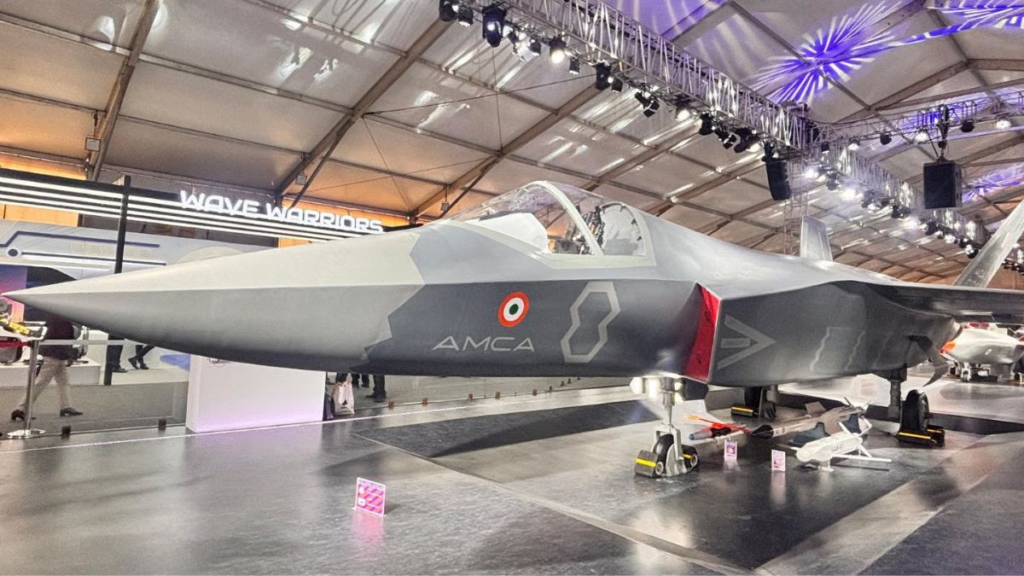
A Quadruplex Architecture for Unfailing Reliability
In 5th-generation combat, system failure is not an option. The IFCC is engineered with a quadruplex distributed architecture, ensuring that the aircraft remains controllable even if multiple components are compromised. This level of redundancy is a hallmark of sophisticated fly-by-wire systems.
The internal configuration of the IFCC is a masterpiece of modular engineering, consisting of six distinct modules:
- Two Digital Modules
Segmented into Prime and Auxiliary units to handle complex algorithmic processing. - Three Analog Modules
Dedicated to interfacing with traditional flight surfaces and sensors. - Power Supply Module
A specialized unit designed to sustain stable operations under rigorous combat maneuvers.
Technical Specifications: The Power Behind the Pilot
To manage the immense data flow required for stealth operations and supersonic agility, the IFCC utilizes the MPC5566 32-bit Microcontroller. This computing element allows for high-speed processing while maintaining the rigorous safety standards required for military aviation.
Communication between these channels is facilitated by a high-speed Cross Channel Data Link (CCDL) using RS422 differential lines, enabling real-time redundancy management and synchronization across the quadruplex system.
Thermal Management and Environmental Resilience
Modern avionics generate significant heat, and the IFCC is no exception, dissipating approximately 120W.
To ensure peak performance in the diverse climates of the Indian subcontinent, the system employs forced air cooling. This allows the computer to operate reliably in ambient temperatures reaching up to 71°C, a necessity for long-endurance missions and high-speed flight.
Certification and Safety Standards
The development of the IFCC adheres to the most stringent international aerospace benchmarks:
- Hardware (DO-254 Level A)
Ensures the highest level of design assurance for electronic hardware. - Software (DO-178C Level A)
Guarantees that the software governing flight controls is virtually immune to catastrophic failure. - Regulatory Compliance
The system is developed in alignment with IMTAR 21 guidelines, ensuring it meets the rigorous airworthiness requirements of the Indian military.
The Strategic Roadmap for Indigenous Defense
The development cycle for the IFCC reflects a disciplined, multi-year strategy. Over a 36-month timeline, the project transitions through several critical phases:
- Prototyping
The initial 18 months focus on the creation and testing of prototype Line Replaceable Units (LRUs). - Qualification
Rigorous Qualification Test (QT) units are produced by the 24-month mark to validate the system against environmental and combat stresses. - Deployment
The final phase involves the delivery of Flight Worthy (FW) units, marking the transition from laboratory testing to actual cockpit integration.
The IFCC is more than just a computer; it is the cornerstone of India’s strategic autonomy in the skies. By integrating advanced 32-bit processing, high-speed data links, and world-class safety certifications, the AMCA’s flight control system represents a significant leap forward in indigenous aerospace engineering.
As the project moves toward its final flight-worthy configurations, it solidifies India’s position among an elite group of nations aspiring to develop the “nervous system” for 5th-generation stealth technology.

It simply does not make sense to me why we are so dependent on US Tech in vital / core areas like Jet engines, Design and simulation softwares, and even marine engines. There is absolutely, positively NO sovereignty without having strong grasp on these elements.