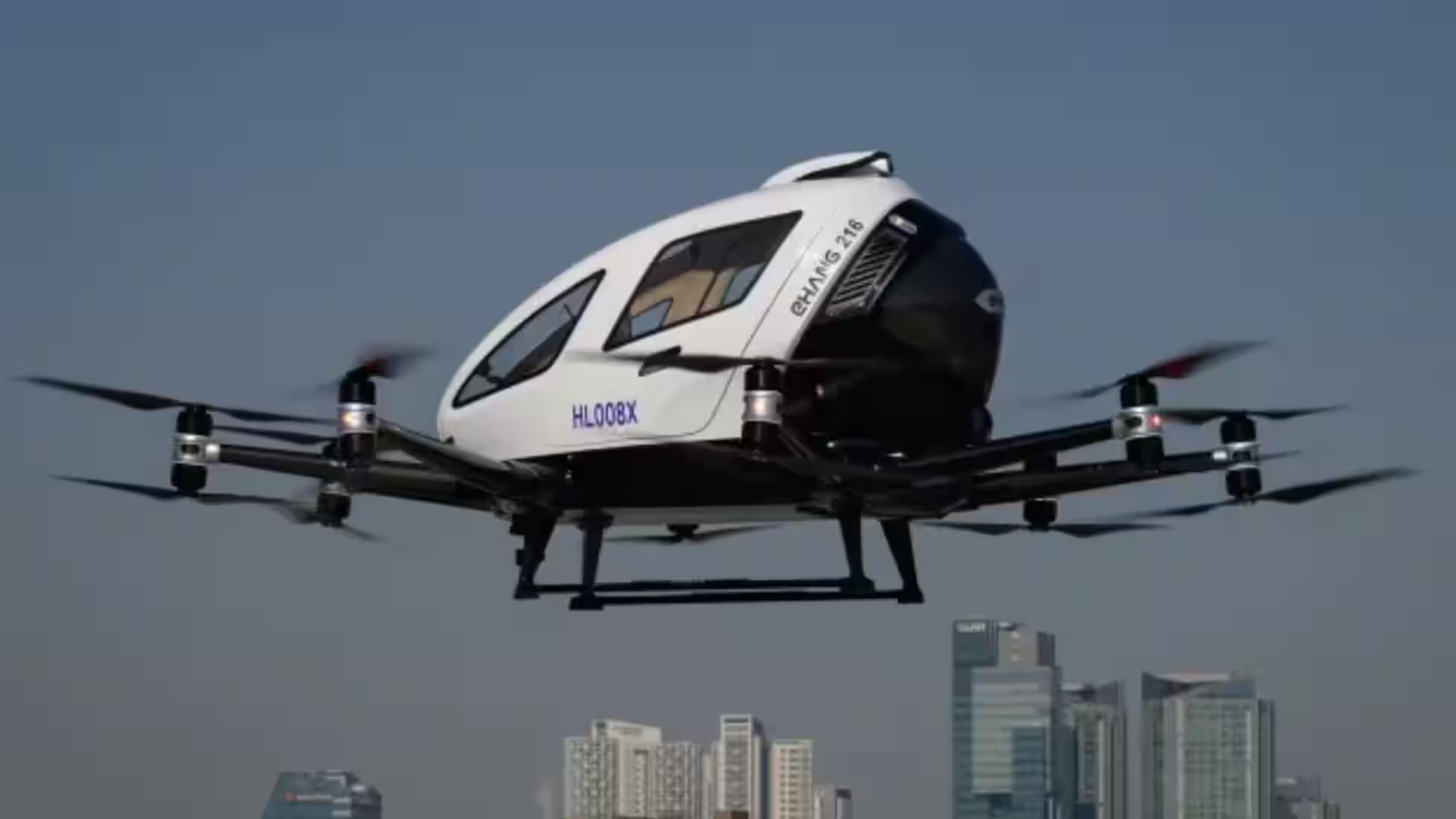
The landscape of modern warfare is shifting toward autonomous dominance, where the risks to human life are mitigated by cutting-edge technology. In a significant move toward self-reliance in defense manufacturing, the Indian Air Force (IAF) has released a project brief for the design, development, and manufacture of an Unmanned Combat Search and Rescue (CSAR) Aircraft.
Initiated under the Make-I Category of the Defence Acquisition Procedure (DAP) 2020, this project aims to bridge a critical gap in recovery operations within hostile territories.
The Operational Imperative: Why Unmanned CSAR?
Traditional Combat Search and Rescue missions are among the most high-risk operations an air force can undertake. Sending manned platforms into contested airspace to recover downed aircrew often puts additional lives at stake. The IAF’s new initiative seeks to replace the “human in the loop” with a runway-independent unmanned platform.
Beyond risk mitigation, these unmanned systems offer distinct advantages:
- All-Weather Resilience: Capability to operate in extreme temperatures and low-visibility conditions such as “white outs” in snow or “brown outs” in dusty environments.
- Versatile Logistics: The platform is not limited to rescue; it can be utilized to deliver supplies and logistic loads to forward areas and difficult terrain where manned navigation is unfeasible.
Core Technical Specifications and Performance Benchmarks
The IAF has outlined stringent preliminary technical parameters to ensure the platform can survive and succeed in the most demanding environments.
1. Payload and Capacity
The aircraft must support a payload capacity of at least 400 kg, which translates to a minimum of four passengers or sufficient space for stretchers.
2. Range and Endurance
A critical requirement is a Radius of Action (ROA) of at least 200 km, supplemented by a loiter time of 45 minutes. While these are the baseline figures, higher ranges are actively desired by the IAF.
3. Operational Ceiling and Environment
- Altitude: Operations from sea level up to 16,000 ft AMSL (with a desirable ceiling of 20,000 ft).
- Launch/Recovery: Must be capable of launching from and recovering on unprepared surfaces.
- Wind Tolerance: The system must handle winds of 30 kts during take-off and landing.
4. Navigation and Autonomy
Reflecting the need for electronic warfare resilience, the platform must navigate using GNSS, IRNSS, and NAVIC, while maintaining full functionality in GNSS-denied environments. It must feature high-tier autonomy, including Auto Take-off, Navigation, and Landing, and the ability to autonomously locate and land near downed aircrew using integrated Emergency Locator Transmitters.
The Path to Indigenous Production: Make-I & Buy Indian-IDDM
This project is a cornerstone of the Atmanirbhar Bharat (Self-Reliant India) initiative. Developed under the Make-I category, the project involves government funding and aims for a minimum Indigenous Content (IC) of 50%.
Successful development will lead to the acquisition of approximately 10 units (Initial Minimum Order Quantity) through the Buy Indian-IDDM (Indigenously Designed, Developed and Manufactured) category.
Industry Eligibility and Requirements:
- Entity Status: Must be an Indian entity as per DAP 2020.
- Experience: Desirable expertise in aviation MRO, logistics, and manufacturing.
- Certification: Familiarity with DGAQA quality assurance and CEMILAC (Centre for Military Airworthiness Certification) processes is highly valued.
This project represents a pivotal moment for the Indian defense industry, offering a chance to pioneer a specialized class of autonomous aircraft that will redefine search and rescue in the 21st century.