By Vishwamitra
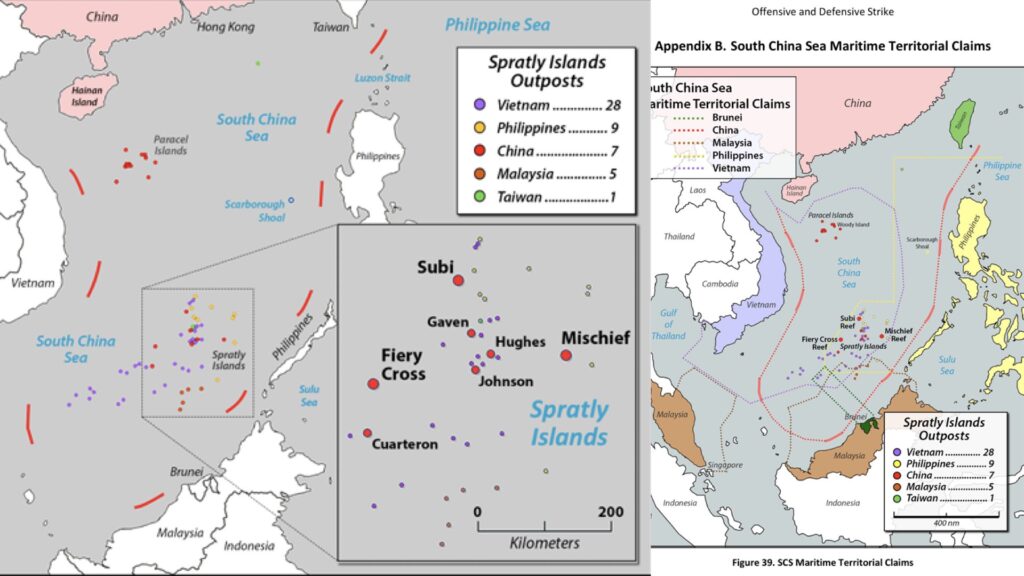
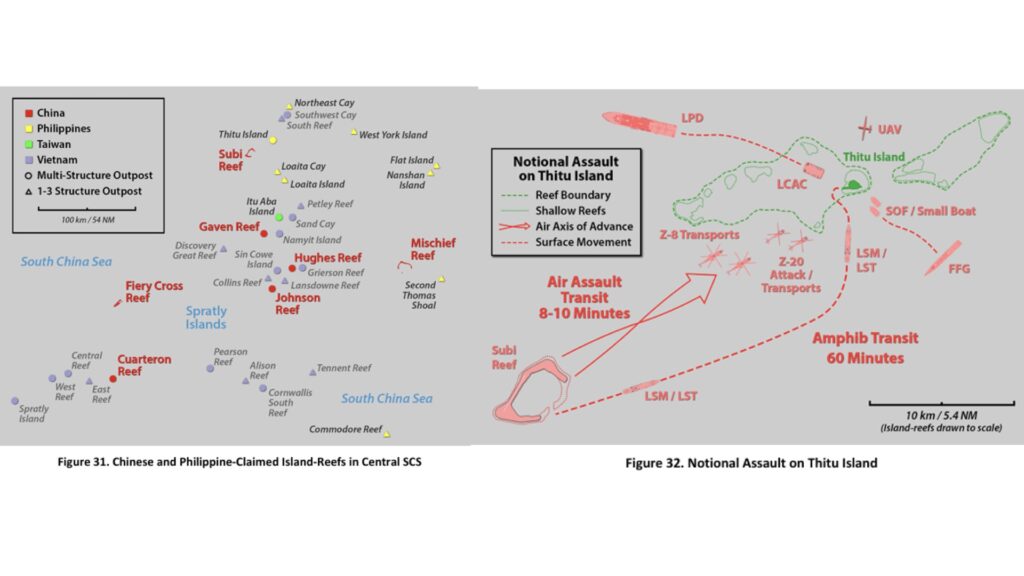
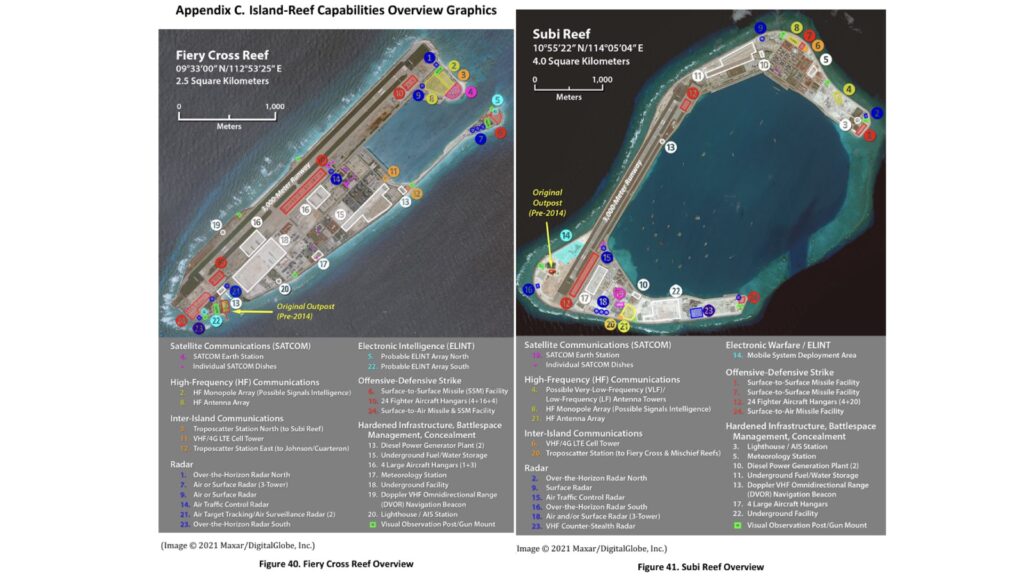
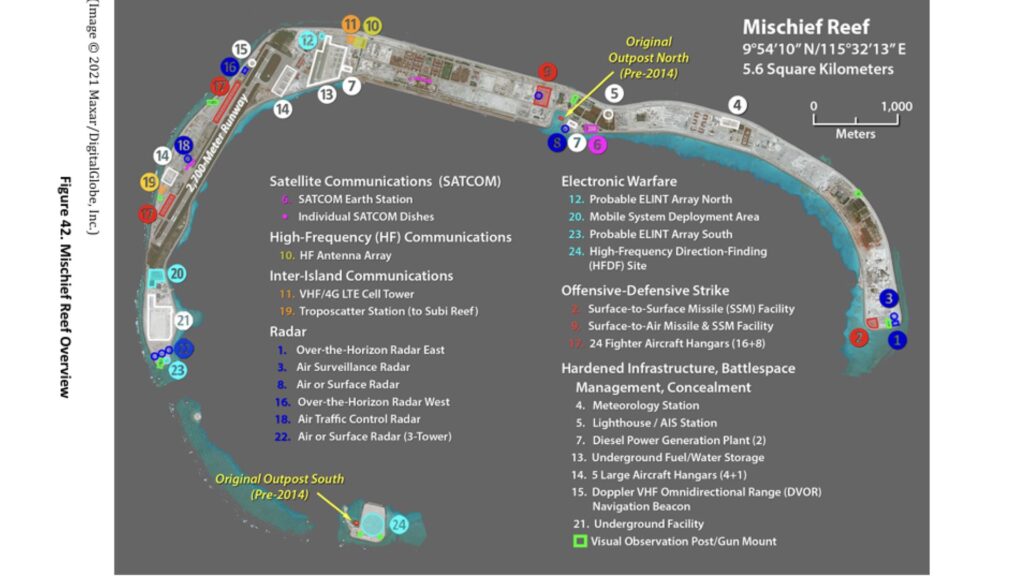
China’s Fiery Cross, Subi, and Mischief Reefs, constructed in the South China Sea, are designed as survivable, modular nodes that increase PLA information, sensor, and strike capabilities. Forward basing of long-range SAMs, mobile SSM TELs, AEW&C, and ASW aircraft, as well as tankers and helicopter lift, creates overlapping denial zones, battlespace awareness, and rapid strike capabilities, making adversary military action more difficult and expensive. Key strengths of these outposts include their air defense, protected SSM launch sites, and AEW/tanker assets, which multiply the effectiveness of carrier and land-based aviation.
Strategic Context and Operational Thesis
- Operational Thesis: The outposts are designed to produce information power, C4ISR, AEW&C, and maritime patrol capabilities, which increase the range of kinetic systems and facilitate coordinated warfare across domains.
- Design Principle: Utilizing modularity and mobility, the use of TEL garages, retractable roofs, and mobile systems enables “shoot-and-scoot” warfare.
Ground-Based Air Defense
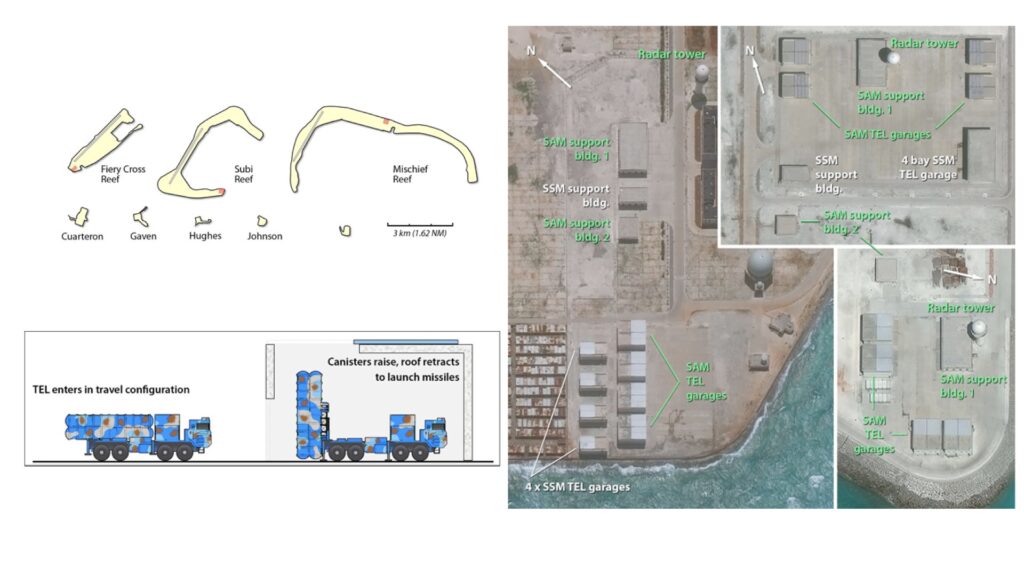
SAM Infrastructure and Concealment
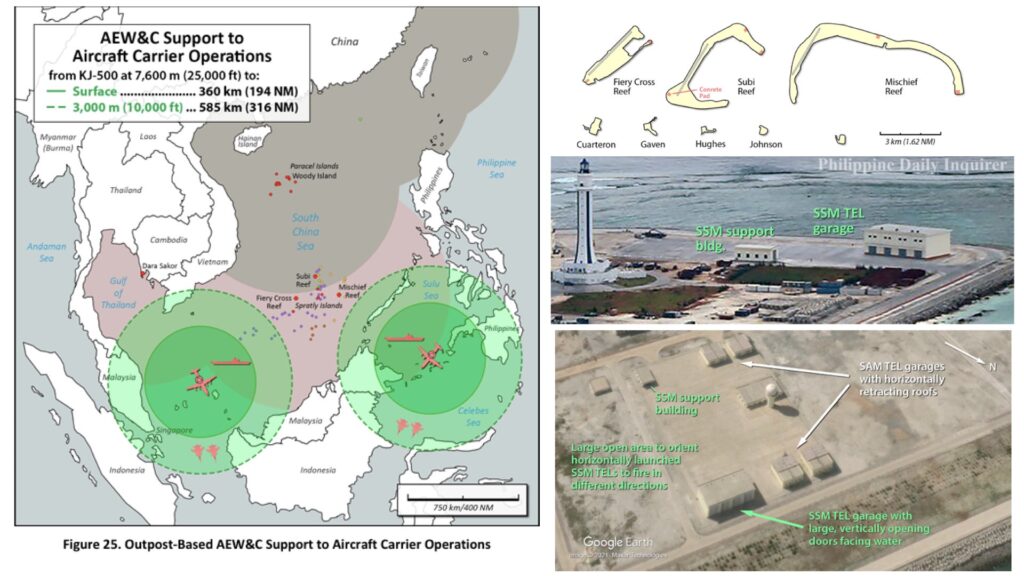
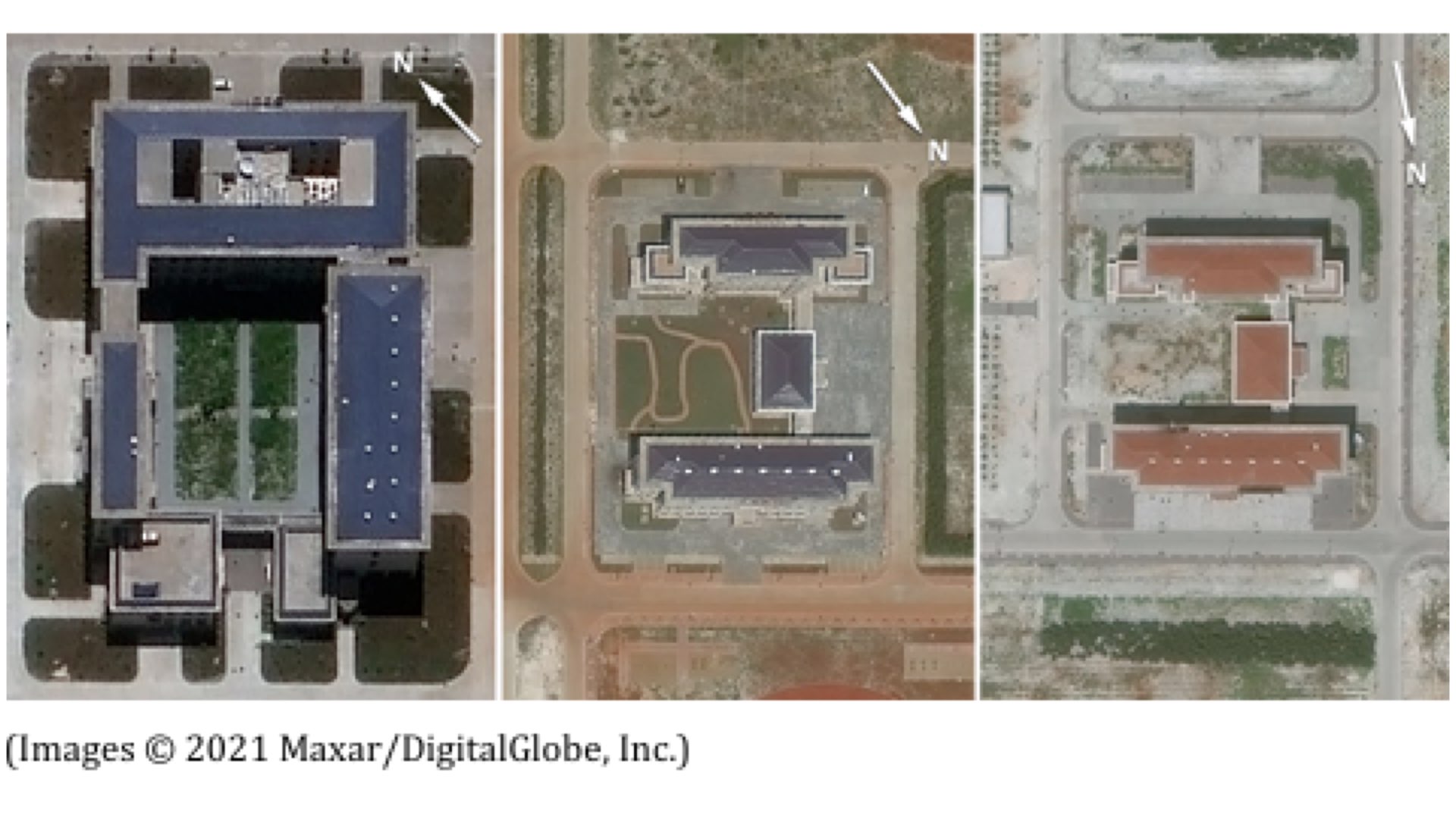
- Hardened TEL Garages: Standard SAM TEL structures (≈ 20 x 22 m) feature two drive-in bays and a retractable roof design to obscure the presence and availability of the TEL.
- Radar Towers: These provide local sensing capabilities across the outposts.
Long-Range and Medium-Range Systems
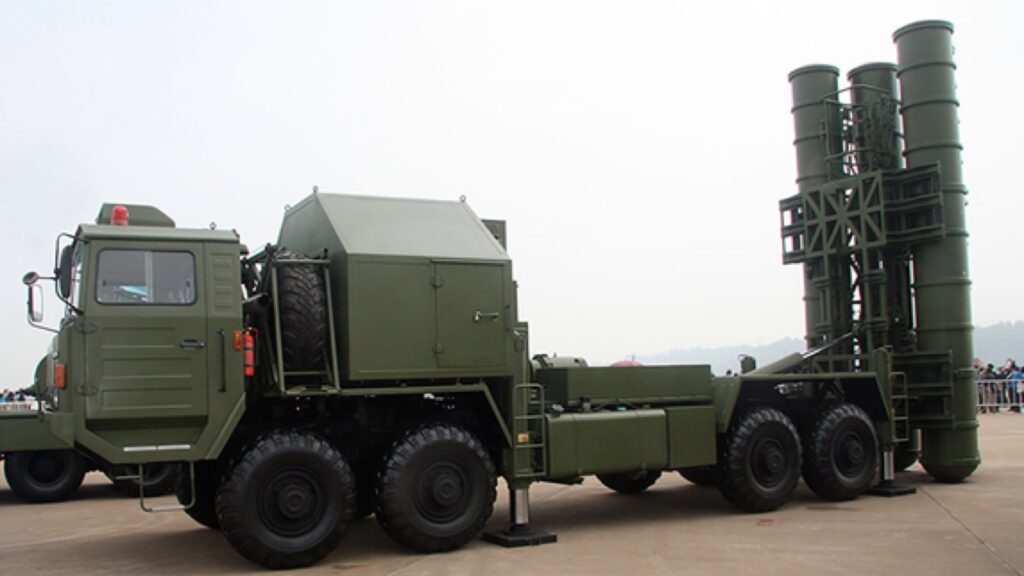
- HQ-9B (Long-Range): Road-mobile TELs with four canisters and a reported range of approximately 300 km. They utilize passive IR and semi-active radar to threaten ISR and strike aircraft.
- HQ-16 (Medium-Range): A Buk-family derivative designed for low-altitude area defense, capable of intercepting UAVs, cruise missiles, and aircraft within the HQ-9 umbrella.
Short-Range and Point Defense
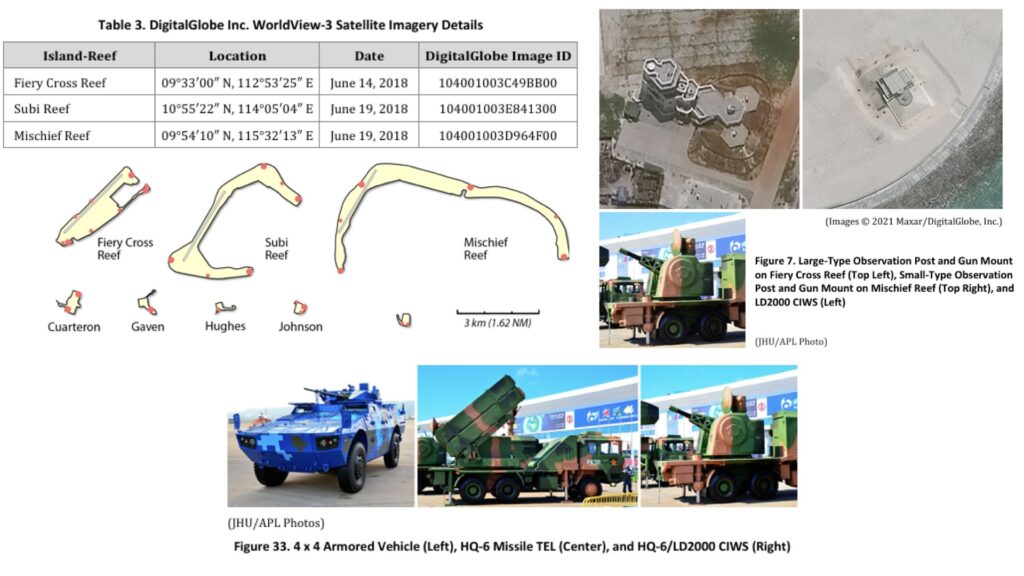
- Observation Posts: More than 30 observation posts provide 360° visual and electro-optical sensing.
- Point Defense Systems: The outposts are equipped with LD2000 CIWS and CS-AR1 anti-frogman systems.
Air Power, AEW, and Tanking
Airfield Capacity and Sortie Generation
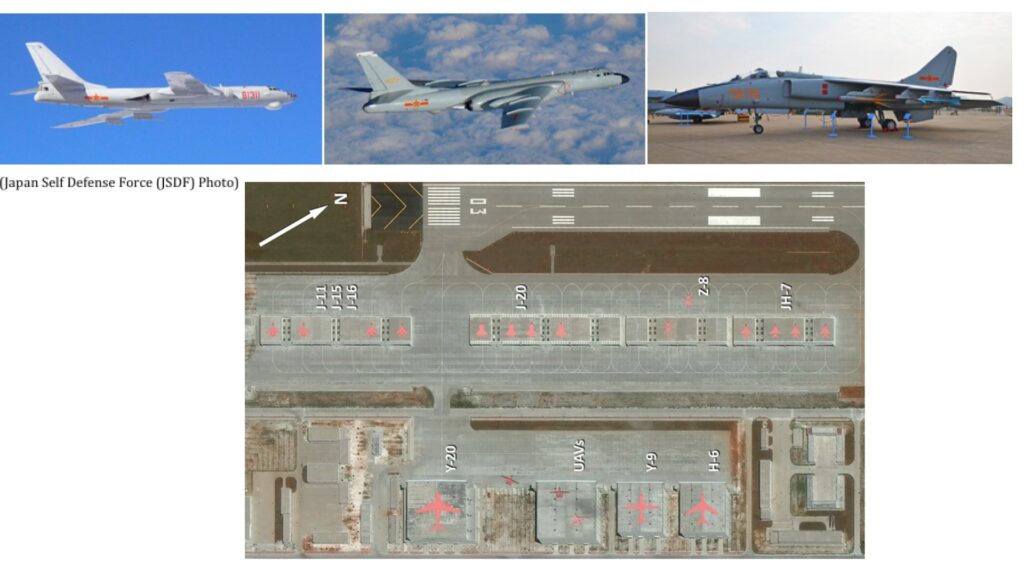
- Runways: Fiery Cross and Subi have runways of approximately 3,000 m, while Mischief’s is approximately 2,700 m—sufficient for heavy transports and most PLA combat aircraft.
- Hangars: Each outpost contains roughly 24 fighter-sized hangars (approximately 72 total across the three main outposts), permitting regiment-sized basing or deception through redistribution.
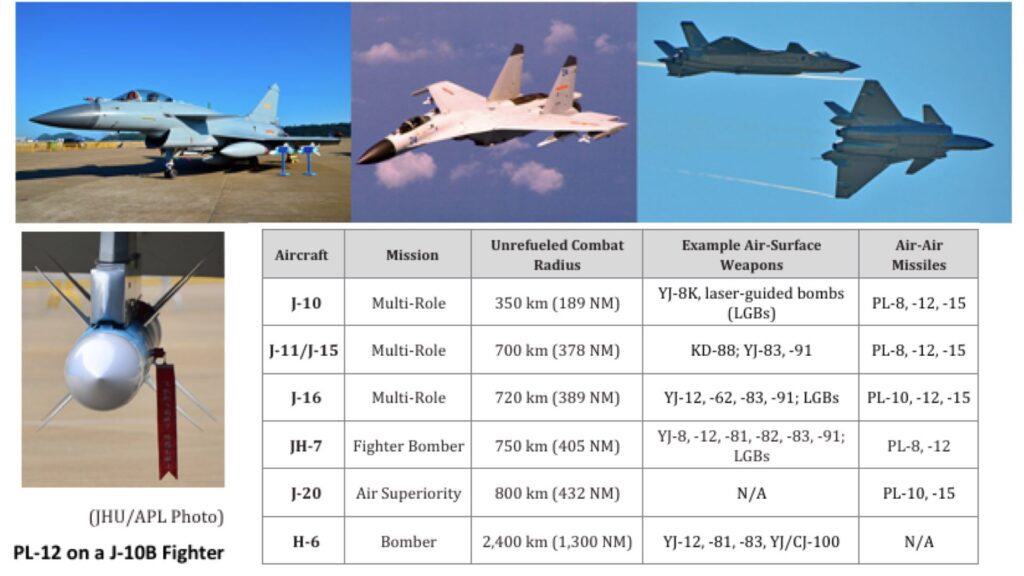
- Fighter Mix and Weapons: Assumed aircraft include the J-10, J-11/J-16, J-15, and potentially the J-20. Long-range AAMs (PL-12, PL-15) extend fighter engagement envelopes to 100–200+ km.
AEW & Tanker Multipliers
- Force Multipliers: Outpost-based AEW&C (KJ-500) and tankers (H-6U, Il-78, Y-20 variants) greatly multiply the on-station times for fighters.
- Operating Doctrine: AEW assets can orbit ahead of carrier task groups to extend detection and control.
Anti-Surface Strike
SSM Facilities and Protected Launches
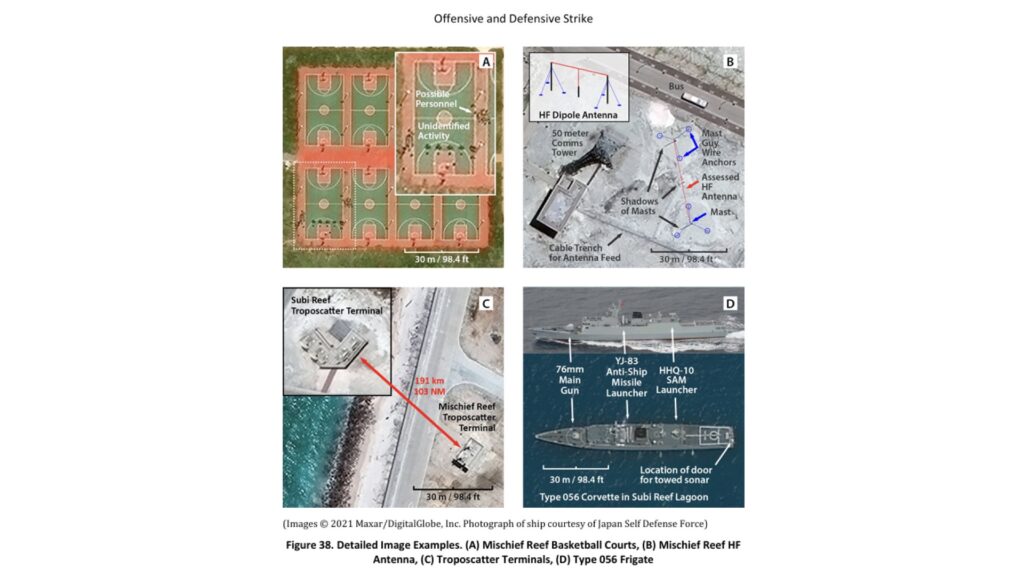
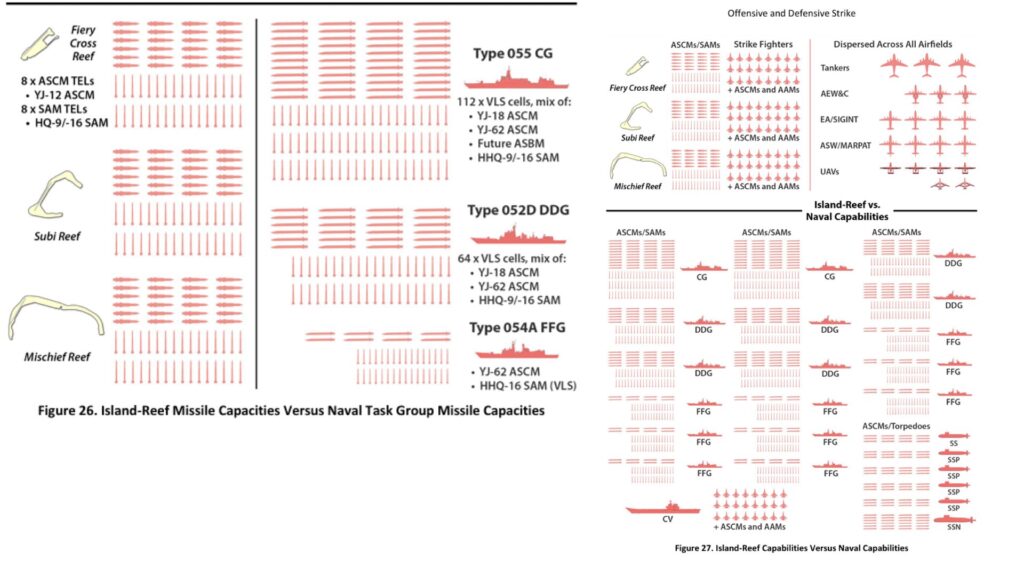
- SSM Garages: Four-bay TEL garages with seaward-facing high doors enable protected, elevated SSM launches.
- Integrated Chains: Co-location with SAM facilities enables integrated sensor-to-shooter chains.
High-End ASCMs and ASBMs
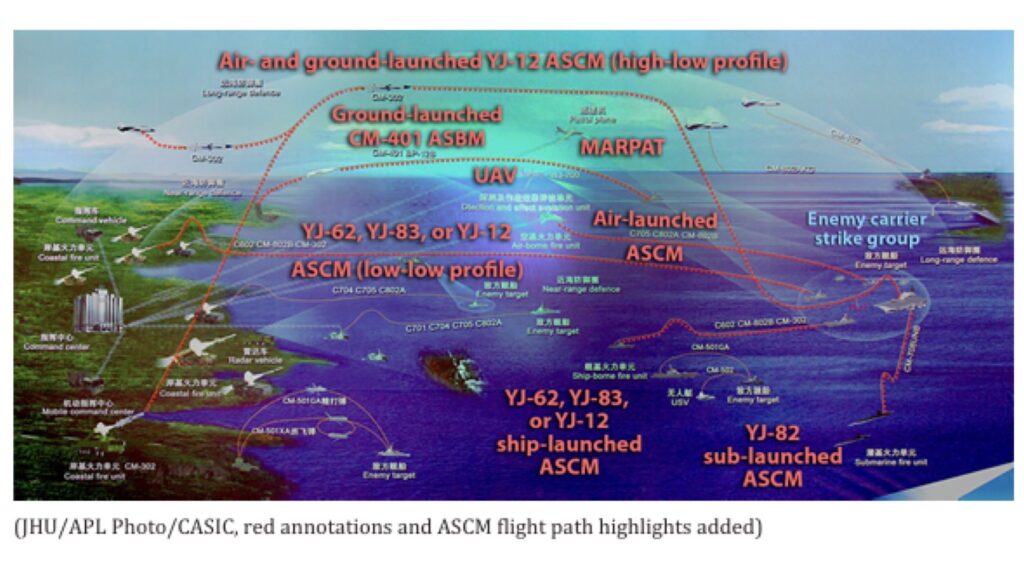
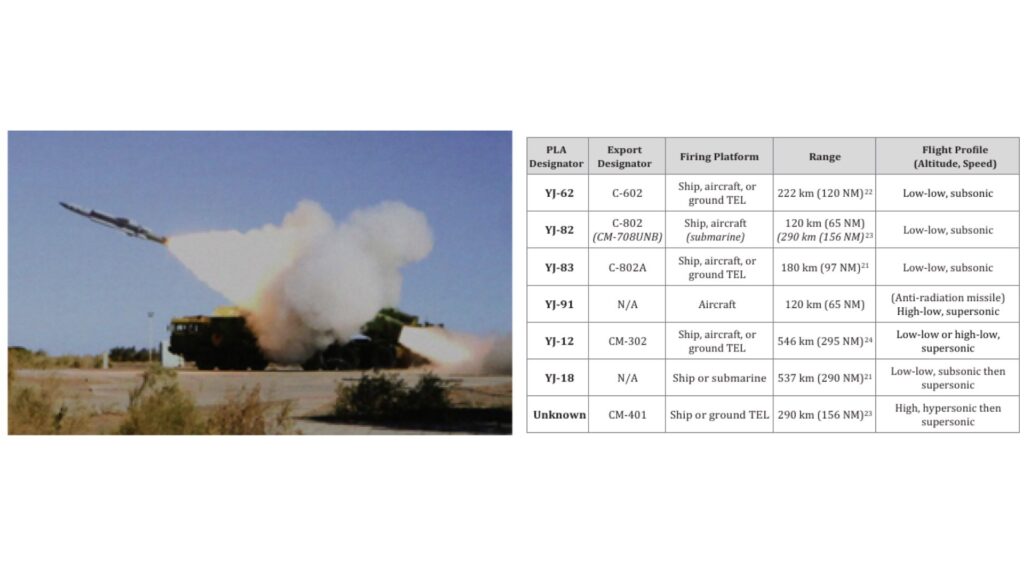
- YJ-12/CM-302: A supersonic, sea-skimming ASCM family. While the export CM-302 has a reported range of 290 km, PLA variants likely reach 500+ km.
- CM-401 (Short-Range ASBM): A maneuverable ballistic option with an active terminal seeker, adding a high-speed terminal threat that is difficult to intercept.
Multi-Axis Salvo Concepts
- Doctrine: PLA doctrine combines subsonic, supersonic, and ballistic missiles from air, sea, and land assets to form complex salvo attacks.
- Operational Advantage: This approach is designed to overwhelm a ship’s sensors, interceptors, and decision timelines, forcing defenders to allocate resources against multiple threat types and altitude bands.
Rocket Artillery and Area Denial
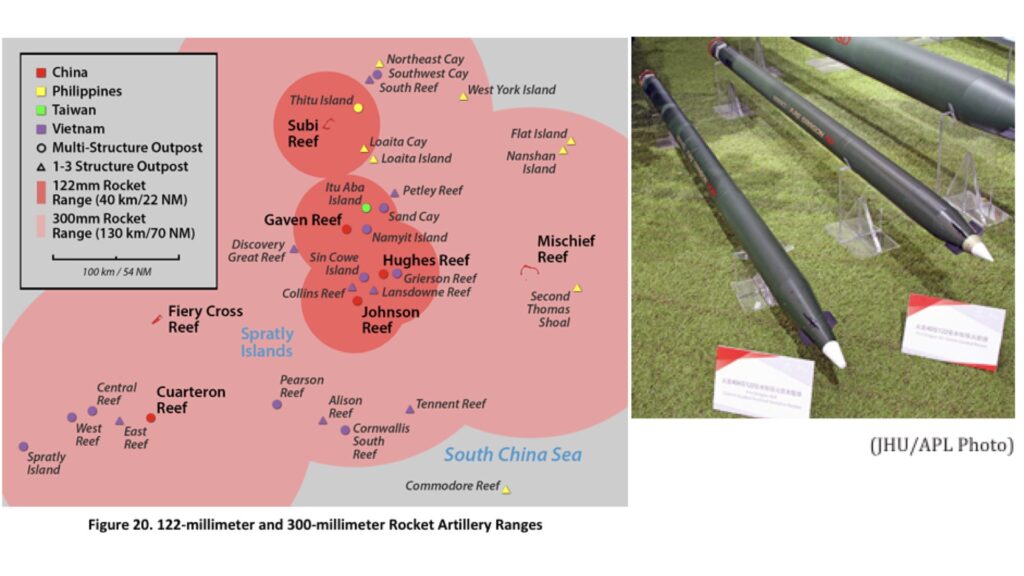
- Capabilities: The Fire Dragon family includes 122 mm (~40 km) and 300 mm (~130 km) rockets that are inertial and satellite-guided (CEP < 20 m).
- Employment: These systems provide suppression, interdiction, and shaping fires out to the littorals, often utilized in barrages before amphibious or helicopter assaults.
Helicopters, CSAR, and Medical Support
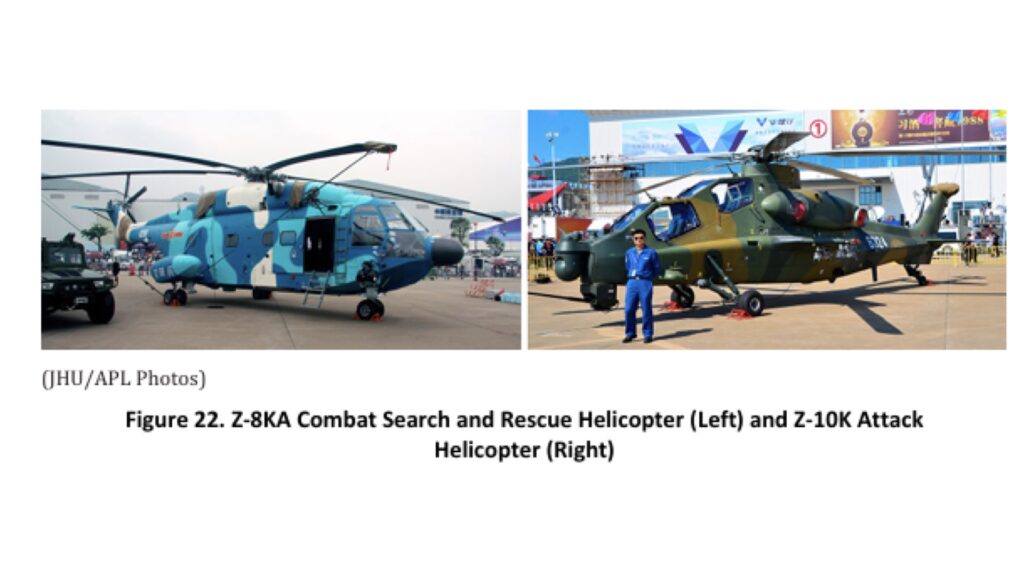
- Assault and Attack: Medium-lift helicopters (Z-8, Z-18, Z-20) enable rapid marine insertion within 100 km, while Z-10 attack helicopters provide close fire support and anti-boat missions.
- CSAR: Dedicated combat search and rescue (CSAR) helicopters and evacuation routes enhance survival probability.
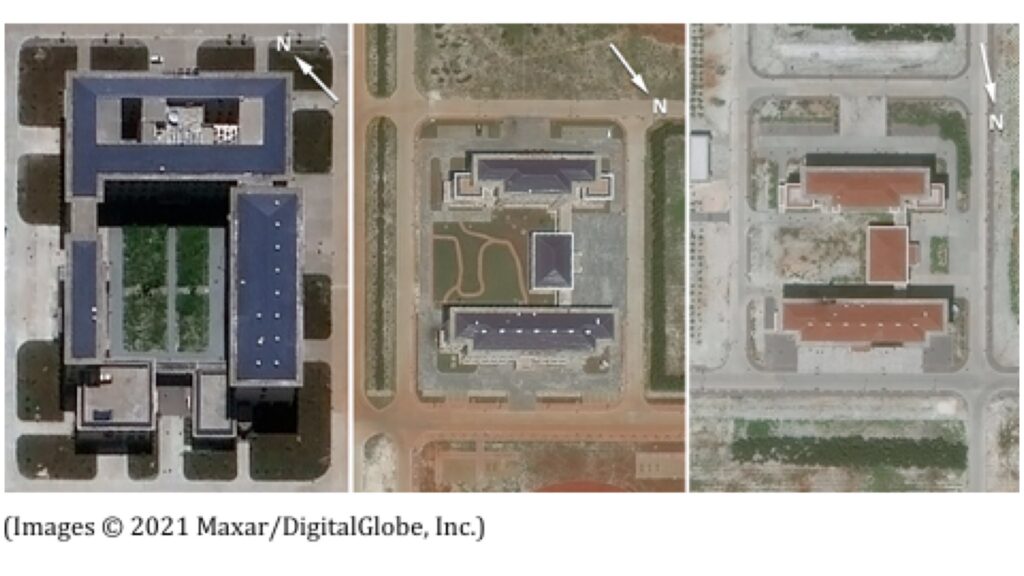
- Medical Facilities: On-site hospitals include operating rooms, ICUs, hyperbaric chambers, and telemedicine capabilities.
ASW Maritime Patrol and Carrier Interaction
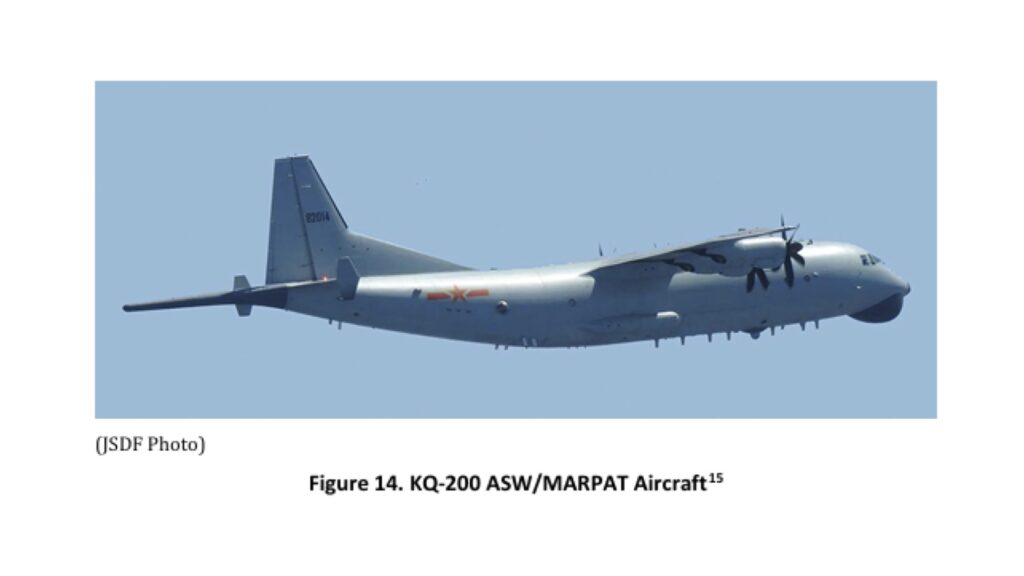
- ASW Assets: The KQ-200 ASW/MAR PAT aircraft features an internal weapons bay for torpedoes and depth charges. Forward basing at these outposts enhances patrol endurance.
- Carrier Support: The outposts provide divert airfields, AEW, and tanker assets that extend the range of carrier strike forces while reducing blue-water risks.
Campaign Implications
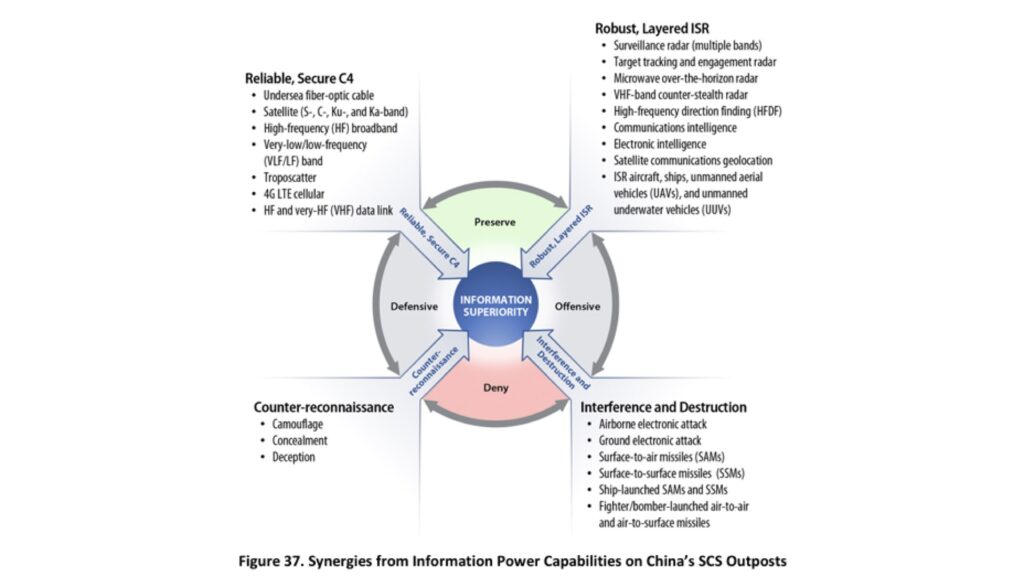
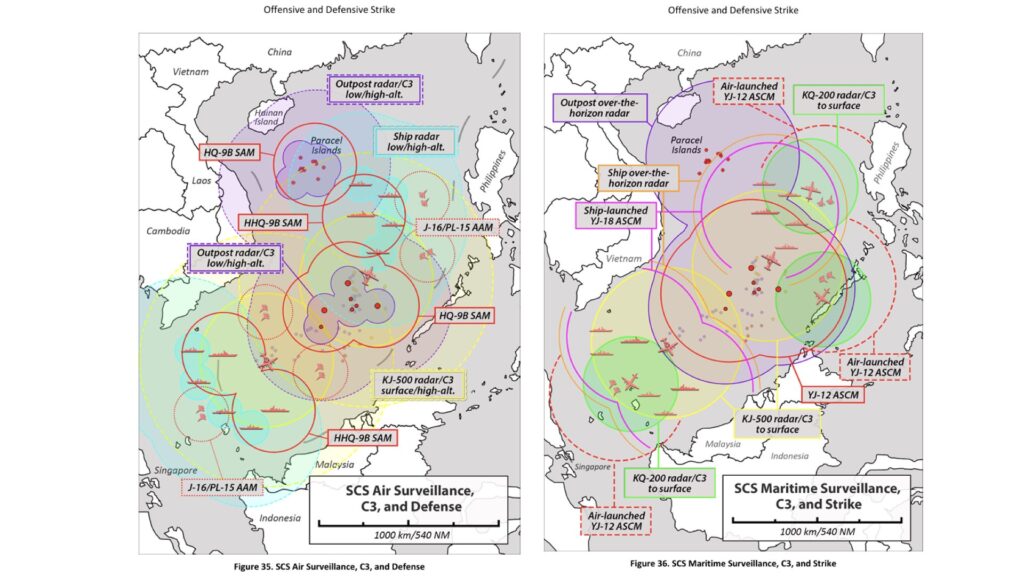
- Informationized Warfare Multiplier: The outposts provide decisive information superiority in C4ISR, AEW&C, and maritime surveillance, which serves as the primary multiplier for strike and defense forces in the South China Sea.
- Vulnerabilities: Key weaknesses include logistics chokepoints, ASW prosecution, potential political escalation, and a heavy dependence on forward sensors that can be degraded.
- Mitigations: To counter these, the PLA emphasizes dispersal, hardened shelters, C2 redundancy, mobile reloading, and counter-C4ISR capabilities.
1. Could the endurance of these bases under blockade conditions (fuel, munitions, spare parts) is extremely vulnerable?
2. What is the endurance and survival chances under severe weather and meteorological conditions, aren’t they susceptible to them?