By Shreedhar Singh
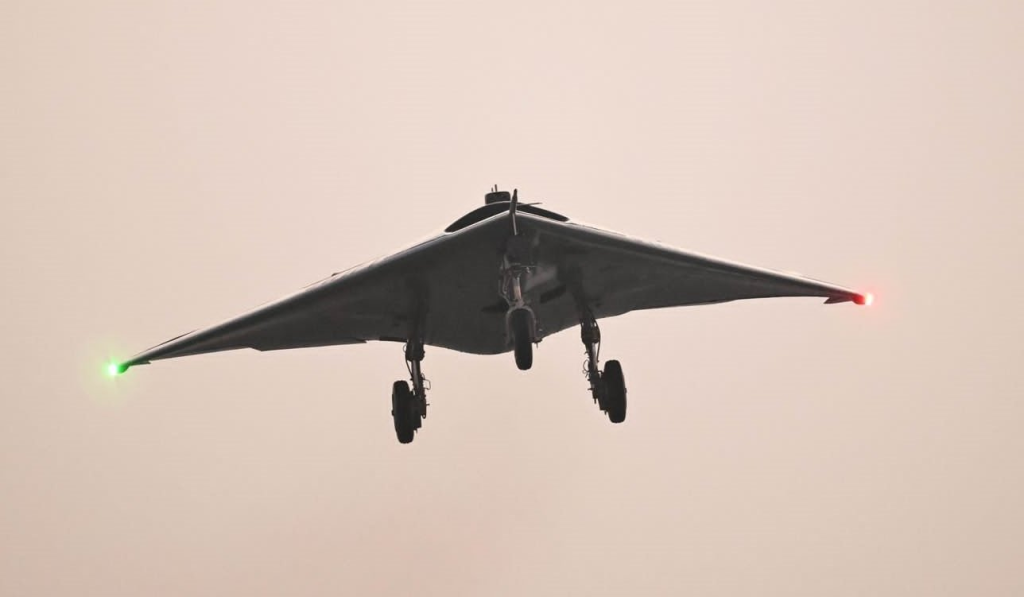
India’s Ghatak UCAV is emerging as a true game-changer in the future battlefield. Engineers are primarily developing the platform for the strike role, and the aircraft will also operate as a loyal wingman alongside manned fighter jets, though conceptually it is UCAV for strikeroles. This unmanned combat aerial vehicle will enable the Indian Air Force to conduct deep-strike missions while reducing risk to pilots and expanding operational flexibility.
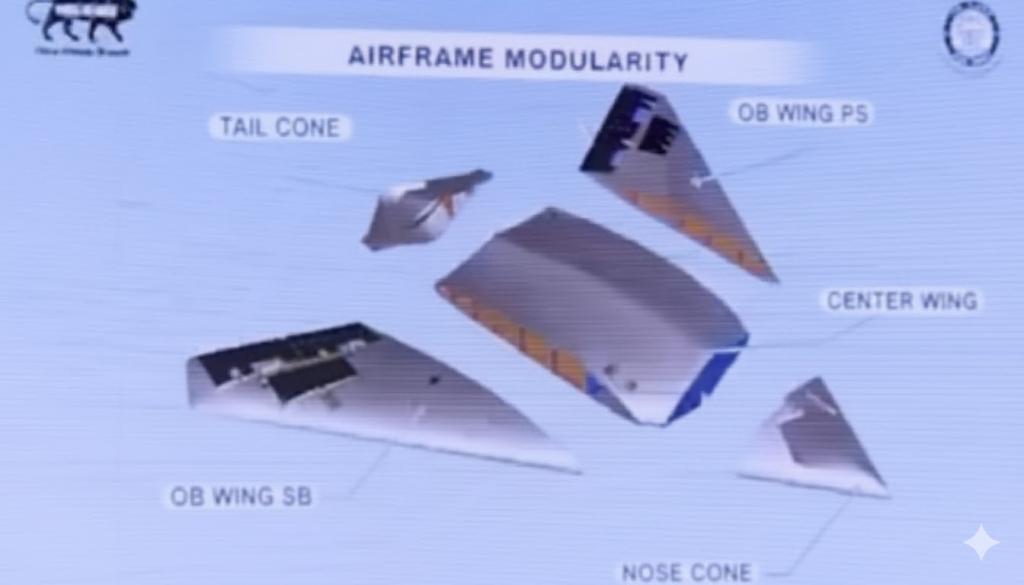
Gemini was used to improve the resolution of DRDO Image
The Ghatak will be a 13-tonne subsonic stealth UAV powered by the dry Kaveri engine, which produces 49 kN of thrust. The aircraft will carry 3.7 tonnes of internal fuel and maintain a loitering endurance of around two hours. Because it combines a subsonic cruise profile with significant fuel capacity, the aircraft will achieve a strong combat range suitable for deep-penetration missions. The dry Specific Fuel Consumption (SFC) of the Kaveri K9 engine is about 0.824 kg/kgf-hr, a figure comparable to the F404 engine, which indicates a very efficient propulsion performance for its class.
The aircraft’s physical dimensions reflect its stealth-optimized flying-wing configuration. The length of the Ghatak UCAV will be approximately 14 meters, while the wingspan will reach about 18 meters, resulting in a length-to-width ratio of roughly 0.78. This geometry supports aerodynamic efficiency while also contributing to the aircraft’s stealth characteristics.
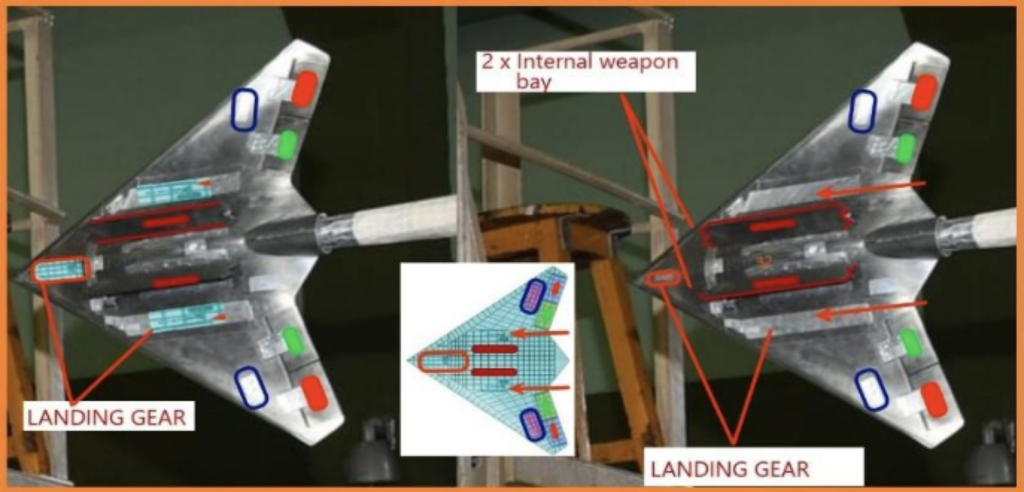
The Ghatak UCAV will feature two internal weapon bays with a total payload capacity of 1.5 tonnes. These bays will allow the aircraft to carry precision weapons while maintaining a low radar signature. Planned munitions include the SAAW (Smart Anti-Airfield Weapon), TARA, and other glide bombs. Additionally, integrating lightweight cruise missiles such as Icebreaker could further expand the strike capability of the aircraft while still fitting inside the internal weapon bay.
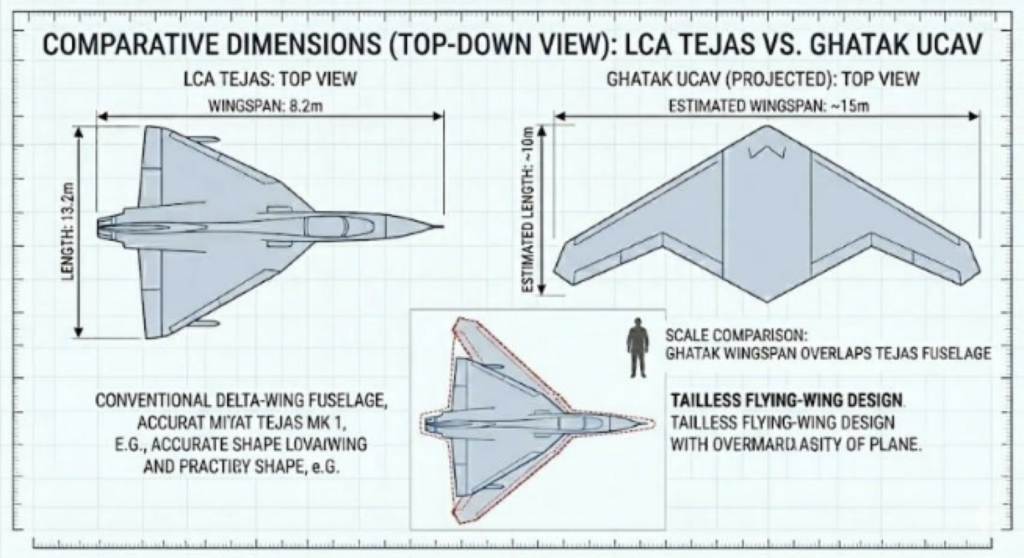
In terms of overall mass, the Ghatak UCAV will have a Maximum Take-Off Weight (MTOW) similar to the Tejas Mk1 fighter. However, the Ghatak will carry around 1.2 tonnes more internal fuel than the Tejas Mk1, whose internal fuel capacity stands at roughly 2.5 tonnes. As a result, the Ghatak will enjoy a greater combat radius and endurance compared with the Tejas despite operating as an unmanned platform. Afterall it will not have to carry pilot & cockpit support systems (Perks of Unmanned platforms).
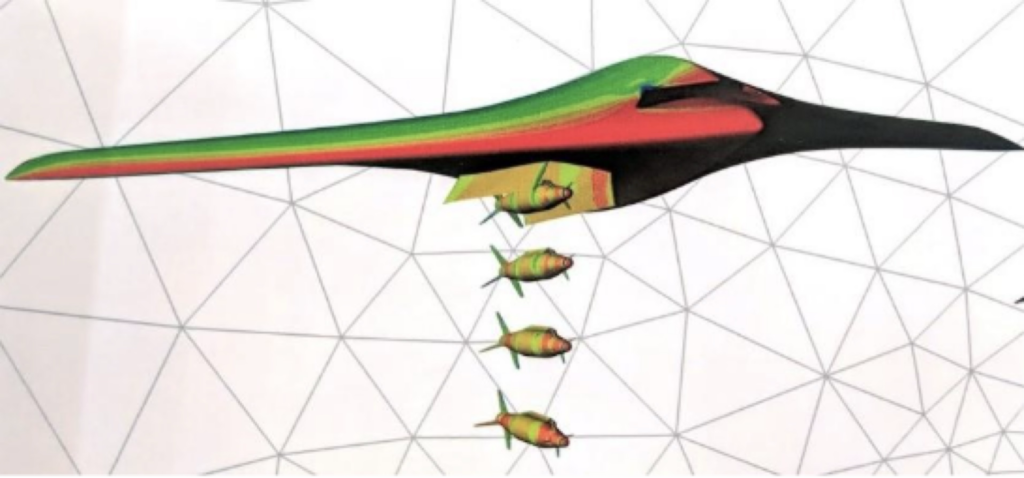
Stealth remains the central philosophy behind the Ghatak’s design. The aircraft uses a flying-wing configuration, which naturally minimizes radar reflections. By eliminating the vertical tail and blending the entire structure into a smooth curved shape, the aircraft effectively scatters radar waves rather than reflecting them directly back to the emitter. This approach significantly lowers the Radar Cross Section (RCS) and allows the platform to penetrate heavily defended airspace.
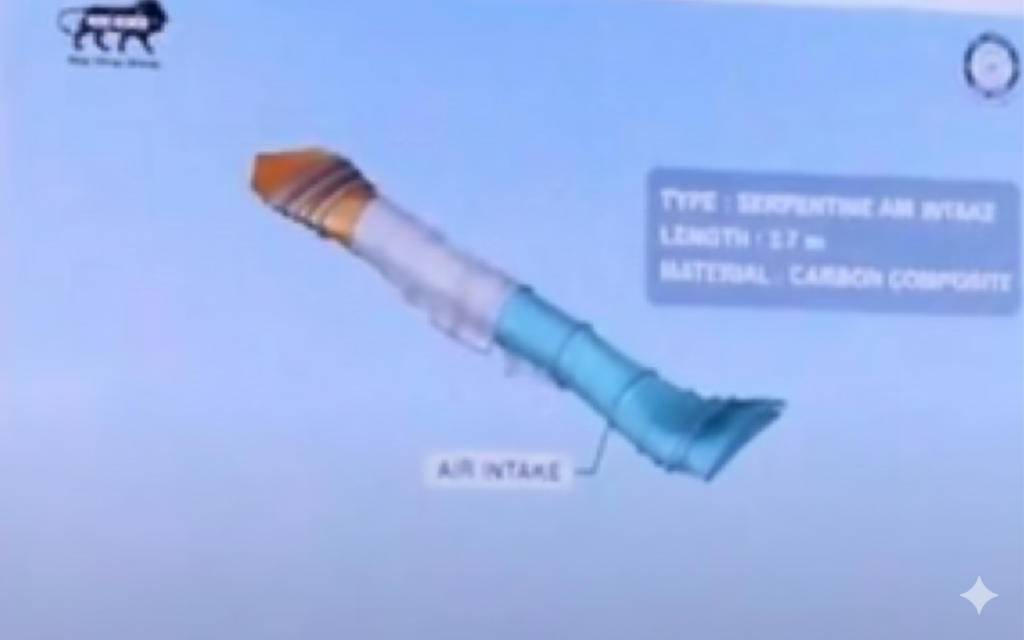
In addition to its shape, the Ghatak UCAV will incorporate a serpentine air intake duct. This intake design will provide more than 10 dB reduction in frontal radar cross-section across the 2–18 GHz frequency range by hiding the engine compressor face from radar detection. However, serpentine ducts introduce a technical challenge known as inlet distortion, where curved airflow creates non-uniform pressure and velocity at the engine face.
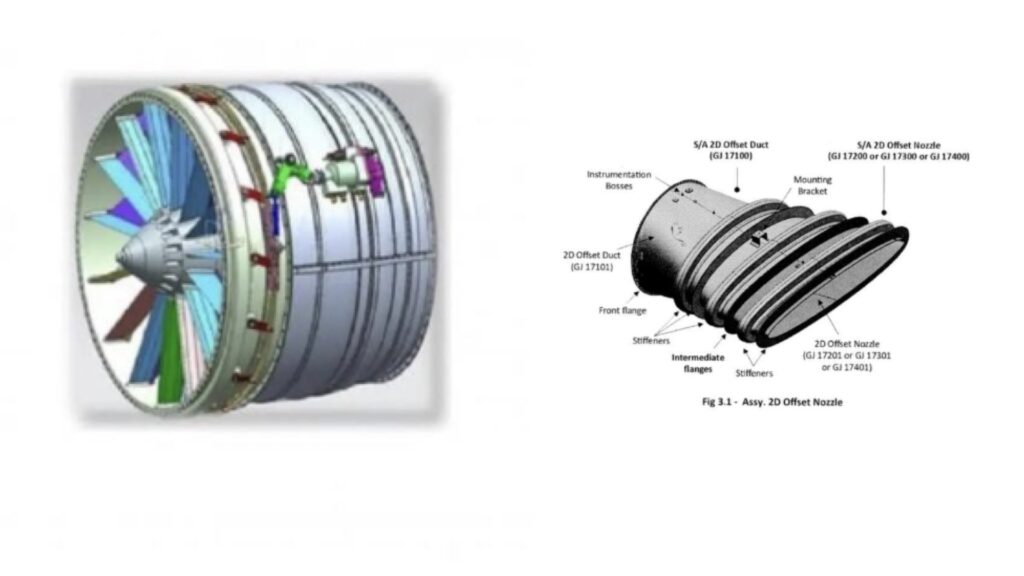
To address this issue, the Kaveri dry engine integrates a newly designed distortion-tolerant fan specifically engineered to handle the pressure variations produced by serpentine air intakes. Standard fans often surge or stall when exposed to such distortions, but the redesigned Kaveri fan maintains stable operation even under these conditions.
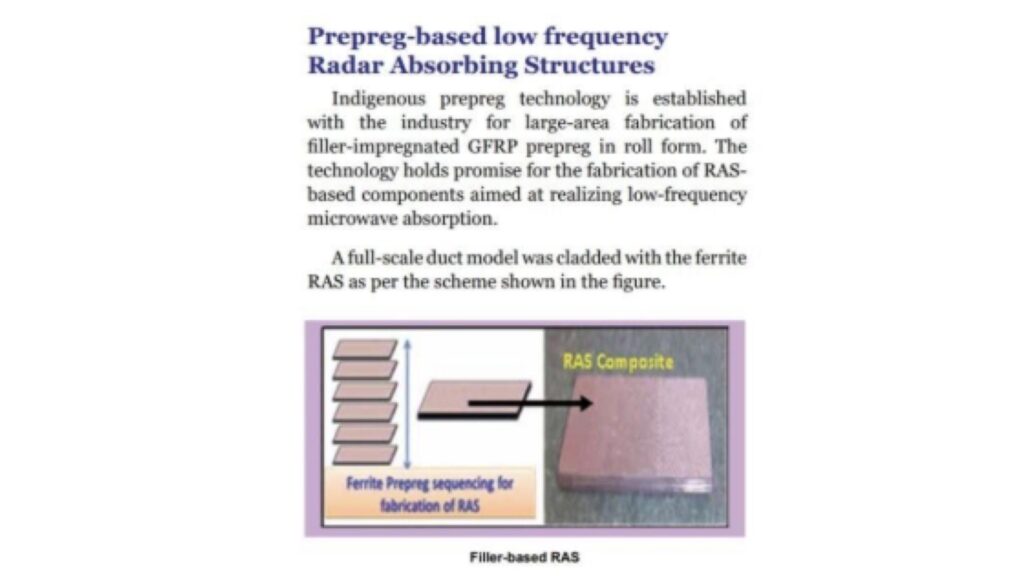
Another important stealth feature involves the use of Radar Absorbent Composite Structures (RAS). Engineers will embed stealth materials directly into the composite components of the aircraft to form a monolithic structure, which not only reduces radar reflections but also significantly lowers long-term maintenance requirements.
Among these technologies is the NiRaLa (Nirala) Absorbing Structure developed by the National Aerospace Laboratories (NAL). This indigenous technology uses an aerospace-grade multilayer epoxy-resin composite capable of absorbing 80–99% of incoming radar energy. The material provides more than 10 dB of radar cross-section reduction and can withstand temperatures up to 180°C, making it suitable for demanding aerospace environments.
The Ghatak UCAV will also incorporate Frequency Selective Surface (FSS) radomes. These structures act as band-pass filters, allowing friendly radar frequencies to pass through while absorbing or reflecting hostile radar signals. This capability further enhances the aircraft’s stealth performance without compromising its own sensor systems.
Finally, the aircraft will employ two-dimensional thrust vectoring to improve maneuverability and reduce its infrared signature. The 2D rectangular nozzles will enable tight and rapid maneuvers, including post-stall control, which can be crucial in combat situations.
To achieve this capability, DRDO and IIT Kanpur have developed Fluidic Thrust Vector Control (FTV). Instead of relying on heavy mechanical actuators, the system redirects engine exhaust by injecting secondary air often cooler air bled from the compressor into the primary exhaust flow. This technique deflects the exhaust plume and creates thrust vectoring without moving mechanical parts.
In addition to providing maneuverability, the injected secondary air forms a cooling film around the nozzle walls, lowering their temperature. The rectangular 2D nozzle design also promotes faster mixing between the hot exhaust plume and cooler ambient air, which significantly reduces the aircraft’s infrared signature and improves its survivability in contested environments.
Taken together, these aerodynamic, propulsion, and stealth technologies position the Ghatak UCAV as a highly capable unmanned strike platform that could transform India’s future air combat doctrine.

we are going to at making news and doing red tape.
This why we are far behind China.we just import and assemble.