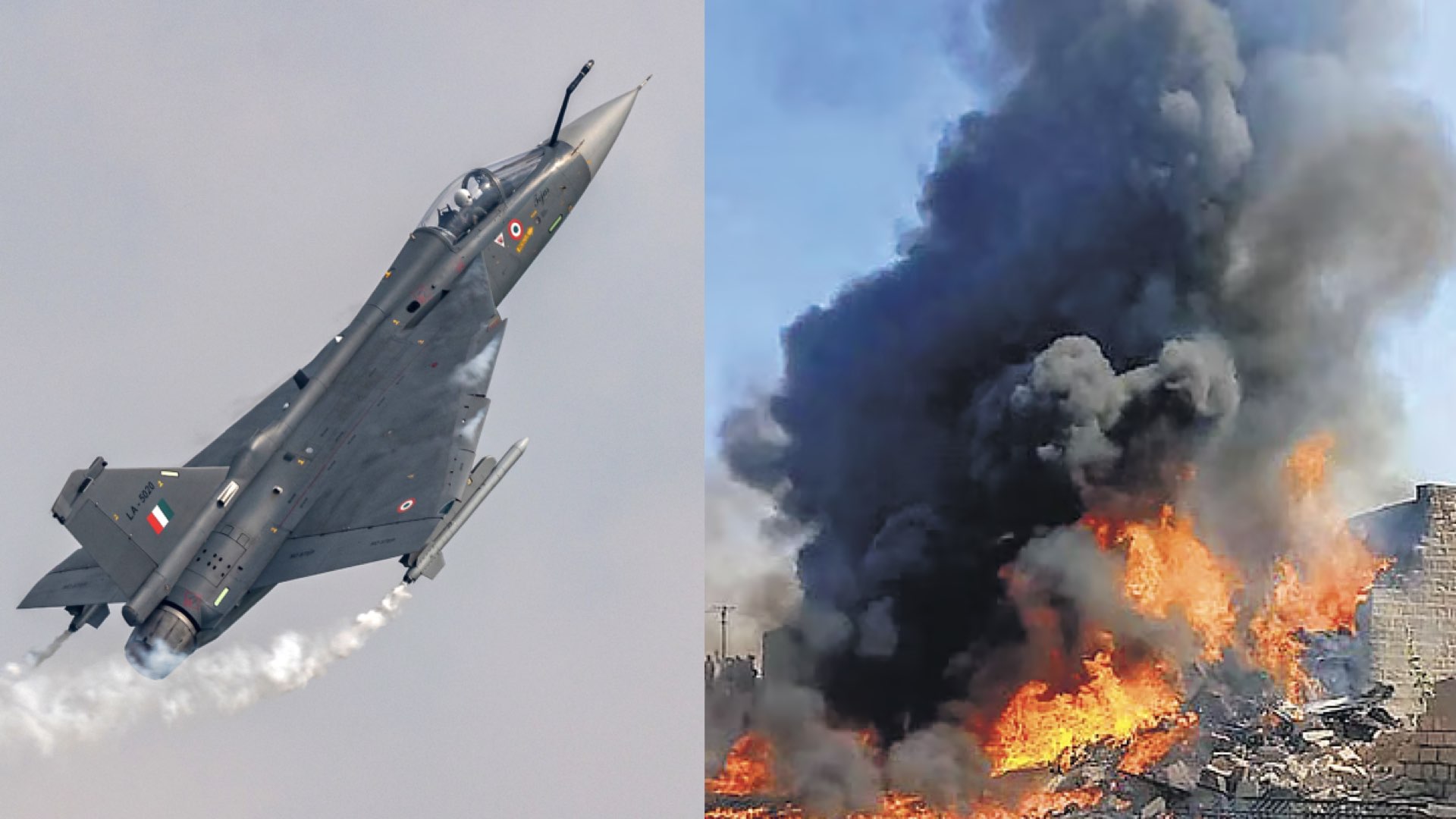
The recent Tejas aircraft crash has once again brought the Indian Air Force (IAF) and the indigenous fighter program into the spotlight. A report published by The Economic Times stated that an Indian Air Force Tejas aircraft has crashed, marking another setback for the Light Combat Aircraft (LCA) fleet. India Today further emphasised on it.
According to the report, the aircraft involved was a single-seat platform. As a precautionary measure, the Indian Air Force has initiated an intensive inspection of the entire Tejas fleet to identify the root cause of the accident. The objective is clear: isolate the actual issue, determine whether it is technical or operational in nature, and implement corrective measures if required. However, at this moment the nature of incident is not cleared.
What Happened in the Recent Tejas Crash?
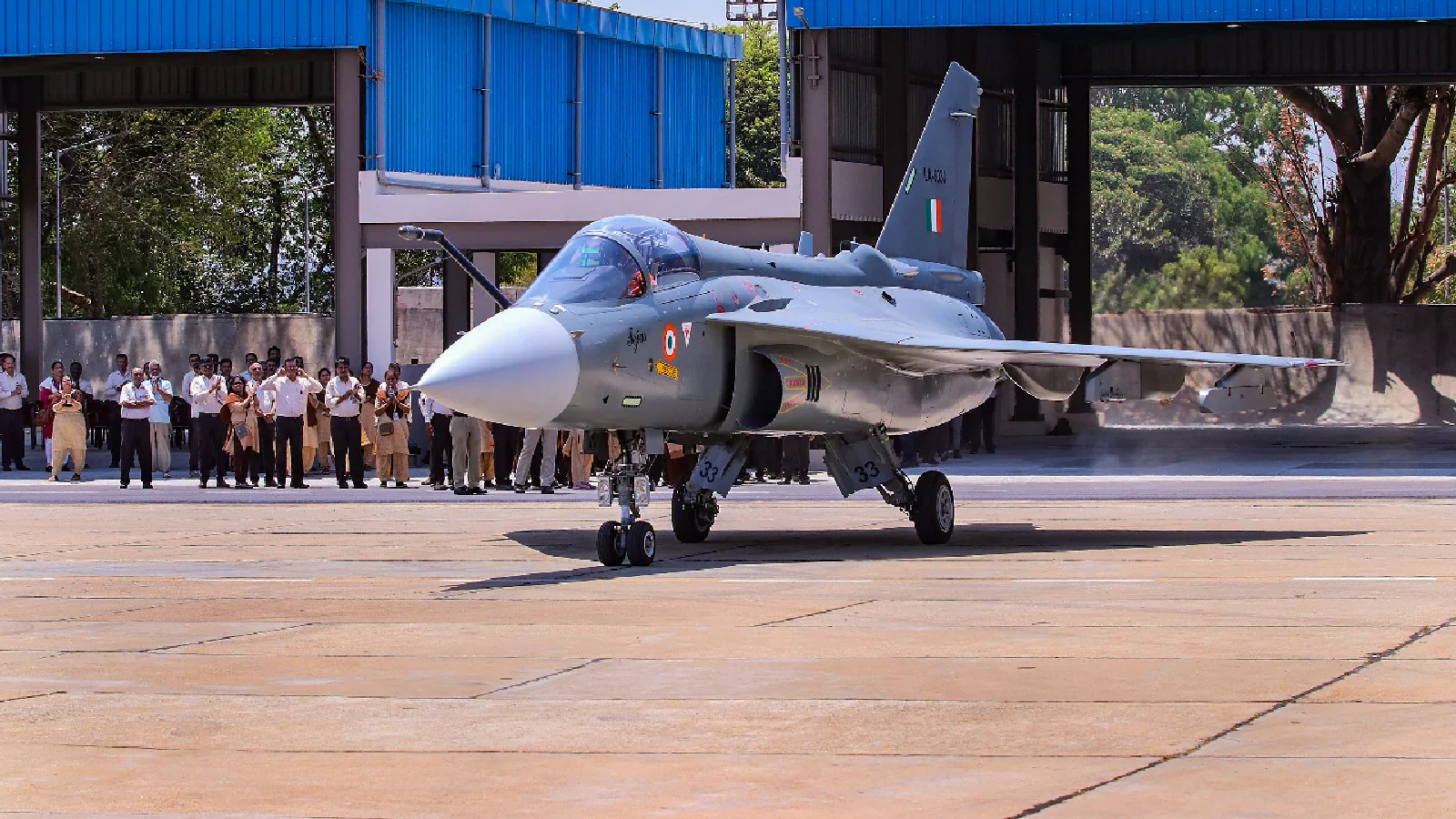
The accident reportedly occurred some time ago, though details have surfaced only recently. The aircraft involved was an LCA Tejas Mk1, which had been on a routine sortie. During its return phase, an accident occurred that severely damaged the airframe. Initial indications suggest that the airframe may not return to service.
Importantly, the pilot ejected safely and did not sustain injuries. In military aviation, pilot safety is paramount, and in this instance, the ejection system functioned as intended. However, officially neither IAF or HAL has made any statements yet.
The delay in public disclosure raises questions. Why was there no immediate official statement? Transparency in defense matters must be balanced with operational security, but timely communication also strengthens institutional credibility.
A Look at Previous Tejas Crashes
This incident is being described as the third crash involving the Tejas aircraft operated by the Indian Air Force.
- In March 2024, an LCA Tejas Mk1 crashed during a firepower demonstration exercise in Jaisalmer.
- Another tragic incident occurred during the Dubai Air Show, where a Tejas aircraft was lost and, unfortunately, the pilot did not survive.
- The latest crash reportedly occurred earlier this month, with the pilot ejecting safely.
Each of these accidents must be studied individually. Aviation, especially military aviation, is inherently complex. Every crash investigation requires technical precision and institutional honesty.
Why the Fleet-Wide Review Matters
Following the recent Tejas aircraft crash, the Indian Air Force has initiated an extensive fleet-wide safety check. This step goes beyond the routine Court of Inquiry that typically follows an accident.
The rationale is straightforward. If the issue is technical and systemic, it must be identified across all aircraft. If it is a one-off anomaly, that too must be conclusively established. Such precautionary action reflects institutional maturity.
Aviation systems are intricate combinations of aerodynamics, propulsion, avionics, software integration, and human-machine interaction. In defense aviation, these complexities are amplified due to mission profiles, weapon integration, and high-performance envelopes.
Therefore, a structured investigation must answer three key questions:
- Was the cause technical or human error?
- If technical, is the issue repeatable?
- If repeatable, what corrective action is necessary?
Until the investigation concludes, speculation would be irresponsible.
The Tejas Program Under Pressure
The Tejas program is currently under significant pressure. The Indian Air Force has already committed to approximately 220 aircraft across variants. This clearly demonstrates that the service remains invested in the platform.
At this stage, it would be incorrect to question the Air Force’s commitment to the aircraft. A total order of 220 jets is “yelling evidence” of commitment. Thus, program credibility depends on transparent investigations, timely rectification, and continuous improvement.
Defense aviation ecosystems evolve through iterative learning. Every mature aerospace program globally has faced setbacks during development and induction phases. The real measure of strength lies not in the absence of problems, but in the ability to diagnose and fix them decisively. Howver, before that it is important to identify if the problem was “technical”.
The Need for Evidence-Based Analysis
At present, there is no publicly available footage, technical report, or official breakdown of the incident. Without verified data, any definitive conclusion would be premature.
However, if these reports are confirmed, then:
- One Tejas aircraft has been lost.
- The airframe is unlikely to be recovered for operational service.
- The pilot survived.
- A fleet-wide review is underway.
Once the official investigation report is made public, a deeper technical assessment can be undertaken. Until then, restraint is necessary.
Caution Over Speculation
Aviation accidents demand seriousness, not sensationalism. The Indian Air Force’s decision to conduct an intensive review of the Tejas fleet reflects caution and institutional responsibility.
Military aviation is unforgiving. Errors whether technical or human must be addressed with precision. The outcome of this investigation will determine whether the issue was isolated or systemic.
For now, the focus must remain on facts, not conjecture.
The Tejas program remains a cornerstone of India’s indigenous defense manufacturing ambitions. Its long-term success will depend on engineering rigor, operational transparency, and sustained institutional accountability.