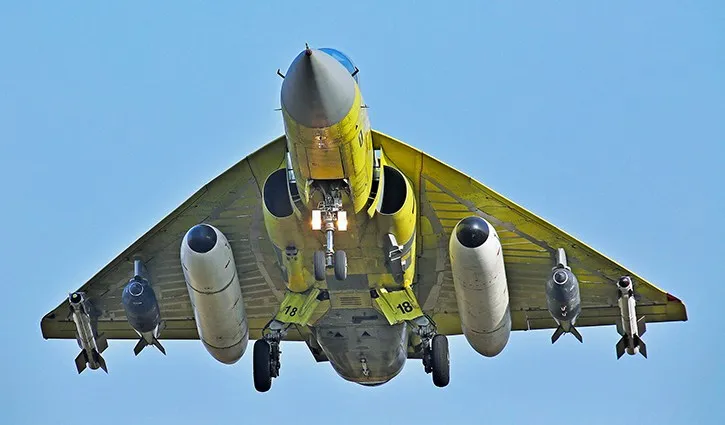
From Tejas Mk1A Delays to AMCA Speculation, Multiple Fault Lines Are Converging
Hindustan Aeronautics Limited (HAL) is facing an unusual convergence of pressures. On one side, the Indian Air Force (IAF) has decided to conduct a comprehensive review before accepting the first five LCA Tejas Mk1A aircraft. On the other, market chatter suggesting that HAL is being sidelined in the AMCA programme has begun to impact investor confidence and stock performance.
Individually, each issue is manageable. Taken together and timed dangerously close to financial year closures, they explain the visible anxiety within HAL’s ecosystem.
First, Let’s Revisit What the Tejas Mk1A Delivery Plan Assumed
HAL and the IAF signed the 83-aircraft Tejas Mk1A contract in February 2021. At that time, both sides aligned on a simple execution logic:
- HAL would begin deliveries by 31 March 2024
- The first 5 aircraft would be delivered and accepted in FY 2024–25
- Production would then ramp up steadily
Based on this assumption, HAL structured:
- Vendor contracts
- Cash-flow projections
- Inventory planning
- Financial guidance to markets
However, this baseline collapsed when engine availability, configuration freezes, and certification alignment slipped.
Tejas Mk1A : As a Result, Deliveries Slid and So Did Financial Certainty
By the end of FY 2024–25:
- HAL delivered zero Mk1A aircraft
- HAL booked zero Mk1A revenue
- Aircraft and subsystems accumulated as work-in-progress and inventory
Now, HAL proposes to deliver five aircraft by March 2026. However, the IAF has made it clear that it wants a full-spectrum technical and readiness review before accepting any aircraft.
Technically, this approach is defensible. Financially, it puts HAL under acute strain.
Why the IAF Review Hits HAL at the Worst Possible Time
First, acceptance governs revenue, not readiness
HAL can only recognise revenue when the IAF formally accepts an aircraft. Until that moment:
- No sales get booked
- No milestone payments unlock
- No relief reaches the balance sheet
Therefore, if acceptance slips beyond 31 March 2026, HAL risks losing a second consecutive financial year of Mk1A revenue.
Meanwhile, inventory keeps growing
While the IAF reviews readiness:
- HAL continues assembly
- Vendors continue deliveries
- Aircraft sit as high-value inventory
Consequently, HAL’s working capital remains locked, auditors raise questions, and MoD finance demands explanations.
Next Comes the Silent Crisis: Vendor Cashflow
At the same time, Tier-2 and Tier-3 suppliers keep invoicing HAL. These suppliers operate on:
- 30–45 day credit cycles
- Tight banking limits
- Thin margins
When HAL delays payments due to cash constraints:
- Interest clauses activate
- MSME Act penalties apply
- Vendors absorb bank interest
Eventually, vendors recover these costs by raising future prices or deprioritising HAL orders, which only worsens delivery timelines.
Thus, a delivery delay becomes a supply-chain risk multiplier.
Now Add the AMCA Narrative and Market Sentiment Turns Nervous
Against this fragile backdrop, reports suggesting that HAL may not be the lead integrator or dominant production agency for AMCA have unsettled investors.
Regardless of the technical truth, perception matters.
Markets read the situation this way:
- Mk1A deliveries remain uncertain
- Cash flows look stressed
- Vendors show strain
- And now, HAL’s long-term role in India’s flagship 5th-gen programme appears unclear
As a result, HAL’s stock price has come under pressure, not because of one bad quarter, but because of strategic uncertainty.
Why These Two Issues Reinforce Each Other
The Mk1A delay weakens confidence in execution.
The AMCA narrative weakens confidence in future relevance.
Together, they create a loop:
- Delays hurt financials
- Financial stress hurts market confidence
- Market pressure limits strategic flexibility
- Strategic uncertainty feeds more speculation
This is why HAL appears unusually eager to achieve even a single Mk1A acceptance, it would break that loop.
Importantly, This Is Not an HAL vs IAF Story
The IAF is right to demand:
- Stable configurations
- Engine availability certainty
- Long-term maintainability
HAL is also justified in worrying about:
- Cash-flow compression
- Interest accumulation
- Vendor fatigue
- Investor confidence
The real issue lies in the structural mismatch between defence acquisition timelines, PSU accounting rules, and supply-chain economics.
Anxiety Rooted in Timing, Not Panic
HAL’s anxiety around the IAF’s comprehensive review does not stem from five aircraft alone. It stems from:
- Two disrupted financial cycles
- A stressed vendor ecosystem
- Rising interest costs
- And growing ambiguity around future flagship programmes like AMCA
Until Mk1A acceptance restarts and AMCA clarity emerges, HAL remains trapped between operational reality and financial optics.
In today’s defence-industrial environment, that gap matters as much as aircraft performance.
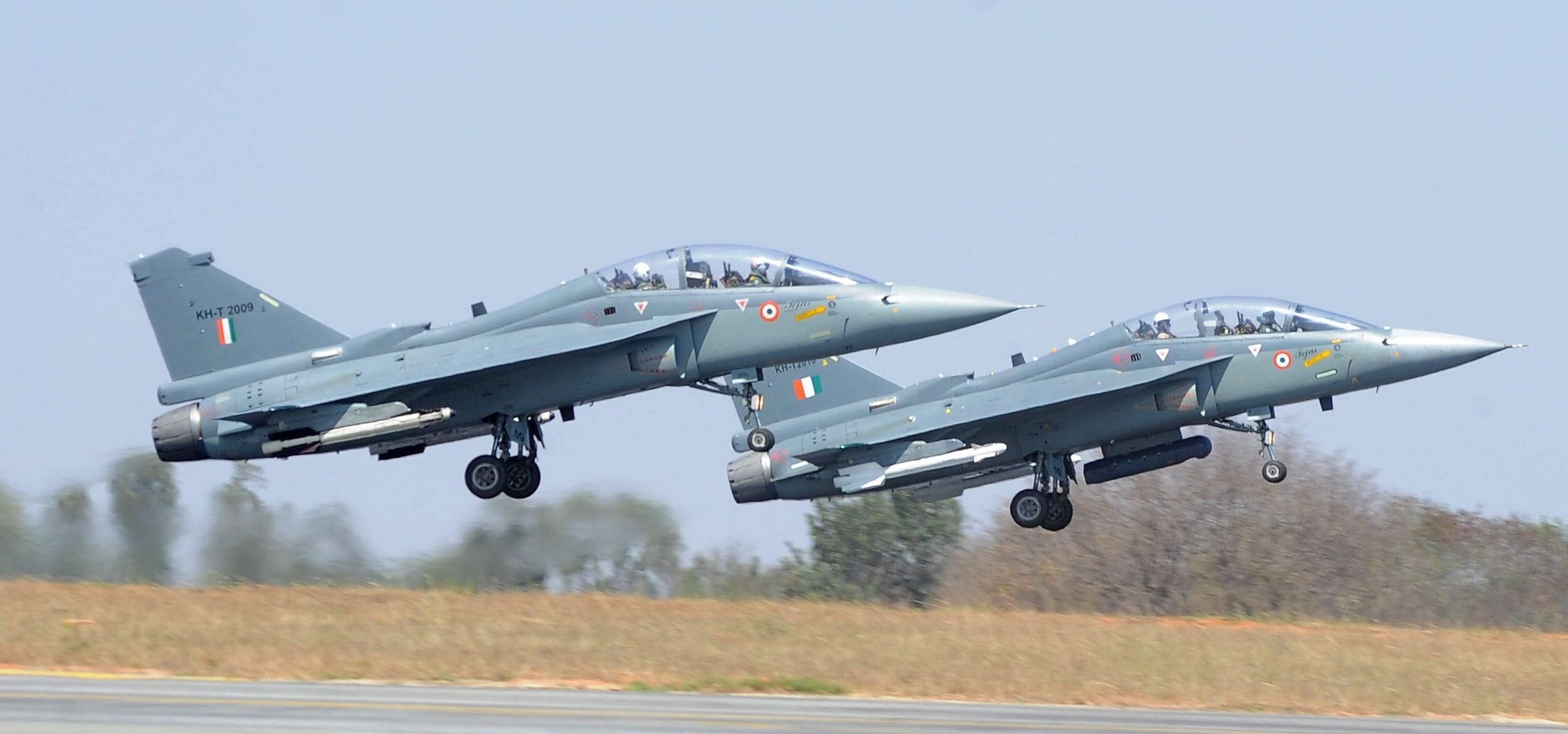
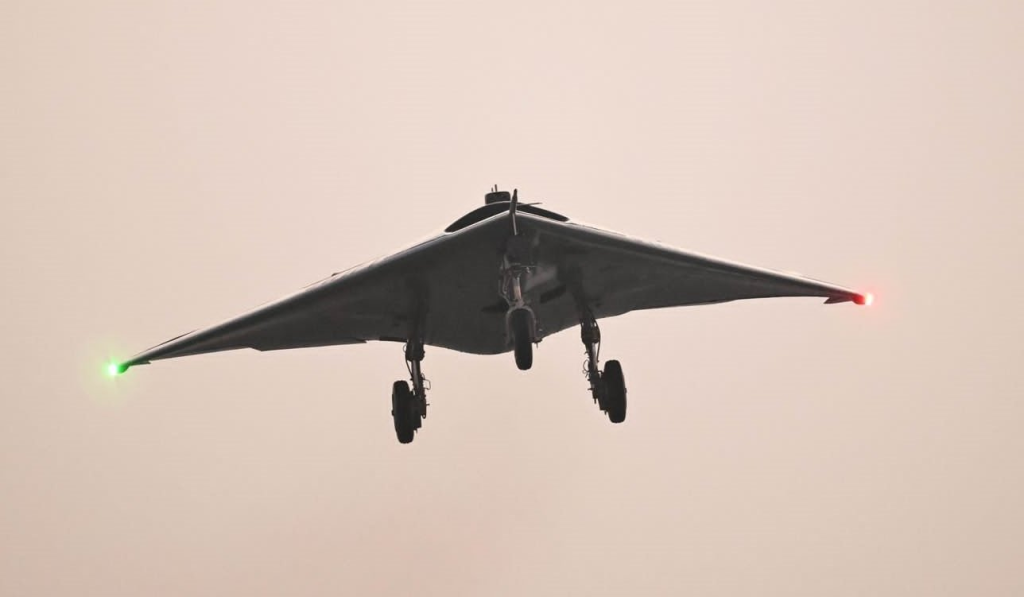

I simply dont understand the noise that is being made by the delay of engines. A simple question that I have been asking several times but do notget an answer.
What due diligence was done before HAL placed order for engines?
When an order is placed lots of factrors are taken into consideration as its a major contract valued at millions & more importantly directly linked to the countries defense requirements. GE says that production line of 404 was closed down & that affected the entire related supply chain. Wasnt GE aware of this when the contracts were signed? If they did why did they agree to the delivery timelines in the order?
Did HAL carry out all the checks before signing the contract? DId they sign blindly without checking if the delivery timelines were realistic? Or are we to understand that HAL & GE blindly entered into a contract ignoring all these factors.
Engine choice was ADA, GoI in consultation with all other stakeholders. Plus, no other engine was certified for Single engine fighter (RD33 Kept aside).
My father was working in HAL. This is not first HAL is facing Engine problem, and Tejas is not the first plane HAL it is making .
24Marut was the first fighter HAL made in 1961, this was asian fighter to go beyond testing phase.
It fought 1971 war where it shoot most advance Pak plane Sabre. It notably participate in Battle of Longewala (On this Battle,1st Border film was made ). It was never loss in air to air combat, altough 3 plane was lost to ground fire. Even Marut had engine issue it’s engine was heavier so it was difficult for it time to lift after attacking on ground so it was shoot down. HAL should soon solve engine problem for Teja as it is one of most compact plane of world. and it is flying machine with best safety record with 2 crash in 40yrs.
In complete article no question is raised on why HAL is struggling to fix “design” issues and why “certification” and “integration” of system is still pending, while this should have been done 2 years ago, HAL has done this to itself, IAF has no role to play apart from constant support and even giving additional 97 orders to HAL.
IAF also should freeze the specs and follow it religiously.
IAF upgraded it specification of Tejas more than 3 times till date.
GOI should not ahy away it’s responsibility in making mess in engine selection.
National defence must remain above politics because national security is paramount; instead, the focus should be on identifying reasons for delays in production and procurement, eliminating bottlenecks in the selection process, strictly ensuring quality in the final product, and prioritizing strong R&D infrastructure for long-term self-reliance and preparedness.
in this entire episode, we are forgetting the crucial role ADA has to play. They are assuming All Play & No work, allowing HAL to be lambasted. It is the responsibility of ADA to provide complete solutions to all avionics, fly by wire, airframe related to lightning tests, Maintainability etc. Significant concessions on Mk1A, Flight testing is also with ADA. EW Systems indigenous , AESA indigenous is also ADA. HAL was forced to fit Israeli systems because ADA failed to coordinate with DARE/ LRDE to provide indigenous solutions.
PSU work ethics is the main issue, where 10 workers do a job which is easily completed by about 3 in private sector. worst, there is hardly any accountability for the PSU’S, neither quality or time based evaluation of various deliverables. PSU’S are like ever hungry greedy children with a very weak digestive system, in view of this, atleast 90% manufacturing should be the job of private sector and HAL and all other related PSU’S should stick to design and research only
I agree it is not only work ethics but also the recruitment ethics for staff and management in PSU,s. In late 70’s I was recruited through Campus recruitment while still in final year of engineering in IIT by a Banglore based Premium PSU as one of t6 Management trainee. While undergoing training we were introduced to the HR head of the PSU. I found him a very young swaive top management leader, and so the curiosity emerged to know more about him and his education qualifications. To our surprise what emerged that he was in his mind twenties and was holding a simple Bachelor of Arts degree and was directly recruited as HR head by CMD. He had no previous working experience or Management exposure, no special degree or apprenticeship, Further enquiries revealed that the person was the son of ruling member of Parliament of erstwhile Congress Government.
This culture of treating PSU’s as their backyard job provider by political class is the main bain of PSU’s style of working. The top management is all political appointees and are devoid of vision and foresight. Their jobs are all secured and they have to prove nothing except their loyalty to ruling Government, we should not have much expectations from such PSU’s leaders.