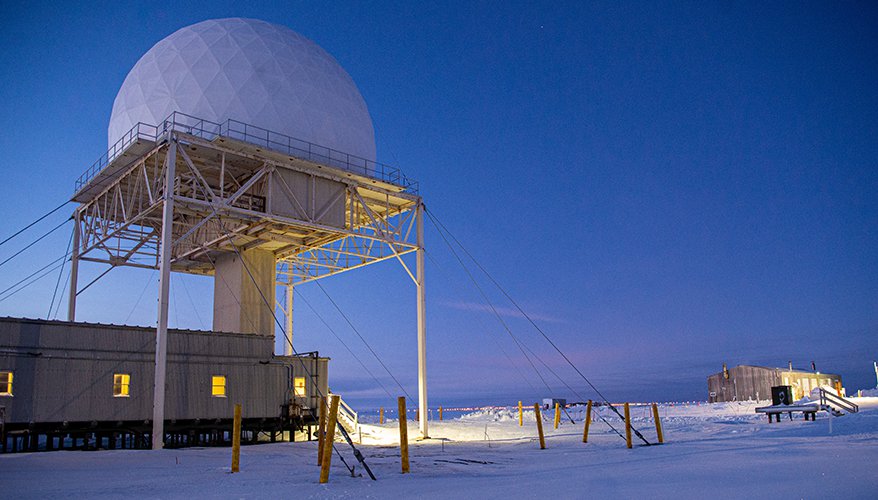
India appears to be laying the groundwork for a new radar and sensor site dedicated to next-generation ballistic missile tracking, marking a quiet but significant evolution in the country’s strategic early-warning and missile defence architecture. While official documents and public disclosures avoid operational details as they should the direction of travel is unmistakable.
At the heart of this effort is India’s push to strengthen long-range detection, tracking, and discrimination of ballistic missile threats, particularly as regional missile capabilities continue to advance in range, speed, and counter-measure sophistication.
Role of Advanced Long-Range Sensors
The Defence Research and Development Organisation (DRDO), through its specialised laboratories such as IRDE, has been working for years on long-range sensors designed for ballistic missile detection and tracking. These sensors are not conventional air-surveillance radars. Instead, they are optimised to:
- Detect ballistic missiles at extreme ranges
- Track high-velocity targets during boost and mid-course phases
- Provide precise data for interceptor cueing and engagement
- Support layered missile defence systems
Such systems are foundational for any credible Ballistic Missile Defence (BMD) or strategic early-warning framework.
A New Site, Distinct from Existing Installations
What makes this development noteworthy is that it is distinct from India’s existing missile tracking and radar infrastructure that observers commonly associate with the western seaboard and maritime approaches.
This new effort points to a separate radar and sensor facility being developed in southern India, designed to complement not duplicate existing coverage. The logic is clear:
- Broader angular coverage of missile trajectories
- Redundancy and survivability of early-warning assets
- Improved tracking geometry for long-range ballistic targets
- Likely linked to DRDO’s BMD Phase II
From a systems-engineering perspective, distributed radar sites dramatically improve tracking accuracy and interception probability, especially against long-range or manoeuvring ballistic threats.
Why Location Details Don’t Matter, Capability Does ?
In line with Alpha Defence’s editorial policy, specific geographic coordinates, site names, or operational layouts are neither discussed nor required to understand the strategic implication. What matters is the capability being built, not the pin on the map.
Strategic sensor sites are designed to operate as part of a networked national system, feeding data into command-and-control nodes and interceptor units. Their effectiveness depends far more on sensor performance, data fusion, and response timelines than on public knowledge of their location.
Strategic Context: Preparing for the Next Threat Envelope
This development should be seen in the context of:
- Rapid evolution of regional ballistic missile forces
- Emergence of longer-range and higher-speed missile systems
- Increased emphasis on missile defence, early warning, and deterrence stability
India’s approach suggests a measured, capability-driven expansion, rather than reactive or symbolic infrastructure building. By investing in advanced sensors first, India strengthens the backbone upon which future missile defence layers will rest.
The Bigger Picture
Taken together, the move indicates that India is quietly but steadily transitioning toward a more mature, resilient missile tracking and early-warning ecosystem. These are not headline-grabbing programs—but they are the kind that fundamentally alter strategic balance over time.
As with most credible strategic systems, silence and ambiguity are features, not flaws.