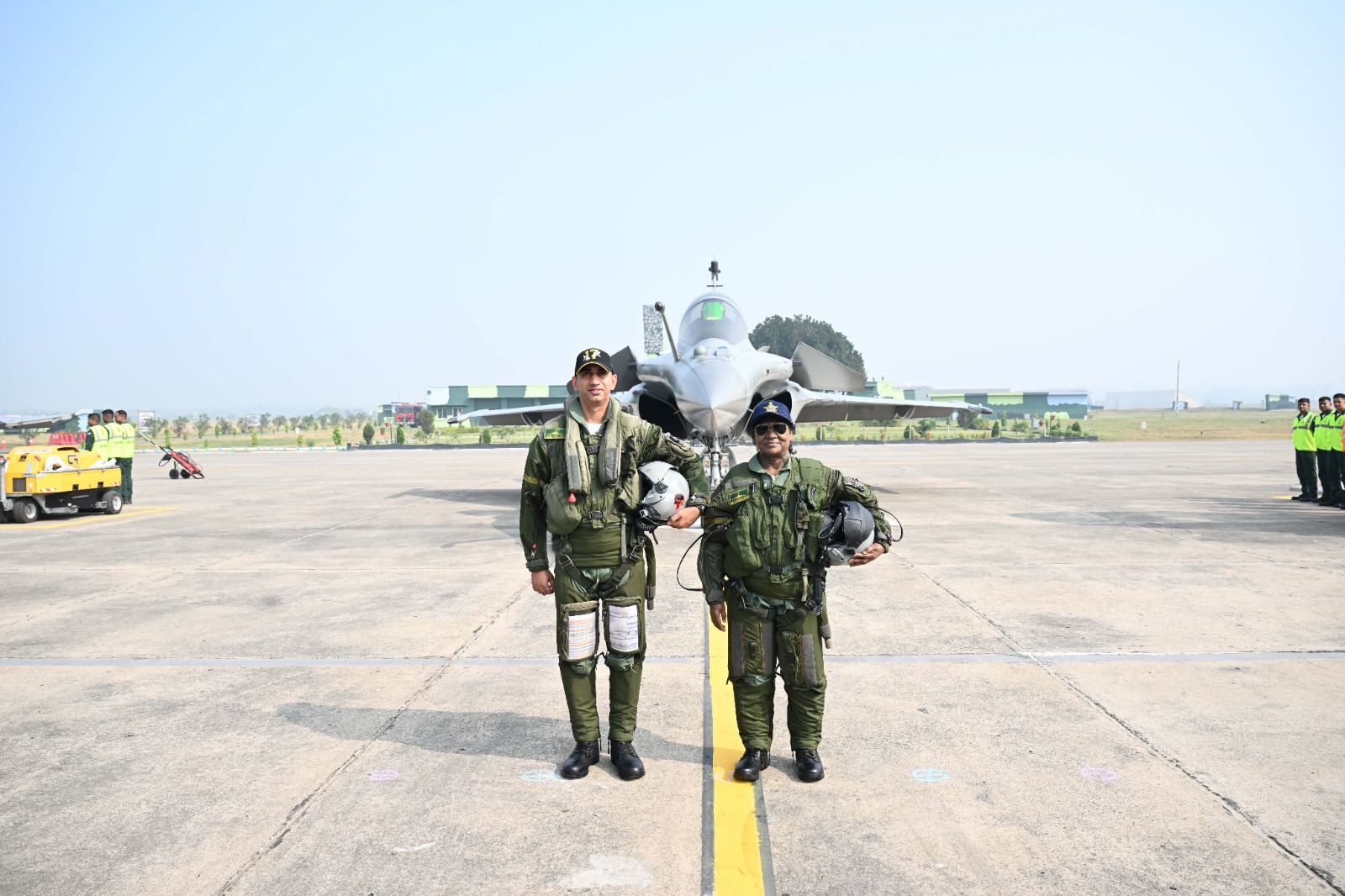
Understanding the Rafale Debate Clearly
India has witnessed an intense debate over the acquisition of Rafale fighter jets for the Indian Air Force. Supporters and critics often argue from opposite extremes. However, real strategic clarity always lies between these two ends. To understand the issue properly, both positions must be examined carefully.
Extreme One: Rafale Will Instantly Fix IAF’s Problems
One extreme claims that acquiring 114 Rafale fighter jets will immediately solve the Indian Air Force’s crisis. According to this view, squadron strength will suddenly stabilize. Cost, they argue, becomes irrelevant when national security is involved (even 35 billion). At first glance, this argument appears logical. However, defence planning never delivers instant results. Military acquisitions show real outcomes only after five to ten years.
Beyond Rafale & The Ground Reality of IAF Squadron Strength
On paper, the Indian Air Force appears to have around 36 squadrons. In reality, the number is significantly lower. Currently, the IAF operates around 15 squadrons of Su-30MKI, two squadrons of Rafale, a limited number of Tejas squadrons, and several legacy aircraft. Practically, only about 19 squadrons remain fully combat-capable today. Many argue that upgraded MiG and Mirage jets still exist. However, these aircraft are aging platforms. Their operational status beyond the next five years remains uncertain.
Indigenous Programs: Progress, But Not Immediate Relief
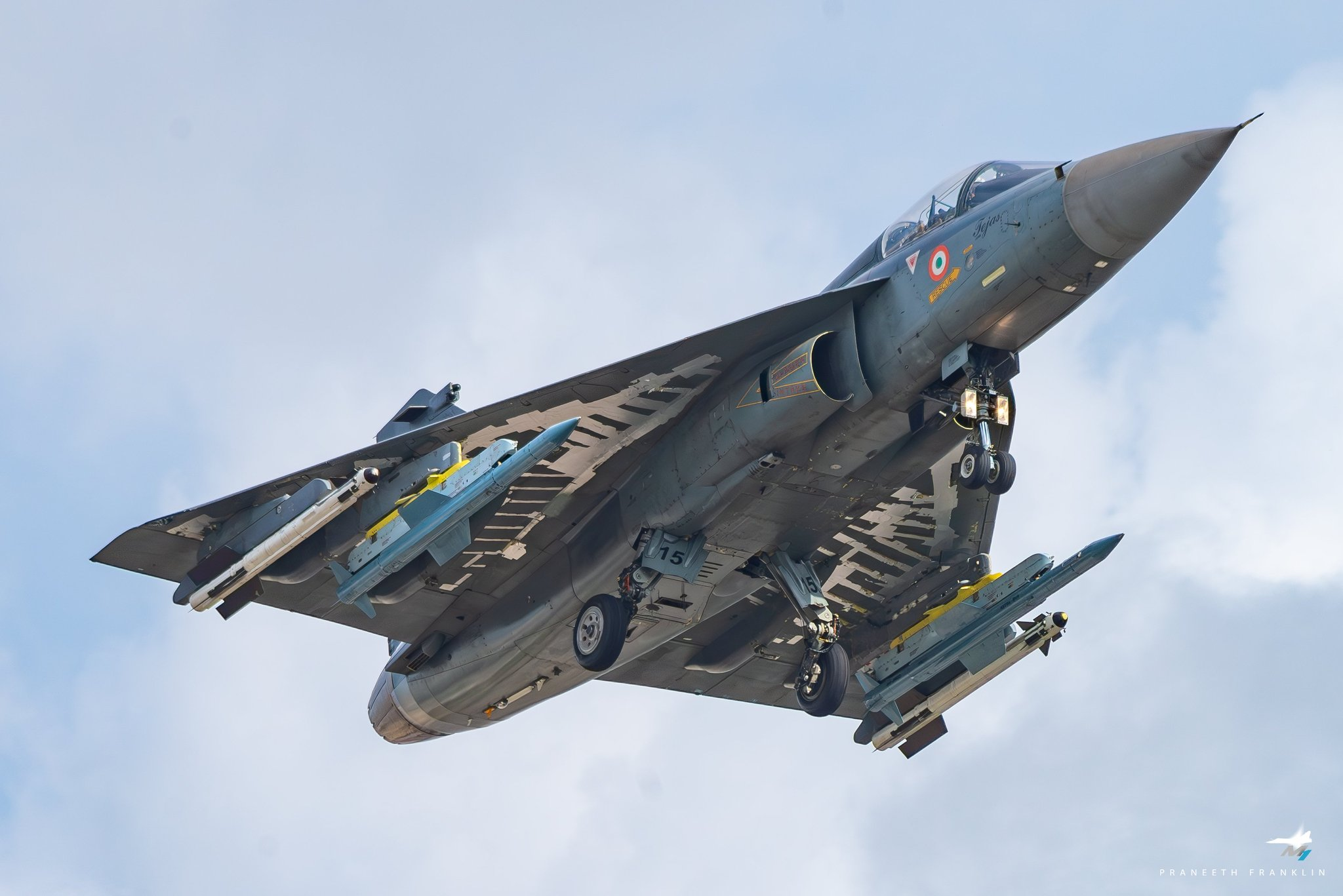
India has placed strong hopes on indigenous fighter programs. LCA Tejas Mk1 production has begun, but deliveries are yet to stabilize. Meanwhile, LCA Tejas Mk2 is expected to make its first flight soon. Even if that happens, full-scale production will take at least five more years. This timeline creates a serious gap. The Indian Air Force needs new fighter jets urgently. Indigenous solutions alone cannot meet this requirement immediately.
Why Immediate Imports Are Being Justified
Supporters of the Rafale deal emphasize urgency. They argue that faster deliveries will quickly rebuild squadron strength. India faces an unpredictable security environment. Tensions with Pakistan can escalate at any time. However, fighter jets are complex weapon systems. They cannot be ordered today and delivered tomorrow.
Rafale Delivery Timeline: The Often-Ignored Reality
If India signs a deal for 114 Rafale jets today, delivery will still take time. The first 18 aircraft will arrive in flyaway condition. These deliveries will stretch over nearly four years. The remaining aircraft are planned to be assembled in India. Even then, indigenous content will remain around 30 percent and grow upto 50-60% at later stages. Under this timeline, the first India-assembled Rafale would arrive around 2033. Annual production would likely remain between 12 to 14 aircraft. By 2035, only 30 to 40 jets may be operational.
Capability and Upgrade Limitations
The Rafale jets delivered will meet the originally promised standard. This ensures no dilution or addition of capability for the Indian Air Force, just number addition. However, future upgrades to F5 standards will cost extra. Until then, these aircraft will not integrate indigenous weapon systems. This limitation reduces operational flexibility in the short term.
The Bigger Problem: Decision Paralysis
Once both extremes are understood, the core issue becomes clear. The Indian Air Force undeniably needs new fighter jets. The problem is not Rafale alone. India lost valuable time due to delayed decisions. Indigenous programs also suffered from slow approvals and uncertainty. As a result, India now faces a capability gap with no quick fix.
The Hard Truth About Timelines
Neither imported nor indigenous fighter jets will reach full-scale production before 2035. This reality leaves the Indian Air Force in a difficult position today. An out-of-the-box solution is necessary. Incremental steps will not solve the crisis. However someone will have to lead this and drive a proper vision around the situation.
Why a Mixed Approach Is Unavoidable
Media discussions often present two competing solutions. In reality, neither works alone, now because we have let the ship sail. India must import fighters to stabilize squadron numbers quickly “However no imported option is available today (Quickly)” and accelerate indigenous programs aggressively (engine dependency on US). Given the severity, India may need to import over 100 fighters anyways so focus should be over what india gets in return. Engine Tech ? ability to snap Indian weapons ? hybrid F5 (more on this in next article)
The Real Question: Accountability
The most important question remains unanswered. Who is responsible for this prolonged delay in decision-making? Accountability must be clearly established. Without it, the same mistakes will repeat.
Strategy Over Emotion
The Rafale debate should move beyond emotion and political extremes. India needs realism, speed, and accountability. Only a balanced, decisive approach can restore the Indian Air Force’s combat strength. National security demands nothing less. The question on Rafale should be more focused on Indigenous content (not the gimmick – more on that in next few planned articles) , access to the technology and most importantly sovereignty over source codes and Indian weapon integration.
You are correct but u bit exaggerated the claim that only 30-40 rafales would be operational till 2035.
-> Firstly the French papers are saying that the 24 f5 will completely come in fly away condition from France. They can be quickly operational.
SOURCE – https://www.avionslegendaires.net/2026/01/actu/le-super-contrat-rafale-f4-f5-signe-avec-linde-le-mois-prochain/
– About the backlogs of Dassault for local and export orders of pending 245+ orders is that , They are going to ramp up production capacity form 26/year to 36 in 2027 and 48/year in 2030. I have dug deep on this issue, and one thing i can say that THIS has become national priority for France, Dassault CEO and MACRON has said this openly.
Source- 1)https://www.aerotime.aero/articles/dassault-rafale-output-lags-demand-2025-deliveries?utm_source
2) http://defensemirror.com/news/40338/Dassault_to_Produce_4_Rafales_Per_Month_as_Backlog_Reaches_233_Aircraft?utm_source
3)https://www.armyrecognition.com/news/aerospace-news/2025/france-could-open-a-new-rafale-fighter-jet-assembly-line-in-india-to-fulfill-large-scale-contracts?utm_source
–So delivery will be completed 2031-32 or hardly 2033 1st quarter. And it will be quickly operational.
–>Secondly about the 90 f4s(made in India) , you said that only 12-14 jets will be delivered, but the dral facility in nasik and the tasl facilty in Hyderabad will be equipped to make 24 platforms a year.
So 2026 (contract signing) –> 2029-30 production starts with 12-16 but it will be ramped up to 24/year from 2033 onwards.
-Source 1) https://myind.net/Home/viewArticle/nagpur-to-become-indias-first-full-rafale-jet-assembly-hub?utm_source=
2)https://www.opindia.com/2026/01/india-planning-to-expand-its-fighter-squadron-by-inking-a-deal-with-france-for-the-induction-of-114-rafale-jets/?utm_source
—->What I access that around 60-75 aircrafts will be operational in 2nd-3rd quarter of 2035.
I have been following you for more than 7 years on youtube and I have learned alot from you but one thing I noticed that you have been always pessimistic about this rafale deal since the beginning and this claim that ” only 30 jets would be operational till 2035″ shows ur level of pessimism.
I also wanted 200+ INDIAN made super sukhoi for this deal because we had that ecosystem deal but rafale is the reality. I know its not the 10/10 deal but not as bad as you are portraying this. I m not a copy-paste guy, I have given all the sources which are
credible.
In that case why “Navy” is getting their first jet in 2029 ? they are getting all flyaway 🙂
Hope u read this..
hope u read this
we do