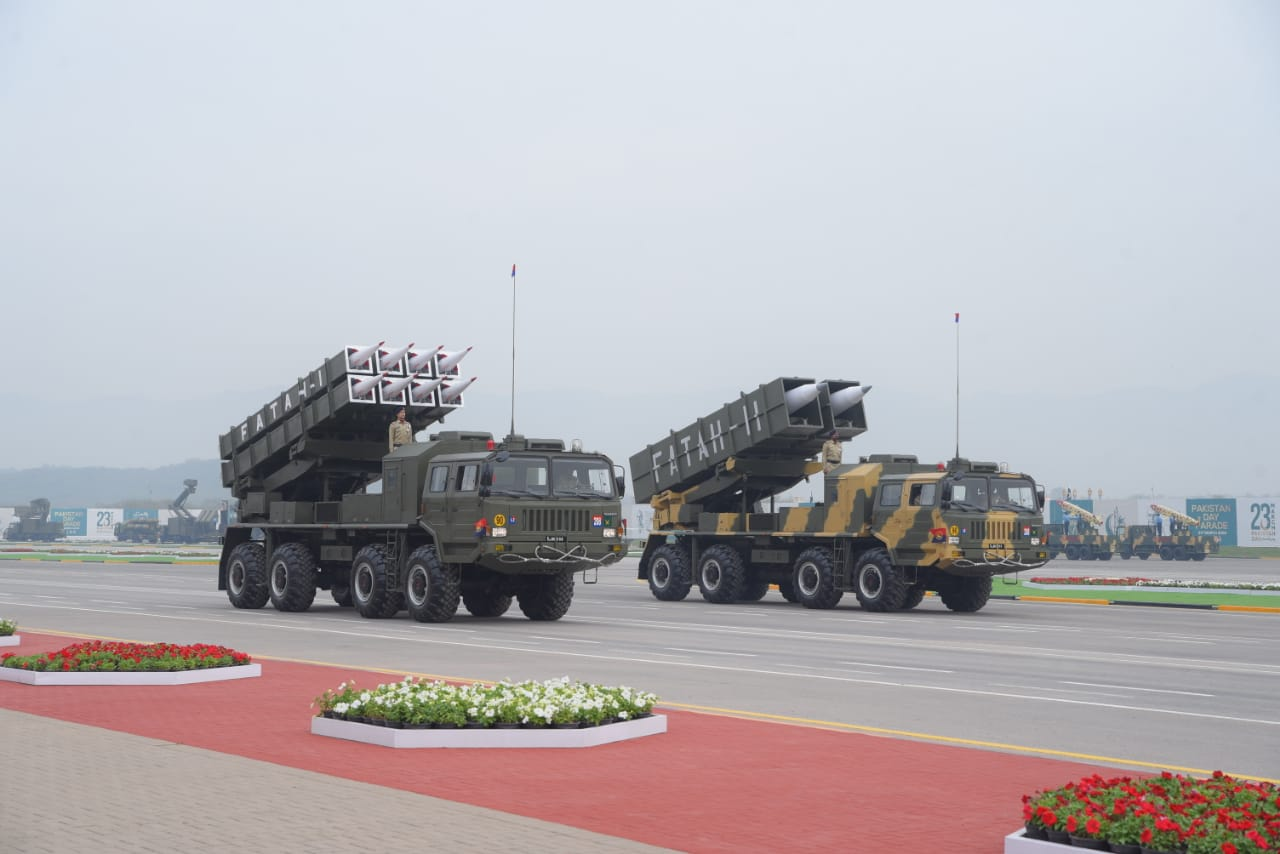
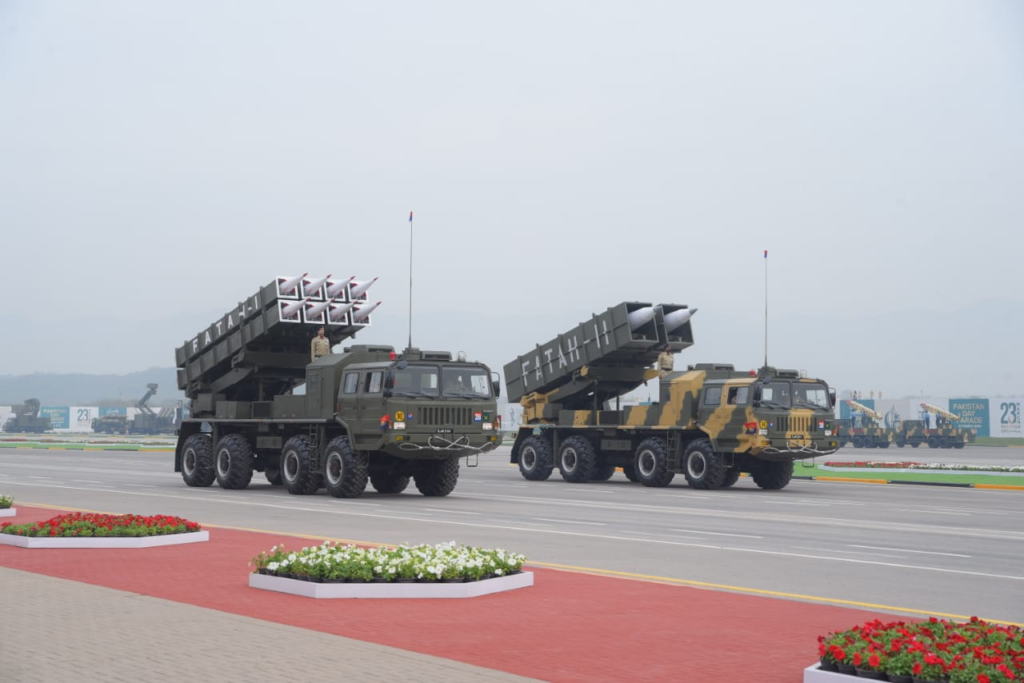
India’s contemporary long-range strike posture must begin with the interception of Pakistan’s Fateh-2 rocket over Sirsa during Operation Sindoor. That interception confirmed Pakistan’s intent to operationally employ long-range guided rockets against India. Although Indian air and missile defences neutralised the threat, the episode exposed a critical escalation layer. Long-range rockets now operate between artillery and ballistic missiles, thereby demanding proportionate counters.
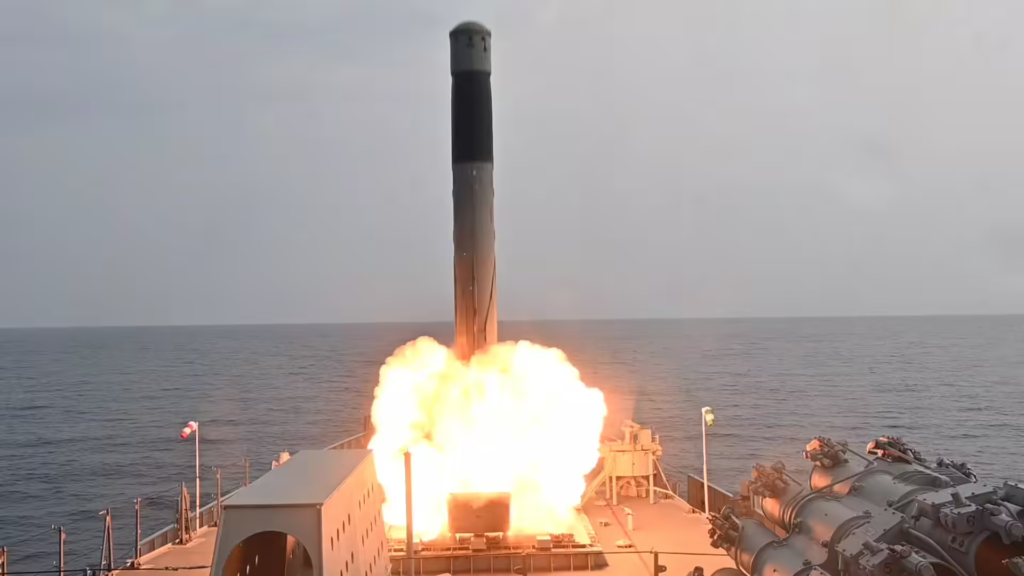
India responded with precision BrahMos strikes that inflicted severe damage inside Pakistan. Those strikes reasserted escalation dominance and deterrence credibility. However, this response also highlighted an inherent limitation. BrahMos remains an inefficient answer to rocket artillery threats. Its high unit cost restricts sustained employment. Moreover, its potential nuclear warhead compatibility embeds every launch within a strategic escalation framework. Therefore, BrahMos functions best as a punitive deterrent, not a routine counter-fire weapon.
Consequently, India requires a conventional, land-based deep-strike capability that remains below strategic thresholds. Ground forces cannot rely exclusively on air power for retaliation against rocket-based escalation. Pakistan’s Fateh-2 and China’s long-range guided rocket artillery reinforce this requirement. Both adversaries exploit systems that offer range, precision, and deniability without triggering missile-level responses.
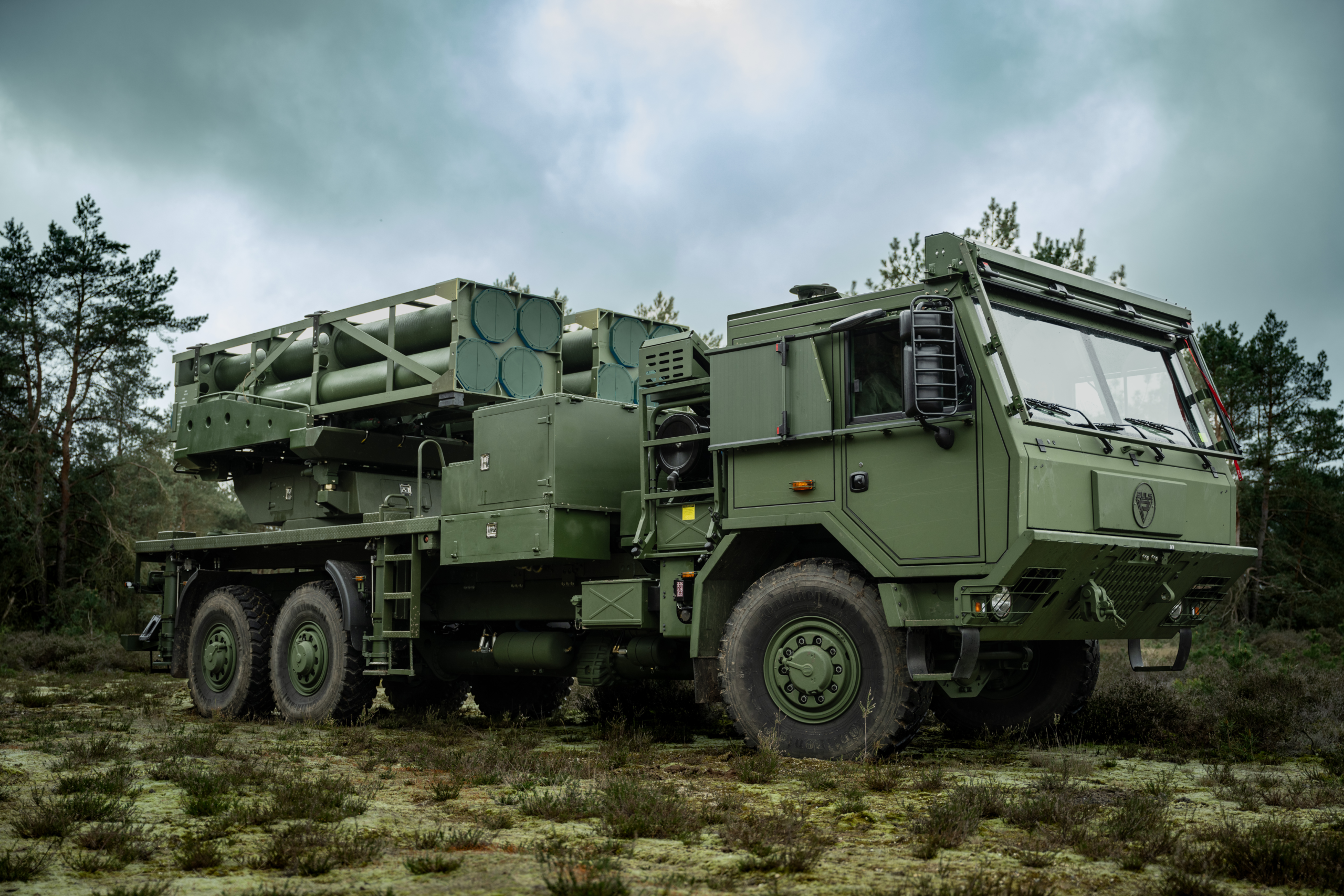
Against this backdrop, India’s move toward long-range rocket artillery parity becomes strategically logical. Universal rocket launcher systems offer a scalable solution. These platforms support multiple calibres from a single vehicle. As a result, commanders gain flexibility across tactical and operational missions. Such systems also enable rapid dispersion and survivability under counter-fire conditions.
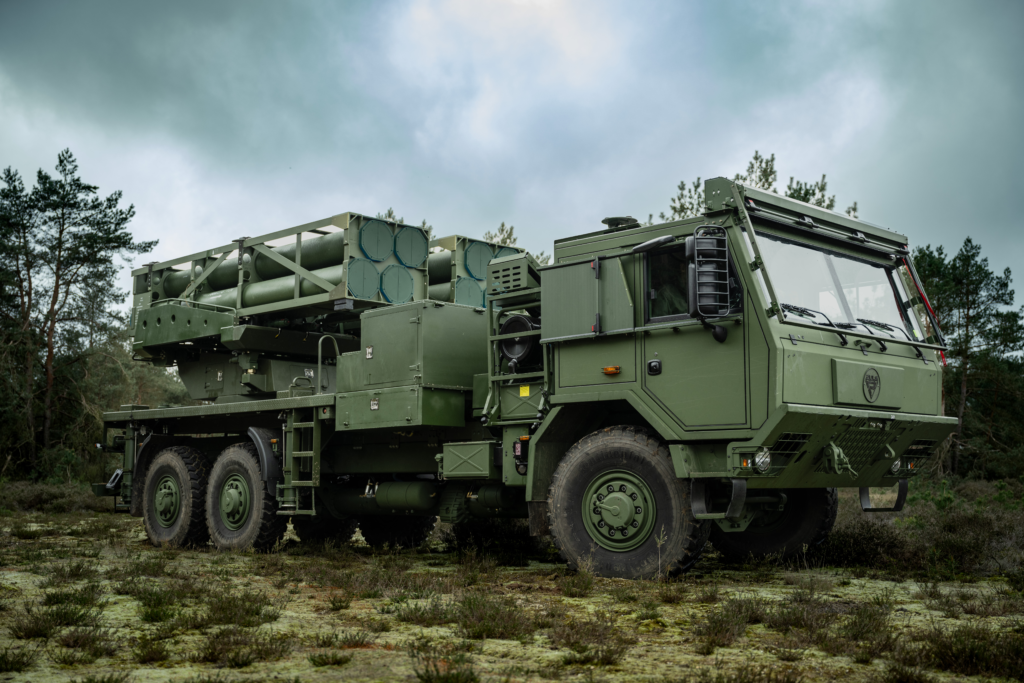
Technically, India’s interim configuration likely combines two complementary rocket families. The first involves 306 millimetre calibre guided rockets with ranges near 150 kilometres. A single launcher vehicle can carry eight such rockets, enabling dense precision salvos. This layer addresses operational-depth targets while preserving cost efficiency. The second family involves heavier rockets with calibres around 370 millimetres and ranges reaching 300 kilometres. Each launcher vehicle carries four of these rockets. Functionally, these systems resemble tactical ballistic missiles but remain embedded within artillery formations.

This combination directly counters Pakistan’s Fateh-2 capability and mirrors Chinese long-range rocket deployments. Predator Hawk–class rockets restore range parity at the ground-force level. EXTRA-class rockets dominate the intermediate depth band. Together, they remove the asymmetry exposed during Operation Sindoor. Importantly, these systems allow proportional, repeatable responses without immediate escalation to strategic assets.
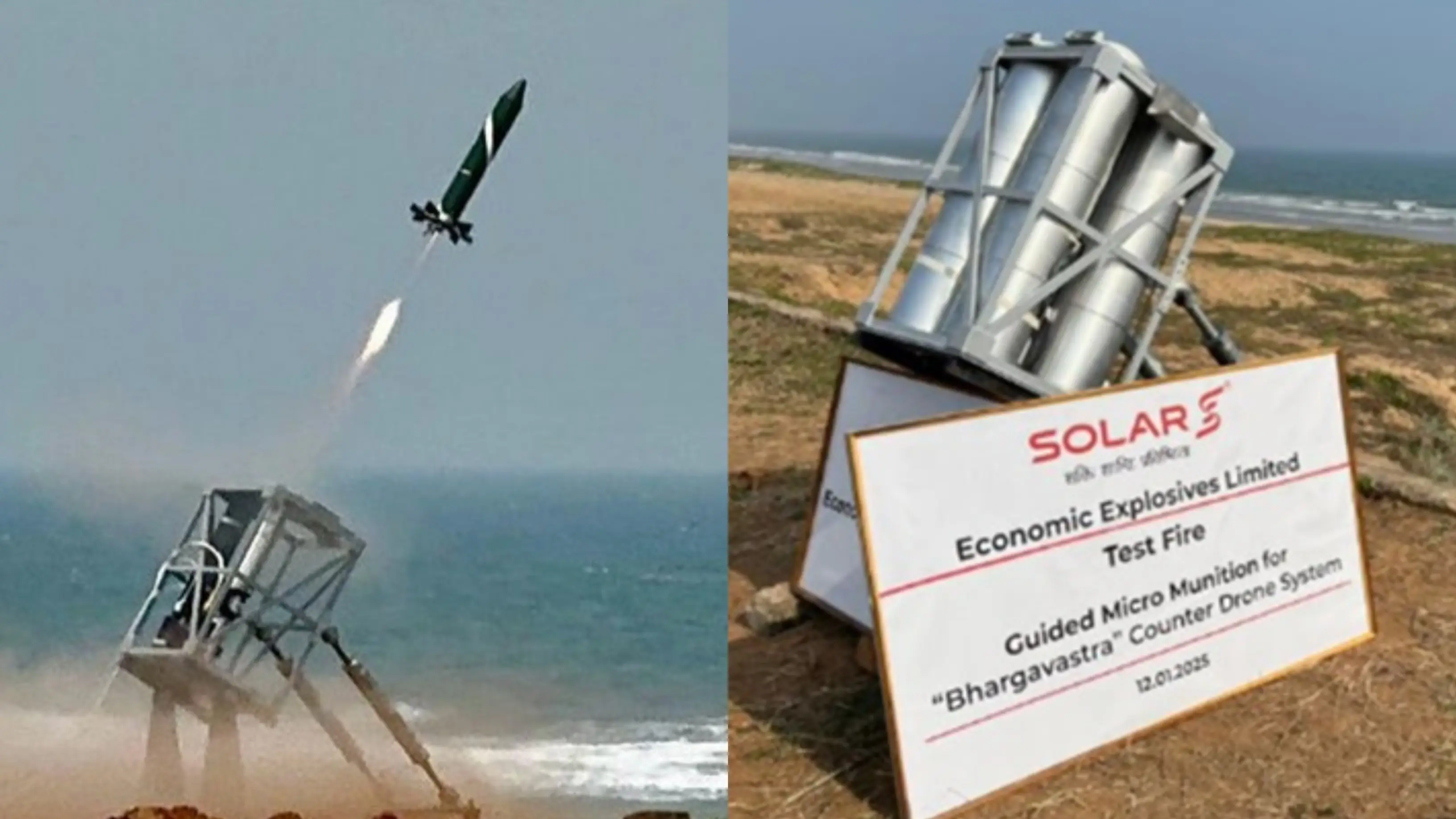
At the same time, India continues to advance indigenous long-range rocket development through DRDO. Recently, DRDO successfully tested a long-range guided rocket system with a 120 kilometre reach. This test demonstrated maturity in guidance, propulsion, and accuracy. In parallel, DRDO is developing indigenous 300 kilometre range rockets, with expected readiness within the next few years. These systems will eventually form the backbone of India’s long-range rocket artillery.
Additionally, recent salvo launches of the Pralay missile indicate that the Indian Army is actively preparing its rocket force architecture. Although Pralay occupies a higher strike tier, its induction signals doctrinal emphasis on layered ground-based strike capabilities. Together, rockets and missiles now form an integrated force structure rather than isolated assets.
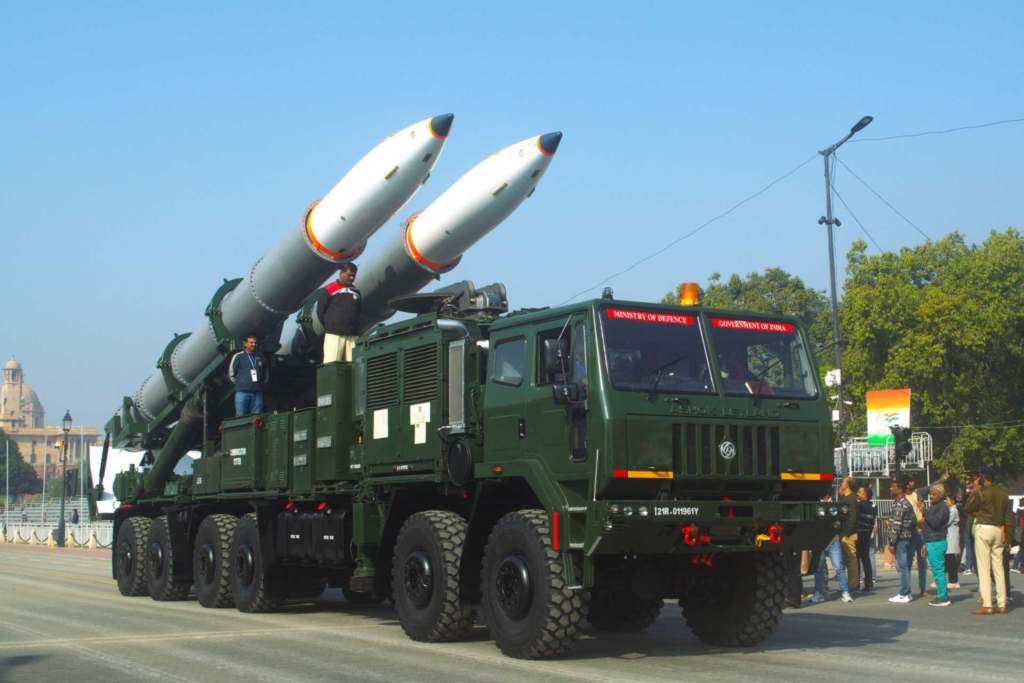
Viewed through this lens, the acquisition of Elbit-origin rocket systems appears transitional. These systems act as placeholders that close immediate capability gaps. They also allow operational familiarisation with universal launcher concepts. Most importantly, they buy time until indigenous 300 kilometre class rockets enter mass production. The eventual larger fleet will almost certainly derive from DRDO-developed systems rather than imported solutions.
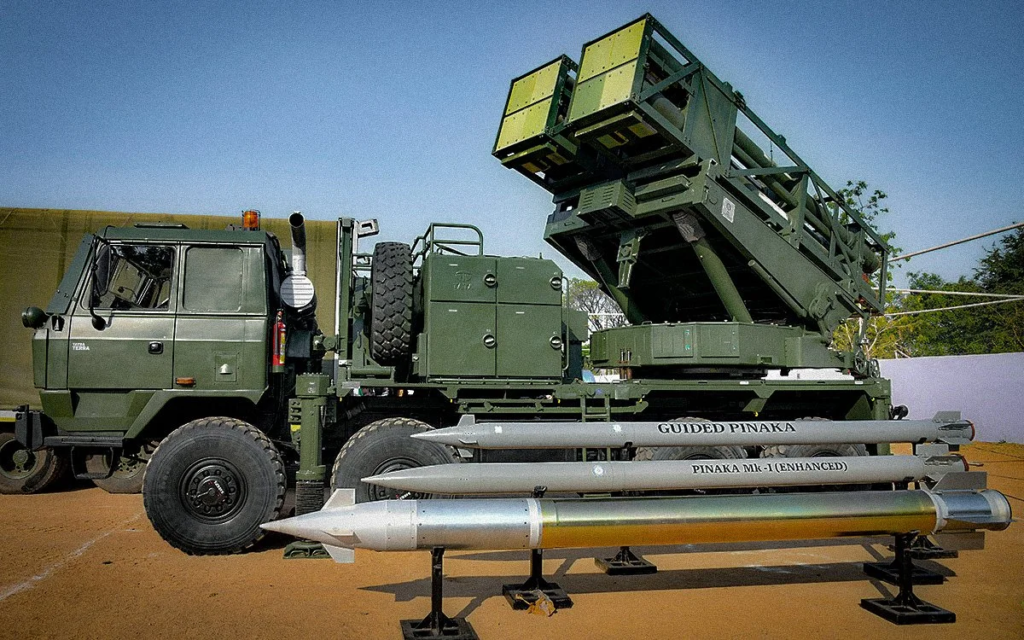
Therefore, India’s answer to Pakistani and Chinese rockets does not hinge on foreign dependence or prestige weapons. Instead, it reflects deliberate sequencing. Interim imports ensure parity and deterrence. Indigenous systems will deliver scale and sustainability. The lessons of Fateh-2 interception and subsequent BrahMos retaliation did not reveal weakness. Instead, they accelerated India’s evolution toward a balanced, layered, and escalation-controlled rocket force.
now india concentrate only three type of ofencerl
first we have to develop the missle with a range of 500 yo 3000 km our Immediate enemies atd pak and china.bur china will not be so deferent to attack India.because all developme t countries don’t want unnecessary war but they want to show power .so toface china we have to equally prepared .when it come to pak their govt tries to keep their people busy with India tension meanwhile their politician loot their country and invest money aboard.the recent movie Purandare give keep picture.here they encourage their people for act of terrorism Haye against induan hindus emwith the help of madeasa mullas
now come airpower.India has to introduce atleast 500 more aircraft of 5+ generation though we don’t use them
next our altilary power this a main business with our tremendous want power we can produce all modern artilary and we can export and make money
A Brilliant analysis spelt out in simple english, giving the rocket architecture, and where we should be going. Super.👍