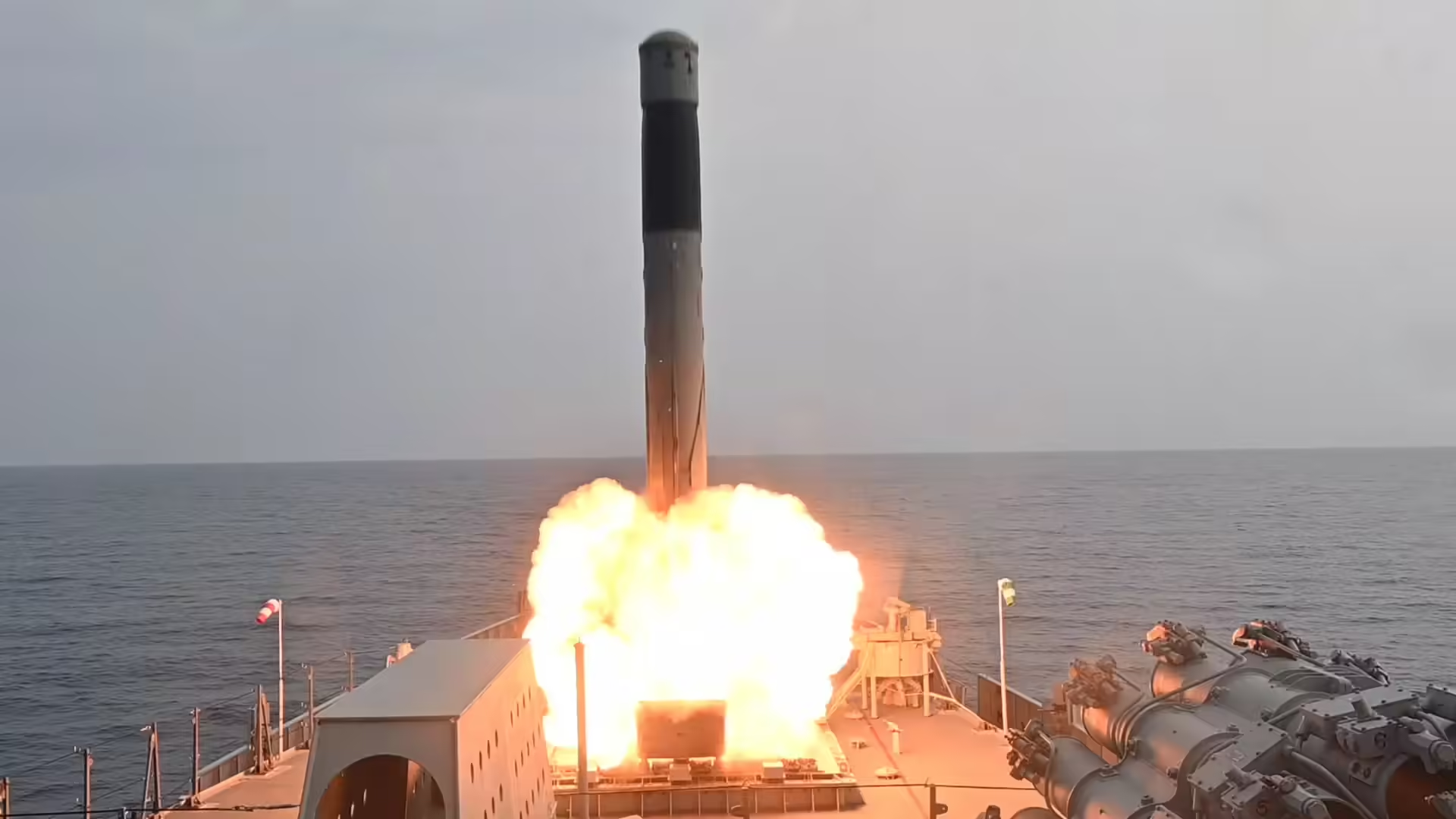
India treats BrahMos as a strategic national investment rather than a conventional missile program, because the system delivers unmatched speed, precision, and survivability across modern contested battle spaces.
Engineers designed BrahMos around a high-energy supersonic cruise profile that sustains velocity even during the terminal phase, thereby compressing enemy sensor-to-shooter timelines beyond practical interception limits.
As a result, hostile air defence networks struggle to generate firing solutions before impact, which explains persistent opposition to this Indo-Russian collaboration from India’s adversaries.
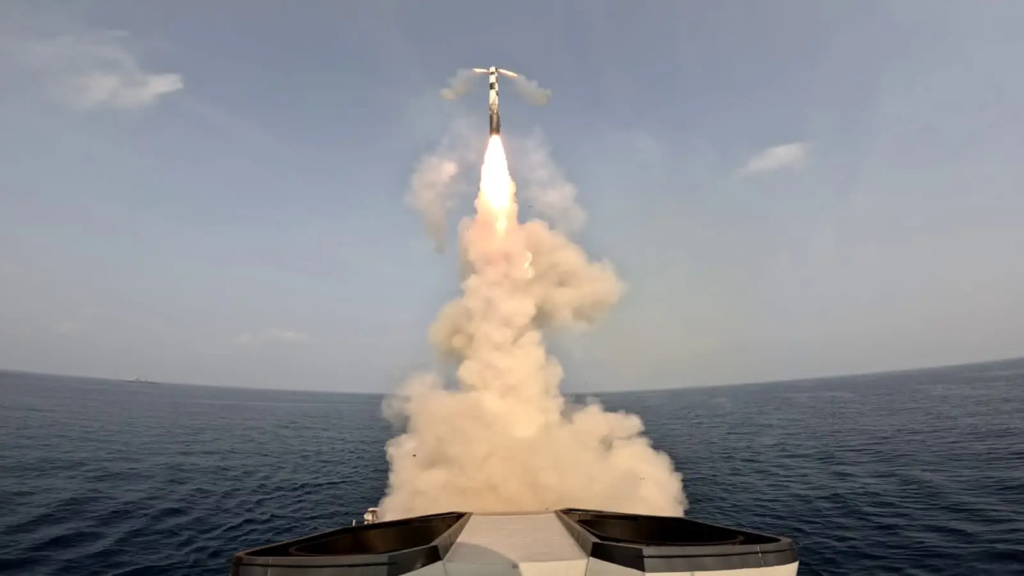
Moreover, the missile’s flight regime exploits low-altitude sea-skimming and terrain-hugging trajectories, which further degrade radar horizon detection and reduce engagement windows for surface-to-air interceptors.
This combination of speed, altitude control, and terminal maneuvering establishes BrahMos as a cornerstone of India’s deterrence architecture rather than a mere tactical asset.
Continuous Evolution of the BrahMos Weapon System
BrahMos continues to evolve through systematic improvements in propulsion efficiency, structural materials, and guidance algorithms, thereby increasing operational flexibility without compromising reliability.
Engineers have steadily extended the missile’s range while maintaining high kinetic energy at impact, which requires precise optimization of thrust profiles, mass fraction, and aerodynamic drag coefficients.
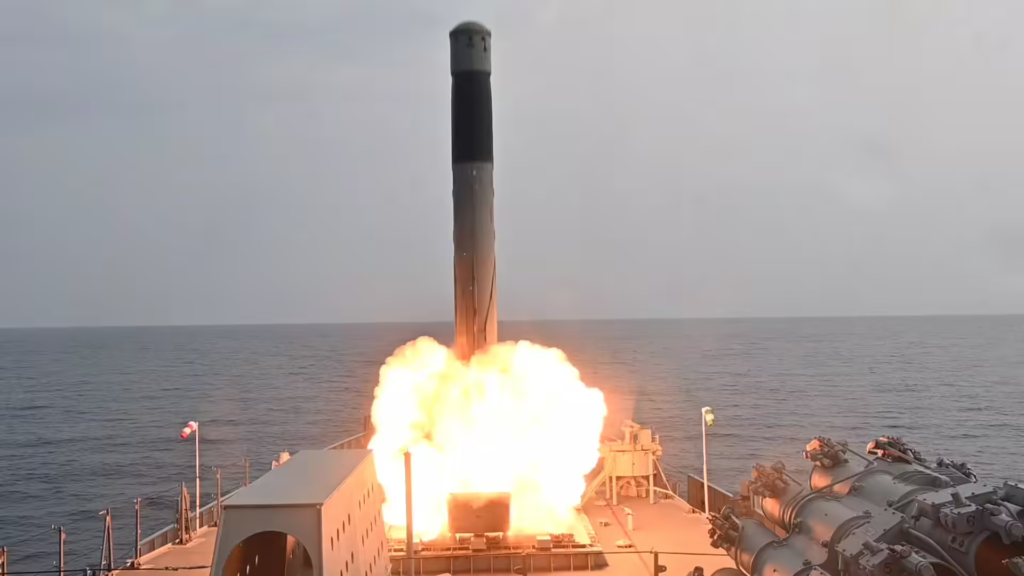
At the same time, developers are progressing toward BrahMos-NG, which focuses on airframe miniaturization, lighter composite structures, and compact avionics to enable fighter aircraft integration without payload penalties.
Looking further ahead, BrahMos-II aims to transition into the hypersonic regime by employing advanced scramjet propulsion, which introduces complex challenges related to combustion stability, thermal loads, and high-temperature structural integrity.
These upgrades demand expertise in computational fluid dynamics, materials science, and guidance-navigation-control systems, making the program an engineering benchmark for India’s missile ecosystem.
Shift from Kinetic to Institutional Targeting
Since direct interception of the missile remains borderline impossible, adversarial actors have shifted focus toward non-kinetic disruption strategies that target institutional stability rather than battlefield performance.
They increasingly exploit administrative loopholes, legal challenges, and leadership uncertainty to slow decision-making and dilute program momentum.
This approach allows adversaries to undermine strategic capability development without risking visible military failure.
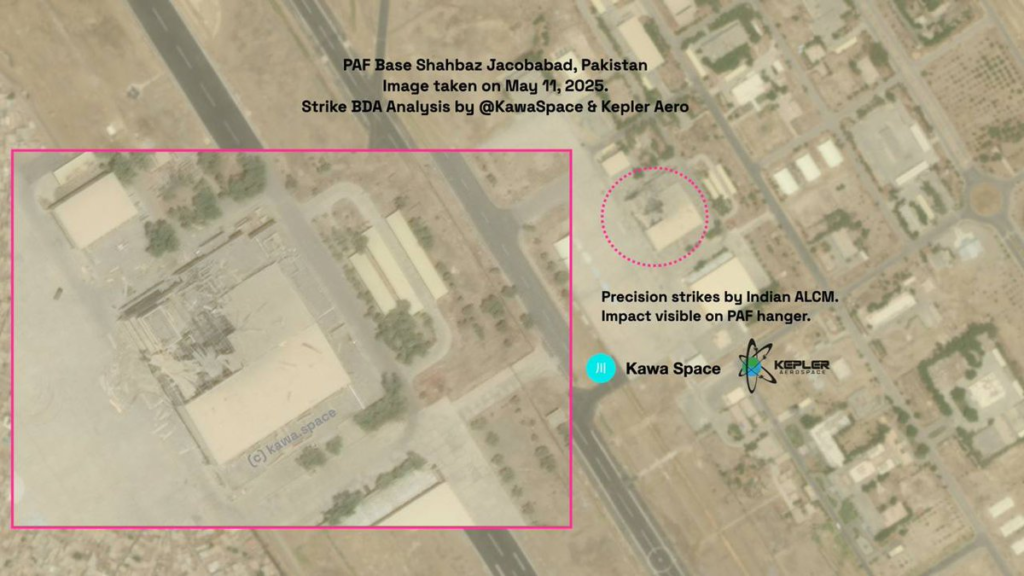
Such tactics aim to disrupt continuity in design authority, supply chain coordination, and long-term roadmap execution, all of which remain critical for high-technology defence programs.
Leadership Disruption at a Critical Juncture
Dr. Jaiteerth R. Joshi represents a technically accomplished missile scientist with extensive experience in systems integration and strategic weapons development.
Authorities appointed him as Director General and CEO-cum-Managing Director of BrahMos Aerospace to provide long-term leadership continuity during a phase of expansion and export growth.
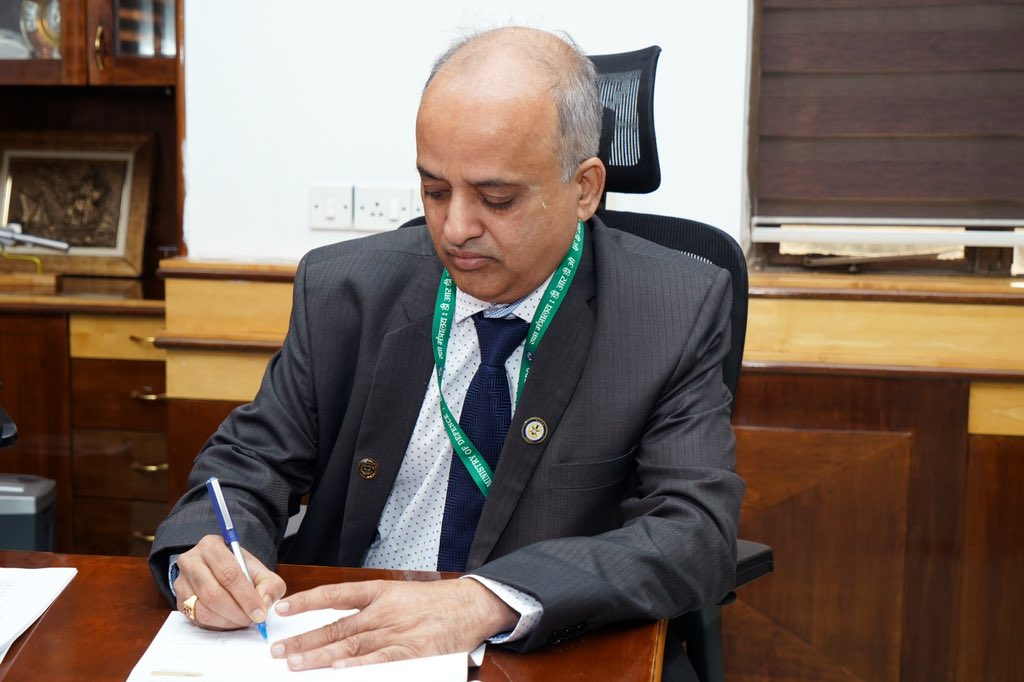
However, in a rare intervention, the Hyderabad bench of the Central Administrative Tribunal removed him from the position, thereby introducing uncertainty at a crucial organizational moment.
The crisis emerged after a senior scientist challenged the appointment, citing supersession despite longer service tenure and earlier promotion to Distinguished Scientist rank.
Strategic Vision Versus Seniority Norms
While seniority plays a role in scientific institutions, strategic weapon programs demand leadership aligned with long-term capability timelines rather than retirement proximity.
BrahMos operates on multi-decade development, production, and sustainment cycles, which require consistent vision and authority to execute upgrades and international commitments.
Therefore, appointment decisions in such programs must prioritize continuity, technical foresight, and execution capacity over conventional hierarchical progression.
Industrial Stability and National Interest
BrahMos Aerospace currently operates at a critical industrial inflection point, with active defence supply orders and international export commitments.
The company has already delivered missiles to the Philippines and continues negotiations with Indonesia, Vietnam, and the United Arab Emirates.
Such engagements require stable leadership to ensure configuration control, quality assurance, lifecycle support, and diplomatic confidence.
Any disruption at this stage directly affects delivery schedules, upgrade pathways, and India’s credibility as a reliable defence exporter.
Why Stability Defines Strategic Success
Strategic missile programs exist at the intersection of engineering excellence and geopolitical signalling.
Leadership instability undermines both technological momentum and national deterrence messaging.
Therefore, India must protect institutional continuity within BrahMos Aerospace to safeguard long-term strategic outcomes.
Only sustained vision and stable execution can preserve BrahMos as a decisive pillar of India’s defence posture.


As pe the law, Mr. Naidu should have become the Director General of Brahmos Corporation instead of Mr Sharma.
It is very reassuring to know snc acknowledge our adversaries. The entire west and its allies act as our friends but in every conflict they have helped our enemies. Including the latest Operation Sindoor. Russia has been our trusted friend. Russian Navy’s support in the Bangladesh war can never be forgotten. Their naval ships chased away the US 7th fleet out of the Bay of Bengal. US navy had come to fight for Pakistan. Imagine today our leaders trying to impress US. Only 4 countries have tested hypersonic missiles. Three are from BRICS and Iran. The west are desperate to get Brahmos technology from Bharat. They are offering to help us in missile development. They themselves have failed to make a working hypersonic projectile. His can they help us? We should also remember the collective west were colonial powers. Hence will never sincerely help Bharat. Let us pray that our leaders have the courage and wisdom to diplomatically keep the colonial powers and their allies away from our shores. Jai Hind! Vandmataram!
This is part of the international game. Let them do their job as usual. We should invent plan B to bypass these kind of hurdles De-facto if not de-jure
The Brahmos programme of India is well established & on strong footing. It is not dependent on any single individual. India’s credentials in this regard are impeccable & the Indian government knows best how to tackle such situations & safeguard the nation’s interest.
few decisions of very very much of national and international issues , sometimes good decision at the corporate levels dosent successful in practical life ,
CAT Bench judgement is surprising. In the matter of strategic national interest, the CAT intervention was unnecessary and it is disturbing. who will head BRAHMOS AIROSPACE , it is the govt. not the CAT to decide. Seniority is not the sole criteria.
seniority not necessary
we need brainy people
In an organisation like DRDO, talent should be given preference rathar than seniority.The appointment given to the present incumbent needs to be confirmed at the earliest .The Govt.of India should appeal in the Supreme court of India to quash the order of CAT Hyderabad immediately.
I am surprised that preferential promotion is being challenged on court. Since, this promotion is a outstanding merit recognition that might not have been provided in the Appointment and Promotion Procedures. The question is whether the management has not amended that officially before the promotion?