~ Ishika Dutta
For most of its history, Aero India was a place where the world came to sell to India. Foreign manufacturers booked the biggest stands, flew their best aircraft over Yelahanka and hoped an Indian decision-maker would be watching. In the years around the MMRCA contest, the F-16, the F/A-18, the Eurofighter, the Rafale and the Gripen all passed through Bengaluru in one form or another, each making its case to the Indian Air Force and to the Ministry of Defense. The show was a shop window, and India was the customer.
That picture held right up to the last edition. In 2025 the Su-57 and the F-35 took part in the same show for the first time, and the two most talked-about fifth-generation fighters in the world were parked in Indian sunshine, each hoping for an Indian order. Few airshows anywhere can put a Russian and an American stealth fighter on the same tarmac, and it said a lot about how India is courted.
The shop window is filling up with Indian goods
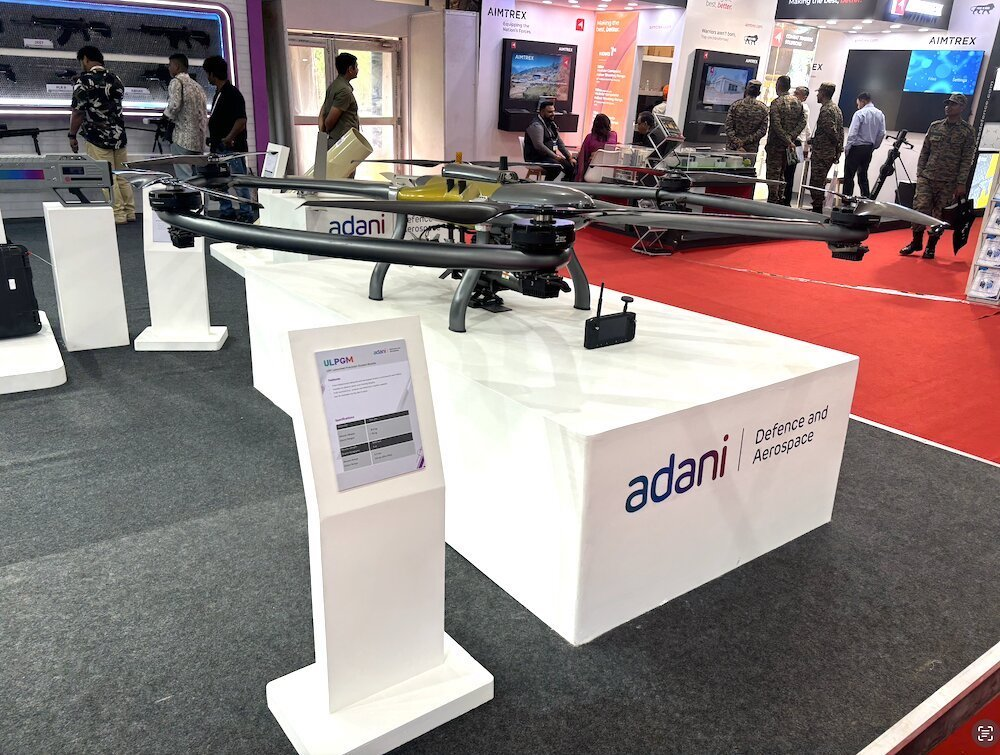
The 2027 edition is turning out differently. Indian companies now have so much to show that the venue cannot hold it all. Firms that expected to book space are being told there is no room, and the squeeze is being felt most by companies that would once have been glad just to be invited.
The numbers behind this have been building for some time. The 2025 show drew about 900 exhibitors, and roughly 750 of them were Indian companies, with around 150 from abroad. That was already the largest Aero India ever, up from about 800 two years earlier. All of it was packed into an exhibition area of about 42,000 square meters, and the layout was tight enough that visitors and exhibitors complained about it loudly. Registration and space booking for 2027 opened in early September, and the demand for space has only grown since.
What the crunch is telling us
A space shortage is usually read as an organizing problem. It is better read as a result. Companies do not fight for floor space unless they have something to put on it, and the Indian industry does now. Engines, radars, missiles, drones, avionics, space systems, composites and MRO capability are all being built here, often by private firms and start-ups that did not exist in this field a decade ago. They want to be seen by buyers, by the armed forces and by foreign partners, and Aero India is where all three are in one place.
The contrast with the older Aero India is the point. Once the question was how many foreign OEMs would show up. Now it is how many Indian exhibitors can be fitted in. That is a direct, visible measure of the Atmanirbhar effort. Policy documents and production figures are one thing, but a hall that has run out of room for Indian stands is the kind of evidence anyone walking the show can see for themselves.
The case for a bigger Aero India
India should respond by expanding Aero India, not by rationing it. A show that turns away domestic exhibitors undersells the industry it is supposed to promote, and it hands the best floor space to whoever can pay for it rather than to whoever is building something new. More hall space, better static display and flying areas, stronger road access and proper hospitality for tens of thousands of visitors would let the show grow with the industry. The Yelahanka air force station has served the event for a long time, and the venue question has been raised before. Whether it is a bigger footprint at Yelahanka or a purpose-built site, the capacity needs to be planned around the Indian industry as it will look in five years, not as it looked five years ago.
There is also a strategic reason. An Aero India that is visibly Indian in its center of gravity changes who holds the leverage in the room. Foreign companies come to meet Indian suppliers as much as Indian buyers. They look for joint ventures, local production and technology partnerships, and the more serious Indian capability they see on the floor, the better the terms India can ask for.
A good problem to have
Indian defense production has crossed a record figure of about Rs 1.27 lakh crore and is aimed at roughly Rs 1.6 lakh crore by the end of this financial year. An airshow that cannot fit its own exhibitors is the same story told on a show floor. The foreign fighters will still come, and they should. But the real headline of Aero India 2027 is already clear: the Indian industry has grown past the room that was built for it, and the next job is to build a bigger one.