~By Ishika Dutta
A ramjet-powered, air-launched supersonic missile that is far lighter than today’s BrahMos would change how many strikes one Su-30MKI can deliver in a single sortie. DRDL has moved this effort from design into hardware: steel test articles are being built to prove the missile fits and carries on both a launcher and an aircraft.
It appears this is a modified version of STAR (STAR based/STAR Like), DRDL’s supersonic target missile, built around its own liquid-fuel ramjet. The aircraft is understood to be the Su-30MKI, which currently carries a single 2.5 tonne BrahMos-A and nothing else in that class.
This article separates what the hardware shows, what has been publicly reported, and what is my own reading.
What DRDL is actually building
DRDL Hyderabad is having two ramjet test articles manufactured, to be delivered within about four months of the order, for integration trials with a launcher and an aircraft. These are not flying engines. They are structural articles: airframe sections, air intakes, control surfaces, mounting and interface brackets and fairings, all built to the design drawings.
That list tells you the airframe shape is frozen enough to cut metal. Intakes and control surfaces are already defined, and the articles include launch shoes and lugs. Those are the interfaces where a missile meets its launcher or its aircraft pylon.
The maturity signal is the point. A programme does not order carriage hardware for two platforms until it is confident about the external geometry, the mass and the attachment points.
Why this looks like STAR
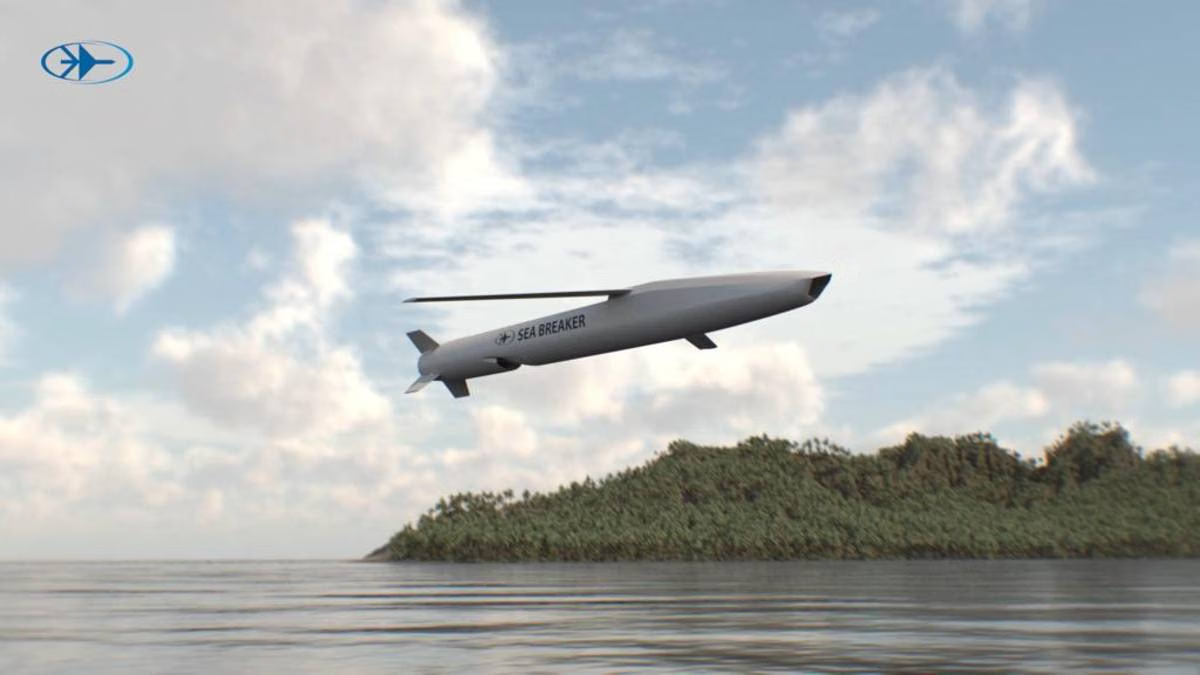
STAR is DRDL’s own liquid-fuel ramjet missile, and its design lines up with what DRDL is preparing for. It uses a solid booster for launch and a liquid-fuel ramjet for sustained supersonic flight, at speeds of roughly Mach 1.8 to 2.5.
STAR is being developed in two forms: a truck-mounted ground-launched version and an air-launched version. A test article that has to be proven on both a launcher and an aircraft matches that split. The programme was reported to be in its third development phase in May 2025, with prototypes being integrated.
The weapon angle is also public. The air-launched version is described as able to play anti-radiation and anti-AWACS roles, and Armada International has reported that STAR is the baseline for an anti-airborne early warning missile. Both name the Tejas as the intended carrier, so Sukhoi can carry more than one.
What the hardware itself tells us
The test articles are ordinary structural steel, which means they exist to prove geometry, mass and interfaces, not to fly. The material is a common mild structural steel, described as being for geometrical missile components. A real ramjet airframe would call for heat-resistant alloys, and there is no combustor, fuel system or nozzle anywhere in the order.
| What the order asks for | What it implies |
|---|---|
| Airframe sections up to about 1.2 m long | The missile body is built from sections, with the longest section near 1.2 m |
| Straightness and concentricity within 0.1 to 0.5 mm, depending on section length | Intake and body alignment is treated as critical |
| Weight recorded and tagged on every component | Mass and centre of gravity matter for carriage and release |
| Dye-penetrant checks around welding, full material traceability | The welded structure is inspected like flight-grade work |
| Two units, one lot, delivery in about four months | A short, focused trial run, possibly one article per platform (my reading) |
Taken together, this is a carriage and fit programme. It answers practical questions before any live round is risked: does the missile hang correctly on the pylon, do the shoes mate with the launcher rail, does the centre of gravity sit where the aircraft’s release logic expects it.
Why lighter matters on a Su-30MKI
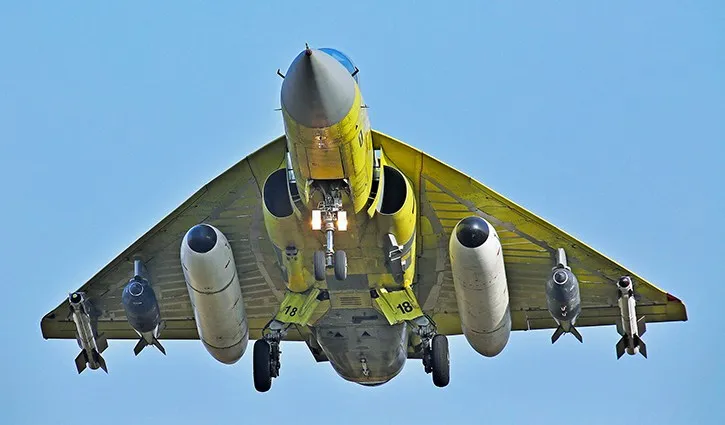
The Su-30MKI carries only one air-launched BrahMos today, because the missile weighs about 2.5 tonnes and only the centreline station is integrated for it. About 40 aircraft are reported to have been modified to carry it . The Su-30MKI has about 12 hardpoints, but the wing stations are normally used for lighter weapons.
The lighter BrahMos-NG is meant to change that. It is reported at about 1.2 to 1.3 tonnes, roughly half the weight of the original missile, and the same report says a Su-30MKI could carry three or four. A DRDO source cited by the Times of India has gone as high as five per Sukhoi fighter. Those are projections, not confirmed configurations, and NG flight trials were reported as planned for 2026.
The missile in this article sits in the same logic from a different direction. As I understand it, it is lighter than today’s BrahMos, which would let one Su-30MKI carry several. How much lighter is not public, so I would not put a number on it.
The operational effect is simple arithmetic. More rounds per aircraft means more targets struck per sortie, fewer aircraft exposed for the same effect, and a harder problem for an adversary’s air defence.
Two ramjet paths: STAR and Astra Mk3 are not the same engine
STAR burns liquid fuel in its ramjet, while Astra Mk3 uses a solid-fuel ducted ramjet, and the two should not be blurred together. Some coverage does exactly that, which glosses over a real difference in design.
| Missile | Ramjet type | Role | Status |
|---|---|---|---|
| STAR | Liquid-fuel ramjet behind a solid booster | Supersonic target, with weapon derivatives planned | Reported in third development phase (May 2025) |
| Astra Mk3 | Solid-fuel ducted ramjet with a nozzle-less booster | Long-range air-to-air missile | Propulsion demonstrated 3 February 2026 |
| BrahMos | Liquid-fuel ramjet | Supersonic cruise missile | In service |
In general terms, a liquid-fuel ramjet can regulate its fuel flow through a tank and plumbing, which suits a missile that must cruise for a long time. A solid-fuel ducted ramjet keeps the fuel as a grain inside the motor and adjusts thrust by controlling the intake air, which is simpler and compact. Both are air-breathing, so neither carries a heavy oxidiser.
BrahMos also flies on a ramjet, but it is an Indo-Russian joint venture. STAR’s liquid-fuel ramjet is a DRDL development, which is why STAR matters for the India-first story here. Having both a liquid-fuel and a solid-fuel path under development at DRDL is a strength: it gives India two proven routes to air-breathing propulsion.
What role this missile could play
The role is the open question, and three are plausible for a STAR-derived weapon. Public reporting describes anti-radiation and anti-AWACS roles for STAR-derived weapons, and a strike or anti-ship role would follow naturally from a supersonic, sea-skimming-capable airframe.
- Anti-radiation. A radar-hunting missile to suppress enemy air defences. Speed helps, because it shortens the time a radar has to switch off, but the radio-frequency seeker matters more, and that part is not visible in carriage hardware.
- Anti-AWACS. A long-range shot at airborne warning aircraft. A mobile target that can move mid-flight makes this the hardest seeker and guidance problem of the three.
- Anti-ship or land attack. Not described in public reporting for STAR. It is where my understanding of a missile that lets one Su-30MKI carry several would fit best, but it is not confirmed.
The carriage hardware cannot tell these apart. A steel article proves the same fit regardless of which seeker eventually goes in the nose, so I would not name a role until there is something firmer than the airframe.
What is solid, what is reported, what is my reading
The hardware is hard evidence, the weapon details are reported, and the link to STAR and the Su-30MKI is my reading of the evidence. Nothing here is officially confirmed as a named programme.
| Claim | Standing |
|---|---|
| DRDL is building two steel ramjet articles for launcher and aircraft integration trials | Firm. This comes from the hardware itself |
| The articles are for geometry and carriage, not flight | Firm. Mild structural steel and no engine internals |
| The programme is STAR or a STAR derivative | My reading. STAR is DRDL’s indigenous liquid-fuel ramjet missile, with ground and air-launched variants |
| The aircraft is the Su-30MKI | Understood, not officially stated. Public STAR coverage names the Tejas as the air-launched carrier (However, testbed at HAL is Sukhoi) |
| The missile is lighter than BrahMos, allowing multiple carriage | Understood, not officially stated. The weight is not public |
| Anti-radiation and anti-AWACS derivatives are planned | Reported in mainstream coverage of STAR. I have not seen an official weapon programme announcement |
| Role, range and induction date | Open. No official range or induction date |
Time will tell which of these hardens first. The airframe work suggests the integration timeline is real, while the seeker and the role are the parts to watch.
Why it matters for India
This is India building its own air-breathing supersonic strike capability and an industrial base to go with it. Three things that makes it significant
First, propulsion independence. DRDL is running a liquid-fuel ramjet path through STAR and a solid-fuel ducted ramjet path through Astra Mk3. Design authority for both sits with Indian laboratories, which is a very different position from relying on a joint-venture engine.
Second, the supply chain. Airframe sections held to a fraction of a millimetre, welded and crack-tested, with every batch of steel traceable, are not routine jobs. The vendor is most likely a private precision engineering firm, and that is the Indian industrial ecosystem DRDL needs for missile production at scale.
Third, the aircraft. The IAF has about 270 Su-30MKI, and only around 40 are reported to carry the single BrahMos-A today. A lighter air-launched missile gives the heaviest fighter in the fleet a real multi-target stand-off role, layered with Astra, BrahMos and Rudram.
What to watch next: the first captive carriage trial on a Su-30MKI, any statement on the seeker, results from the ground-launched STAR trials, and whether a weight figure ever becomes public.