~ By Ishika Dutta
Four fighter programmes, four different approaches, and so far, the same result: aircraft that exist mostly on paper.
The title is deliberately provocative, so let’s get the caveat out of the way first: this is not an argument that the Indian Air Force flies nothing. It is an argument that almost every serious attempt India has made in the last two decades to fix its fighter shortage co-development, indigenous production, off-the-shelf import, and now a new indigenous-with-private-sector model has been slowed to a crawl by a mix of bad luck, worse timing, and decisions that look reasonable in isolation but compound into disaster in sequence. FGFA never got past the drawing board. Tejas exists in large numbers on order books but not on tarmacs. Rafale is real but frozen at a scale set in 2016. AMCA is, for now, mostly a PowerPoint slide with a new execution model attached to it. Meanwhile the IAF’s actual fighter squadron count has slid to somewhere between 29 and 31 against a sanctioned strength of 42, a gap that has been discussed since at least 2018 and has not meaningfully closed since.
1. FGFA: the co-development that no one wanted to co-develop
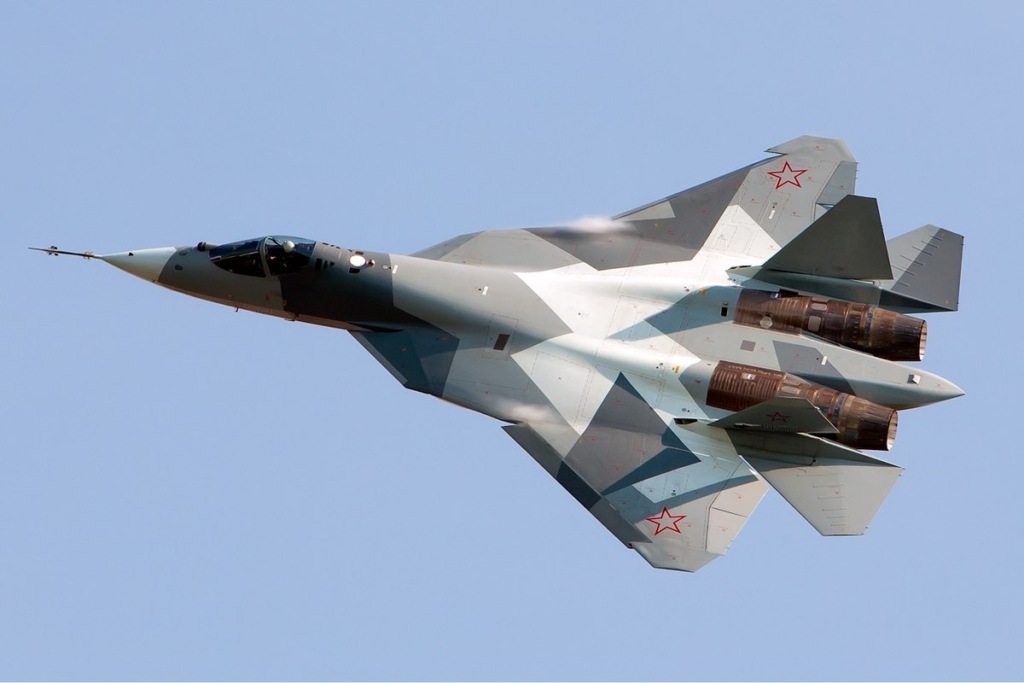
The Fifth Generation Fighter Aircraft programme was India’s first real shot at a stealth fighter, built on a simple premise: partner with Russia on a derivative of the Su-57 (then PAK FA), split the cost, and walk away with both an aircraft and the technology to build the next one without asking anyone’s permission. The inter-governmental agreement was signed in 2007 and a design contract followed in 2010. On paper it made sense, India got a seat at the table of a fifth-generation programme a decade before AMCA existed even as a concept, and Russia got a partner to help fund an expensive fighter it could not afford alone.
In practice, no country hands over the technology that makes it competitive in the arms export market, and Russia was no exception. India’s central demand was access to source code, the software that governs the aircraft’s sensors, mission systems and future upgrades, because without it India would be permanently dependent on Moscow for every capability update. Russia resisted, then reportedly agreed only if India’s financial contribution rose sharply, toward figures in the region of $7 billion, which New Delhi wasn’t willing to pay for a jet it wouldn’t fully control. The engine that was meant to define the aircraft, the Saturn izdeliye 30, was years from ready; prototypes flew on an older AL-41F1 derivative instead. And the clearest signal of how little confidence Russia itself had in the programme’s scale came in 2015, when Moscow quietly cut its own planned purchase from the hundreds initially floated down to a single squadron of 18–24 jets. While, India was still budgeting for around 144 aircraft under what had grown into a roughly $25–30 billion commitment.
By April 2018, after eleven years, India walked away. The lesson wasn’t that co-development is a bad idea; it’s that co-development between a buyer who wants the crown jewels and a seller who has nothing else to sell was never going to end differently. Every fifth-generation partner nation the world over from Turkey and the F-35 to Japan and the F-22 has run into some version of the same wall. FGFA just hit it earliest and hardest for India.
2. Tejas: a capability held hostage by an engine
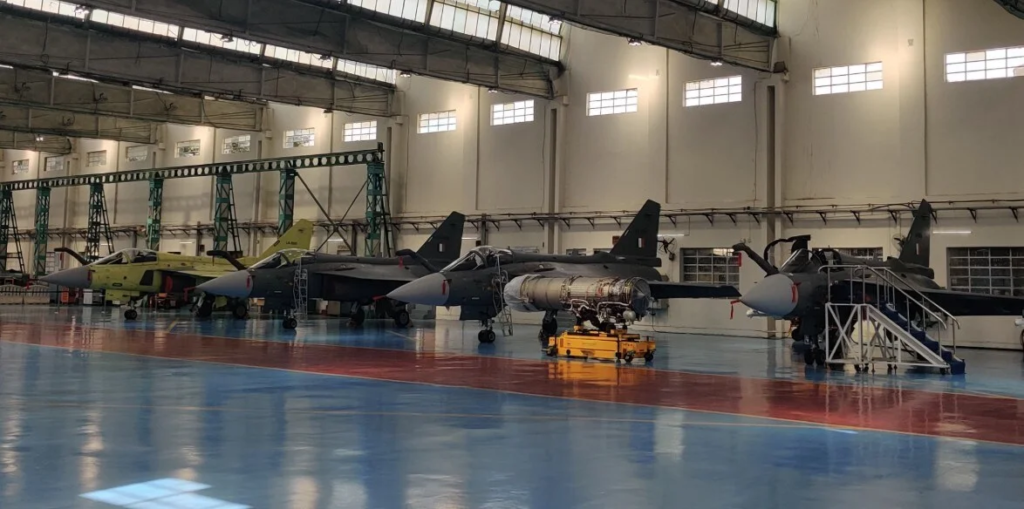
Tejas is the one programme on this list that genuinely deserves an article of its own defending it, a home-grown 4.5-generation fighter that took far too long to mature but now flies, fights, and is being ordered in real numbers. Between the original Mk1, the 83-aircraft Mk1A order placed in 2021, and the further 97-aircraft order cleared in 2025, the IAF’s commitment now stands at roughly 220 Tejas airframes. A serious fleet by any standard, and one the Air Force is now, by its own admission, betting its near-term squadron math on. That is exactly why the engine problem is so damaging.
The Mk1A runs on the GE F404-IN20. By the time India placed its first big Mk1A order, General Electric hadn’t built a fresh batch of that engine in years, there was no live demand to keep the line warm and delivering to a firm contract meant re-establishing tooling and a supply chain almost from scratch. This is the pattern the article’s title is really about: India sits on paper orders for years or decades, and by the time the ink dries the hardware ecosystem behind it has gone cold. GE has since missed multiple promised delivery dates through 2026, and as of this year roughly 30 Mk1A airframes have been fully built and flight-tested by HAL but sit in the hangar without an engine to put in them, unable to be formally handed over to the Air Force. GE has talked about ramping to around 24 engines in FY 2026–27 and roughly 30 a year after that which, against an order book of 220, is still a multi-year drip-feed. Layer on top of that a Tejas Mk2 programme whose more powerful GE F414 engine deal including the technology transfer terms India wants remains unresolved, and the picture gets no easier.
3. Rafale: excellent, and frozen in 2001
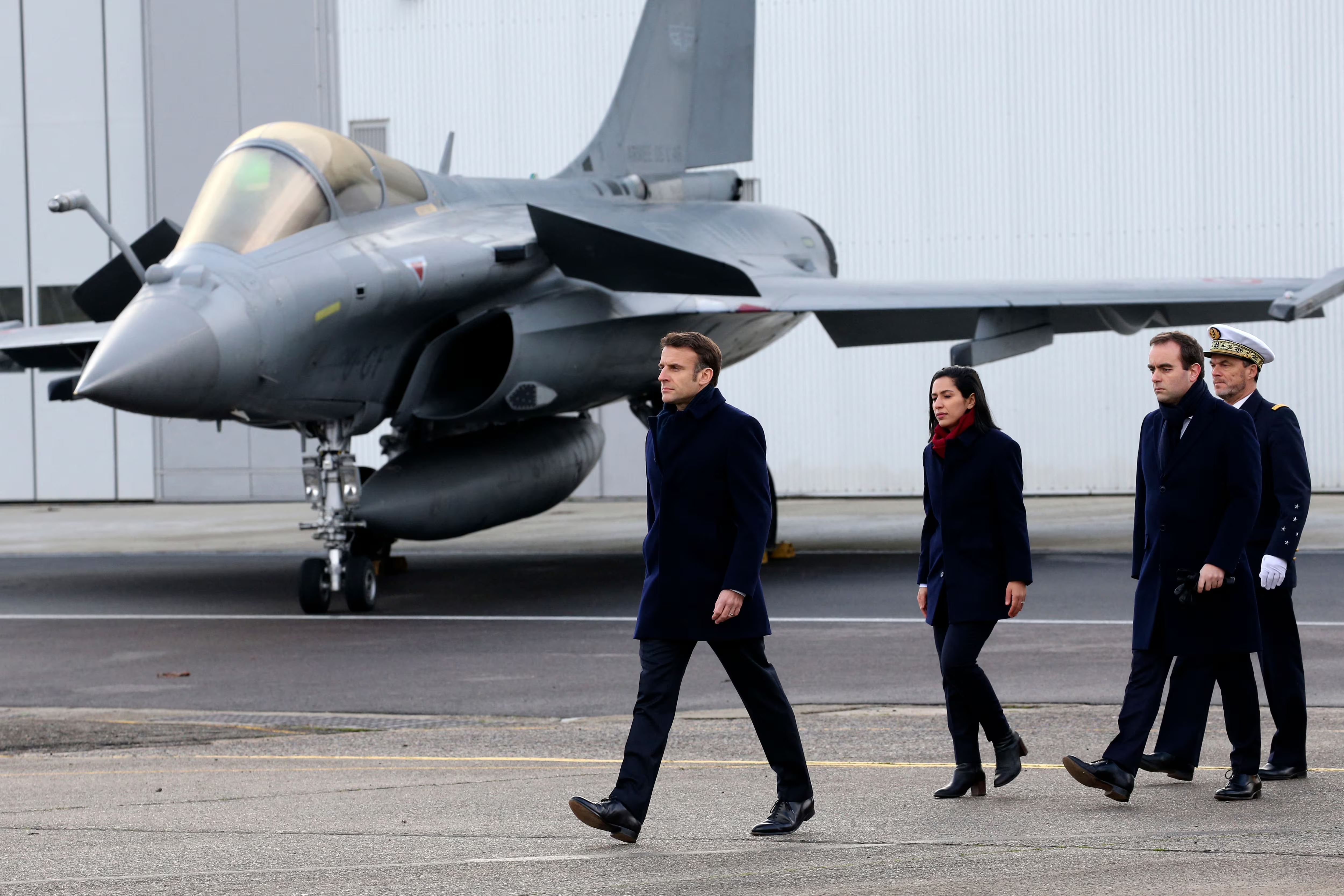
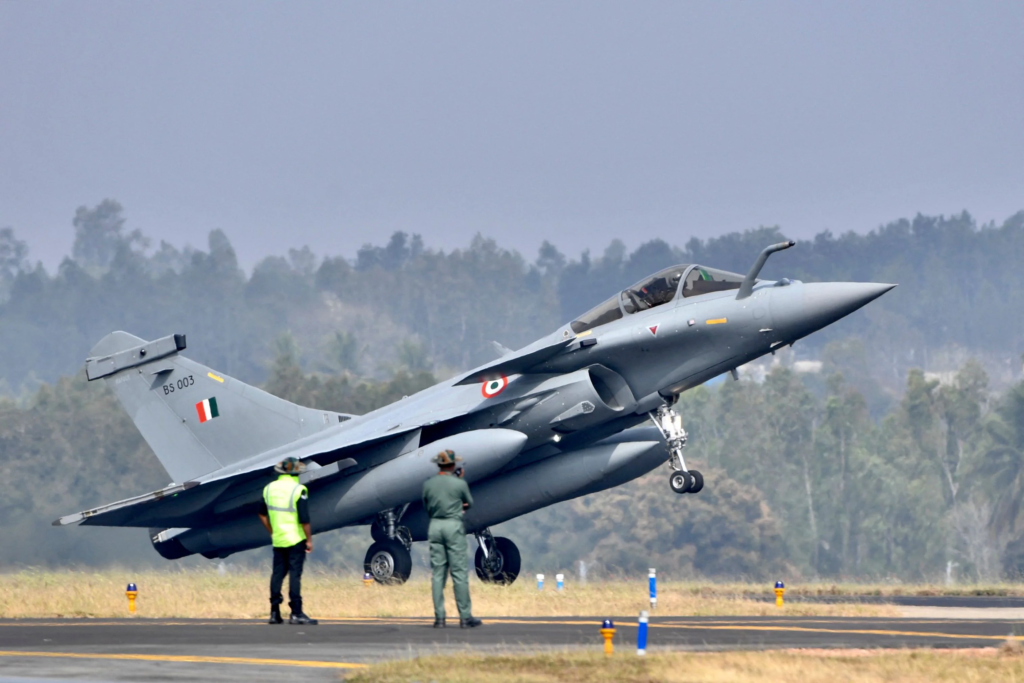
The Rafale story is really the story of a process, not just an aircraft. What became the MMRCA competition effectively began in the early 2000s, went through a public tender from 2007, was whittled down to Rafale and the Eurofighter Typhoon by 2011, collapsed under its own procedural weight, and was rescued in 2016 as a government-to-government deal for 36 jets. Today, roughly two and a half decades after the process began, the IAF operates those 36 Rafales across two squadrons, 17 Squadron at Ambala and 101 Squadron at Hasimara. They are, without question, capable aircraft. But they were selected against a field that has since moved on in ways worth remembering.
When MMRCA was being evaluated, the Saab Gripen E didn’t exist yet only the earlier proposed Gripen NG was on offer. The Eurofighter Typhoon was still flying with a mechanical radar, its AESA upgrade years away. The F-16 and F/A-18 were only just getting their first-generation AESA radars. Rafale’s RBE2 AESA was genuinely ahead of the pack at the time. Two and a half decades on, the field has largely moved to gallium-nitride (GaN) based AESA radars reported upgrades on the Typhoon (ECRS Mk2), the F-16 (APG-83) and the Super Hornet (APG-79) while the Gripen E went a step further with the swashplate-steered ES-05 Raven. Rafale’s radar generation, by contrast, has stayed comparatively static. The aircraft that looked like the future of the category in 2001 is, by 2026, closer to its most senior member.
The real leap forward the F5-standard Rafale is in trouble for reasons that have nothing to do with India. It was meant to inherit connectivity, drone-teaming and next-generation sensor work developed for the France-Germany-Spain FCAS programme; with that programme stumbling, France’s own Air Force chief has publicly said he’d rather take more F4-standard jets sooner than wait for F5, and France’s own delivery schedule has already slipped F5-standard jets from 2031–32 to 2033–34. Reports have periodically floated Gulf partners, the UAE among them, as an existing large Rafale customer helping underwrite F5-specific development costs, though nothing of that sort has been confirmed publicly.
And then there is the production math. Dassault has been trying to ramp its shared global production line which serves France and every export customer at once toward roughly three aircraft a month, and only got there gradually; it delivered 26 Rafales worldwide in 2025 against a still-larger order backlog. India’s proposed follow-on deal for 114 more jets, cleared for Acceptance of Necessity in February 2026 with Cabinet approval still pending, is structured as 18 delivered flyaway from France and 96 assembled in India on a line that does not exist yet and would have to be built up from zero. Even in the best case, where the deal is signed this year, the flyaway jets would arrive over several years and the India-assembled jets would take meaningfully longer than that to ramp to volume, given how a shared global production line, French Air Force needs, and other export customers all compete for the same slots. A realistic full-delivery horizon stretching out toward the early 2030s is not a pessimistic read of that arithmetic, it’s closer to the base case. Anyone in India treating Rafale as an urgent, near-term answer to the squadron gap needs to hold that timeline next to the F5 uncertainty above: without a signed deal and a firm production slot, Rafale numbers stay a paper plane too.
4. AMCA: the new approach, running against the clock
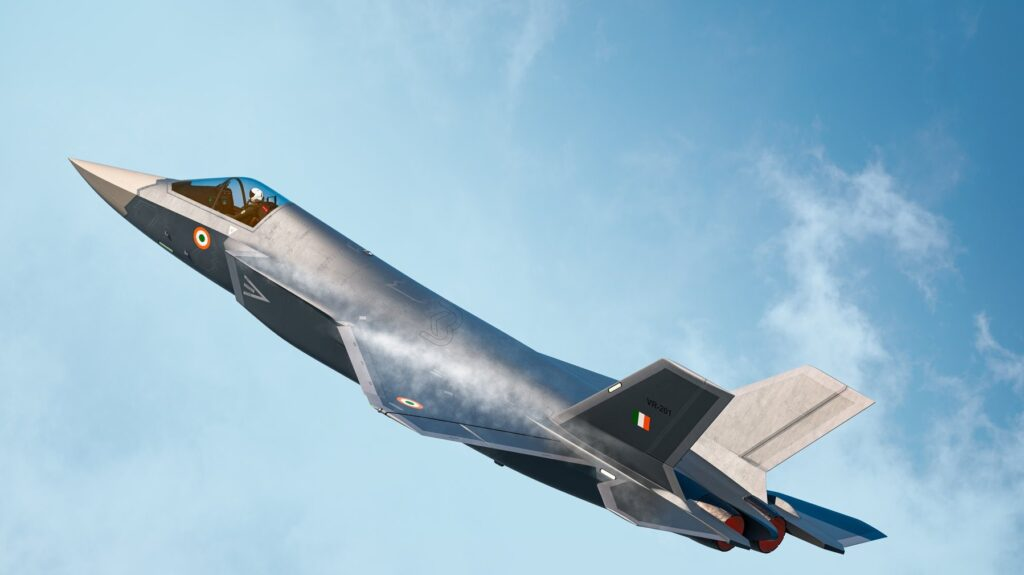
The Advanced Medium Combat Aircraft is India’s attempt to do fifth-generation development the hard way “indigenously” and it is now trying a genuinely new execution model to get there. Instead of routing everything through HAL as sole production agency, the Aeronautical Development Agency has approved a structure where public and private Indian firms can bid independently, form joint ventures, or build consortia, with DRDO/ADA holding the design authority. Historically, HAL was a major player and it already outsources significant work to private firms like L&T, Godrej and Azad Engineering but companies like Tata, with genuine aerostructures experience from international programmes, can now compete for a leading role rather than working only as a subcontractor. It is a sensible structural fix for a system that has historically bottlenecked around one public-sector prime, and it is exactly the kind of change that comes with a learning curve: new contracting models, new supplier qualification, new lines of accountability between DRDO, ADA and private primes. Cost and schedule overruns during that transition should be treated as the expected price of the fix, not a surprise.
The trouble is timing. AMCA’s targets have already slipped meaningfully from what was once discussed prototype rollout and first flight windows that were talked about for the mid-2020s have moved out to a first-prototype rollout around 2028–29 and a maiden flight in 2029 at the earliest, by DRDO’s own current statements, with some reporting suggesting even that could slide further given the transition to the new execution model. That is a slip of roughly four years or more against earlier ambitions, and it matters because of who is not waiting. Turkey’s KAAN ~ a programme that, like AMCA, is trying to build a fifth-generation-class fighter largely on its own terms, first flew on 21 February 2024. Turkey started later than India conceptually and got an aircraft into the air first. That comparison isn’t meant as a verdict on either programme’s ultimate quality; it’s a reminder that in fighter development, delay compounds. Every year AMCA slips is a year closer to its intended in-service date competing against adversary capability that keeps moving too.
The squadron math no one escapes
Put the four programmes side by side and a pattern, not a coincidence, emerges. FGFA died because India and its partner wanted incompatible things from co-development. Tejas is real but throttled by an engine supply chain that went cold while India deliberated. Rafale is excellent but capped at a scale & technology decided a decade ago, with its next leap hostage to a European programme’s collapse and a production line that doesn’t yet exist on Indian soil. AMCA is trying something structurally smarter than anything before it, and is already behind schedule for that very reason.
All of this is happening while the IAF’s own fighter squadron count sits somewhere around 29 to 31, against a sanctioned strength of 42 that has been the official target since long before any of these four programmes reached their current state. That gap is the real subject of this article. Four different strategies co-develop, build indigenously, buy off the shelf, build privately, have each, in their own way, produced aircraft that are more paper than metal so far. None of them are dead. Tejas in particular deserves the fuller, fairer treatment of its own piece. But taken together, they explain why India’s fighter crisis isn’t a story about any single bad decision. It’s a story about what happens when a country keeps sitting on paper for just a little too long.