~Ishika Dutta
On August 26, HAL and Safran Helicopter Engines signed a contract that most of the Indian defence commentary treated as a footnote to a helicopter programme that doesn’t exist yet. That is the wrong way to read it. The Aravalli engine agreement is not really about the Indian Multi-Role Helicopter. It is about whether India can, for the first time, walk into a helicopter engine programme as a co-developer rather than a licensee and whether that habit can be exported to harder problems later.
What was actually signed
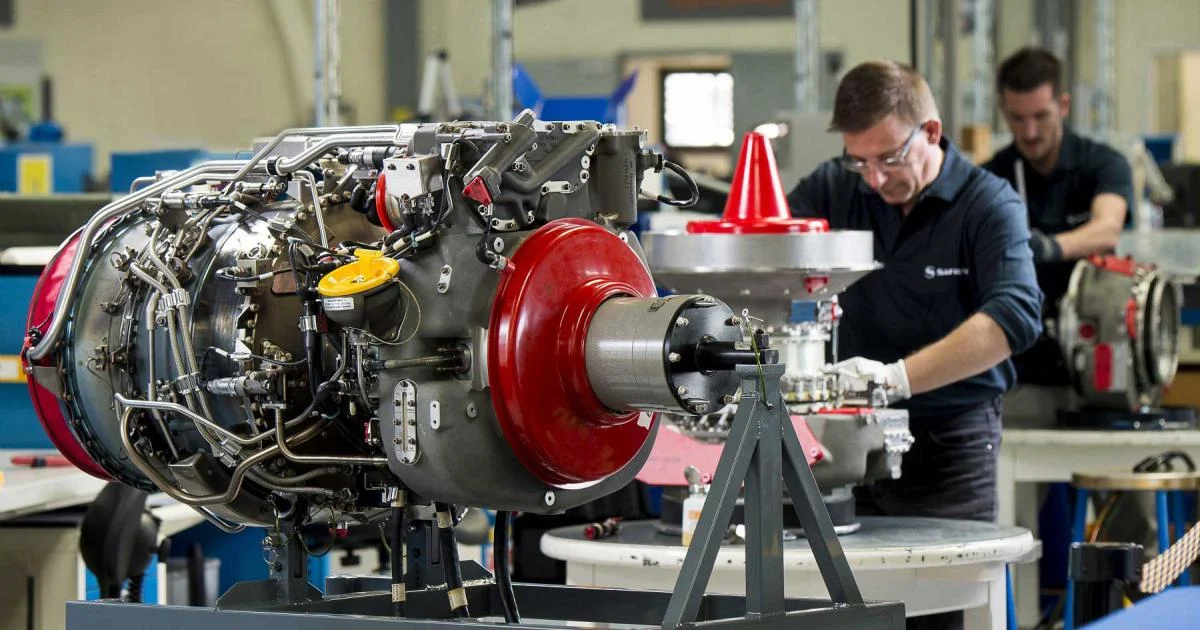
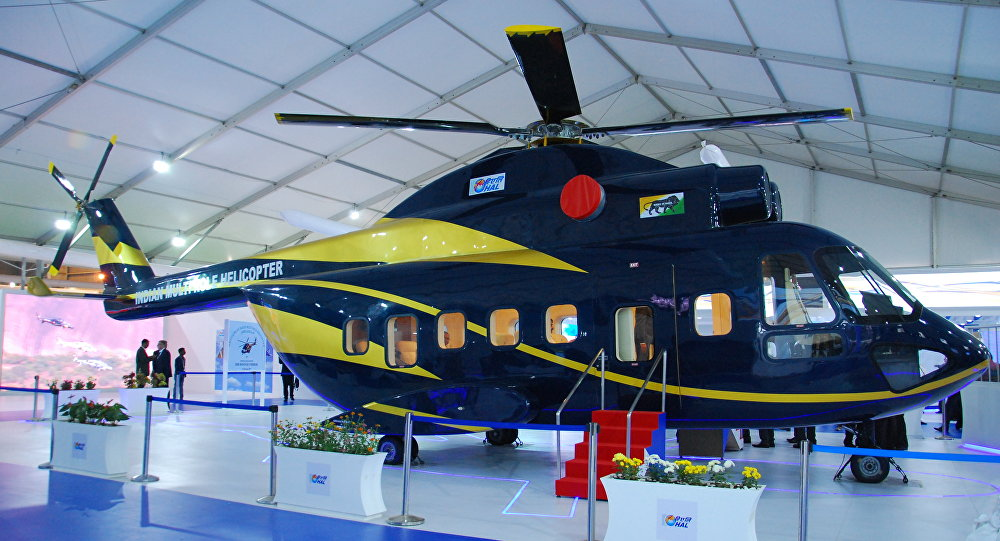
SAFHAL Helicopter Engines Pvt Ltd the 50:50 joint venture HAL and Safran Helicopter Engines have run together for years has now been handed a real mandate. The contract covers the full cycle: design, development, manufacture, supply and lifecycle support of a new turboshaft engine in the 3,500 to 4,000 shp class, named Aravalli. It will power two airframes that are themselves still on paper: HAL’s 13-tonne Indian Multi-Role Helicopter (IMRH), meant to replace the Indian Air Force and Army’s ageing Mi-17 fleet, and its naval sibling, the Deck-Based Multi-Role Helicopter (DBMRH). Production is planned at Tumakuru in Karnataka, with the engine development targeted for completion around 2032-33. HAL sits on both sides of the table here as a shareholder in SAFHAL and as the customer buying the engine for its own helicopters.
None of this is new information a week later. What is worth stopping on is the category the engine sits in, and why that category didn’t exist in Safran’s catalogue before this contract.
Why this is a real co-development, not a modification
Look at Safran’s helicopter engine lineage and a pattern jumps out. Every high-output engine the company has built to date tops out around 3,000 shp that ceiling belongs to the Aneto family, unveiled in 2017 and still Safran’s most powerful helicopter powerplant, currently flying on platforms like the Leonardo AW189K. Below that sits the Ardiden line, including the Ardiden 1H1 “Shakti” that already powers HAL’s Dhruv and Rudra, an engine that came to India as a modification of an existing Safran design, not a ground-up build.
| # | Engine Family | SHP Range | Dry Weight | Year Developed | Notable Applications |
| 1 | Arrius | ~479–710 shp | ~101–120 kg (223–265 lb) | First produced in 1981 | Eurocopter EC120, EC135, Kamov Ka-226 |
| 2 | Arriel | ~650–1,000 shp | ~111–134 kg (245–295 lb) | First ran in 1974 | Agusta A109, MH-65 Dolphin, Sikorsky S-76, Harbin Z-9 |
| 3 | Arrano | 1,100 to 1,300 hp | ~175 kg (386 lb) | First bench tested in February 2014 | Airbus H160 |
| 4 | Ardiden | 1,400–2,000 hp | ~205–210 kg | Launched in 2003, first ran in 2005 | HAL Dhruv, HAL LUH, Ardiden 1 Shakti |
| 5 | Makila | ~1,660–2,415 shp | ~247–279 kg (incl. FADEC) | Launched 1973, first run in 1976 | Airbus Super Puma, H215/H225, Denel Rooivalk |
| 6 | RTM322 | 2,100 to 2,600 shp | ~232–255 kg | First run 15 December 1984 | AW101, NH90, AH-64 Apache |
| 7 | Aneto | 2,500 to 3,000 shp | ~260 kg (Aneto-1K) | Unveiled 2017, first flight of Aneto-1K in March 2017 | Leonardo AW189K, super-medium/heavy helicopters |
Aravalli breaks that pattern. At 3,500-4,000 shp, it sits above anything Safran currently manufactures. There is no existing airframe of theirs to strip down and re-badge for India. That is precisely why this counts as genuine co-development rather than the licensed-modification model India has lived with for decades: Safran doesn’t have a shelf product to hand over even if it wanted to cut corners. The engine has to be built from scratch, together, which means Indian engineers are in the room for the parts of the process, core architecture, hot-section design, systems integration, that a modification contract would have kept at arm’s length.
The two things India is actually buying
Strip away the helicopter and the Aravalli contract is really offering India two separate things.
The first is a template. If SAFHAL can pull off a genuine co-development in the 3,500-4,000 shp bracket, it becomes the first real proof that this model works for India at all not just on paper, in a press release, but as an executed programme with hardware at the end of it. That template matters well beyond helicopters. India’s long-running ambition for an indigenous high-thrust jet engine, tied to the AMCA fighter programme, has been stuck for years on exactly the question Aravalli is now testing in a lower-stakes environment: will a foreign OEM actually co-develop core engine technology with India, or will “partnership” quietly resolve into India building someone else’s design under license again? Aravalli is the test case running before the harder one arrives.
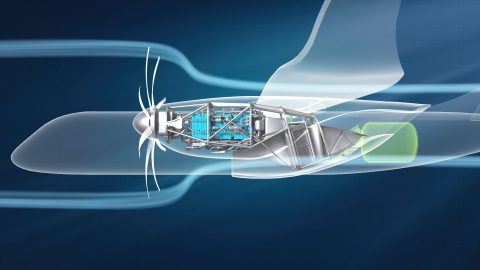
The second is manufacturing capability that outlives the helicopter. An engine in this power class is not helicopter-specific know-how, it’s a demonstration that India can build turboshaft hardware at a thrust level it has never produced domestically. The most interesting way to see this is the fixed-wing comparison: the engines on a Lockheed C-130J Super Hercules generate roughly 4,500 shp per engine. Helicopter and turboprop engines aren’t interchangeable off the shelf, the modifications needed to move a design from rotary-wing to fixed-wing application are real but they are not exotic, either. An engine core validated in the Aravalli-class power band is, in the long run, a plausible starting point for an indigenous C-130J-class turboprop, not just for the next helicopter after IMRH.
The timeline problem nobody signed away
It’s worth being precise about what hasn’t happened yet. The IMRH programme itself still doesn’t have Cabinet Committee on Security clearance, the costing committee has cleared an allocation, but the CCS sign-off that actually greenlights design and development is still pending. Engine development alone is expected to run roughly five years from this contract, putting a mature Aravalli somewhere around 2030-2033. That means the airframe programme and the engine programme are now racing each other: HAL cannot commit fully to IMRH’s final design until it knows what its engine looks like, and it cannot know what the engine looks like until Aravalli clears its own development milestones. Expect early IMRH prototypes, if they fly before Aravalli matures, to do so on interim powerplants like Aneto.
A necessary dose of skepticism
It would be convenient to read this contract as India’s helicopter engine problem solved and move on. It probably isn’t that simple. No country hands over its crown-jewel propulsion technology cleanly, and Safran’s own commercial interest in this deal access to India’s helicopter market, cost-sharing on a new engine family it would otherwise have to fund alone is doing at least as much work here as any goodwill toward Indian self-reliance. The honest way to track this programme from here is not by the press release language about atmanirbharta, but by how much of the actual engineering work, not assembly, not testing, but design authority ends up sitting in India by the time Aravalli is certified.
That’s the number that will tell us whether this was a co-development or a co-branding exercise.