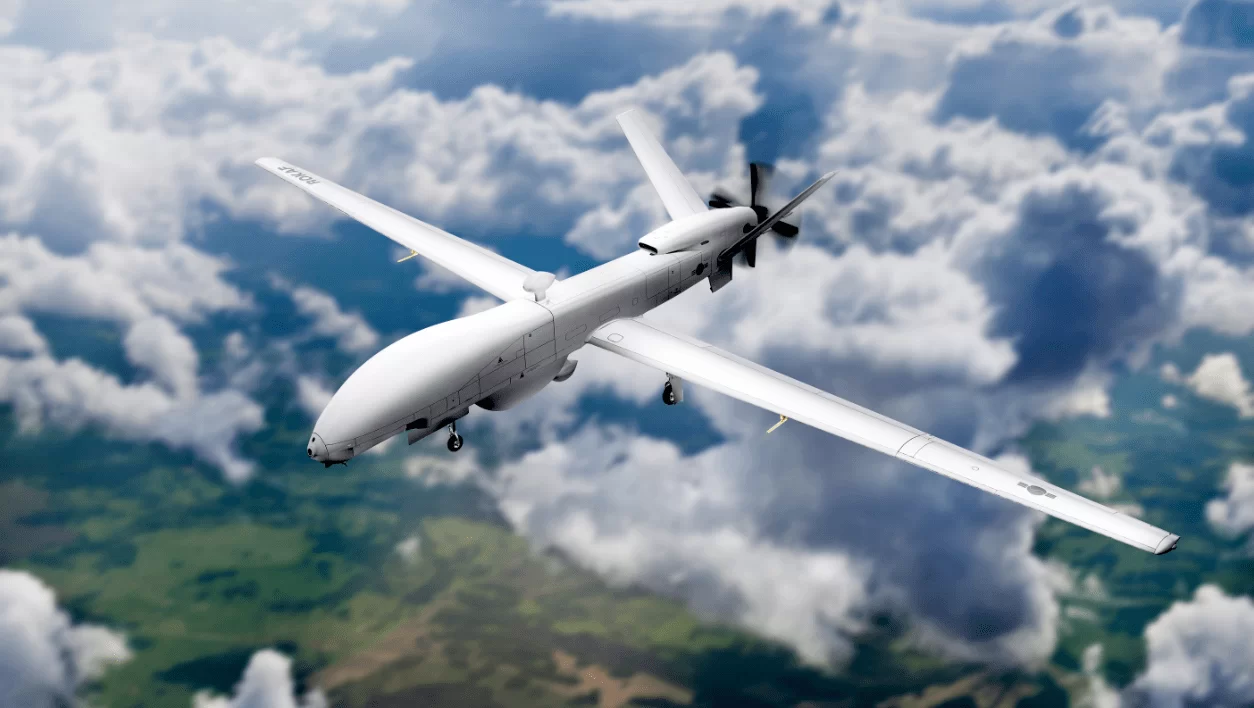
Twenty years is a long time to stay pointed at one target. South Korea’s MUAV requirement was conceived in 2006. It survived a lost prototype in 2019, a mid-program sensor-icing problem that pushed the schedule out by years, and a 2012 moment when Washington’s approval to sell Seoul the RQ-4 Global Hawk made the entire indigenous effort look redundant on paper. It missed its original 2017 in-service target by the better part of a decade. None of that stopped the program.
On April 8, 2026, that persistence produced a result: South Korea’s Defense Acquisition Program Administration (DAPA) held a rollout ceremony at the Korean Air Aerospace Division Tech Center in Busan for the first production example of the RQ-105K, the aircraft better known through its two-decade development run by the program name MUAV (Medium-Altitude Unmanned Aerial Vehicle) and the platform designation KUS-FS. Around 300 people attended the event, which South Korea’s Air Force chief of staff, General Son Seok-rak, described as a first step toward the service’s manned-unmanned teaming architecture.
This is being positioned officially as Korea’s first indigenous strategic-grade UAV a MALE (medium-altitude long-endurance) platform in the same size class as General Atomics’ MQ-9 Reaper, built to give the ROKAF an organic, persistent surveillance capability over North Korea rather than relying solely on RQ-4 Global Hawks and manned RF-16 sorties.
A program two decades in the making
The MUAV requirement dates to 2006, conceived as a domestic MQ-9A-class unarmed reconnaissance platform. The Agency for Defense Development (ADD) and Korean Air Aerospace Division (KAL-ASD) were selected as lead designers in 2008, with first flight following in February 2012. The program then ran into a long stretch of trouble: an overlapping 2012 U.S. approval for South Korea to buy the RQ-4 Global Hawk raised questions about duplication, mid-altitude icing issues affected onboard sensors, and a prototype was lost in a December 2019 crash. Development slipped years past the original 2017 in-service target.
DAPA finally certified KUS-FS to Korean defense specification and closed out development in March 2023. The Defense Project Promotion Committee approved serial production on August 18, 2023, backing a program reportedly worth roughly 980 billion won, and a production contract was signed that December. The aircraft on display April 8 is the first production-standard airframe. The Korean Air says it completed airframe integration and painting in February 2026, with full-scale ground testing starting in March.
Airframe and sensors
Specifications reported consistently across Korean Air’s own brochure material and multiple trade outlets: 13 m length, 25 m wingspan, and a height of roughly 3 m.
Propulsion is a 1,200 hp (890 kW) turboprop from Hanwha Aerospace, derived from the Samsung Techwin SS-760K turbojet originally built for the SSM-700K C-Star anti-ship missile, an unusual lineage, going from a small expendable-missile turbojet to a UAV turboprop. Some reporting has attached a 24.46 kN thrust figure to this engine alongside the 1,200 hp rating; the two units aren’t describing the same thing for a turboprop, infact creating confusion. The literature around the engine is blurry and need further clarification.
Sensor fit is split between the two other major partners: Hanwha Systems supplies the EO/IR turret, LIG Defense & Aerospace (formerly LIG Nex1) supplies the SAR. Data links include SATCOM plus Ku-band and UHF line-of-sight, and the aircraft can be flown from either a fixed ground control station or a mobile 40-foot containerized GCS.
On performance, a South Korean media report cited a 5,750 kg MTOW, 360 km/h top speed, 24+ hour endurance, and an operating envelope of roughly 10,000–13,716 m (33,000–45,000 ft). The same report claimed ground-target scanning out to 110 km and identification of fixed sites at 130 km.
Naming and roadmap
The RQ prefix follows the same convention as the U.S. RQ-4/RQ-9 system: unarmed reconnaissance variant. DAPA has floated an armed derivative under the MQ-105K designation since 2023, though that remains a stated intent rather than a funded program of record in current reporting.
Korean Air says the airframe is due to transfer to the ROKAF in July 2026 for system integration and flight testing, with squadron delivery targeted for early 2027. The 39th Reconnaissance Squadron at Chungju Air Base stood up in November 2020 specifically to eventually operate KUS-FS alongside RF-16s and RQ-4s is the intended home unit. Total planned buy is around ten air vehicles across two to three complete systems (each system bundling multiple UAVs with a ground control station). Separately, Hanwha Aerospace was contracted in mid-2025 to develop a more powerful 1,400 hp replacement engine, targeted for 2028, an indication Seoul already sees the current powerplant as a limiting factor rather than a settled baseline.
DAPA is citing a 90% localization rate for the program, which if it holds up under scrutiny would make this one of the more indigenized MALE UAV efforts in the region, notably absent the heavy dependence on U.S. or Israeli subsystems that shapes several other Asian MALE programs.
The takeaway
Strip away the turboprops and SAR modules and what’s actually being marked in Busan is twenty years of a program that got everything thrown at it, a redundant procurement scare in 2012, an icing problem that ate years off the schedule, a lost prototype in 2019, a decade of slip past its original in-service date and didn’t fold. Programs get judged on their delays right up until the day they stop slipping; after that, the record just reads “delivered.” KUS-FS is about as clean an example as this region has produced lately of what sustained institutional persistence actually buys: not a shortcut around the roadblocks, just an outcome that outlasts them.
Sources
- MILMAG, “South Korea: First Production RQ-105K Unmanned Aircraft Unveiled,” April 2026
- FlightGlobal, “First production standard MUAV rolled out in Busan,” April 2026
- Asian Military Review, “South Korea rolls out first production MUAV,” April 2026
- FW-MAG Future Warfare Magazine, shownews coverage of the Busan rollout
- Army Recognition, “South Korean Air Force’s new KUS-FS MALE UAV identifies ground targets 130 kilometers away,” 2024
- Korean Air Aerospace Division, KUS-FS brochure (archived PDF)
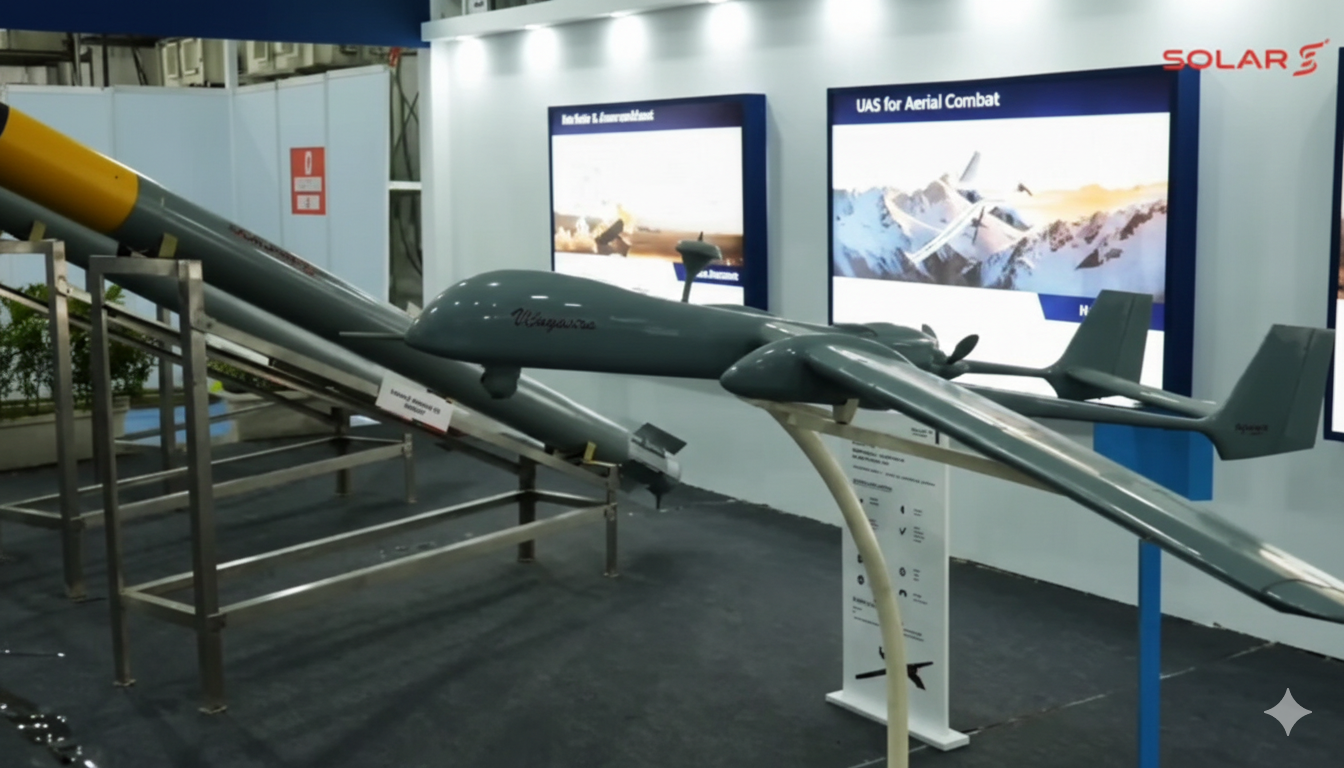
East asian countries are on a ROLL.
SK with a complete ecosystem of submaries, ships, indegenous 4.5++ generation KF21, small arms, missiles, SAMs, tracked and wheeled air defence and artillery.
Japan with indegenous stealth submaries, ships, airforce with F2s, now GCAPs, and a strong grasp on AI tech.
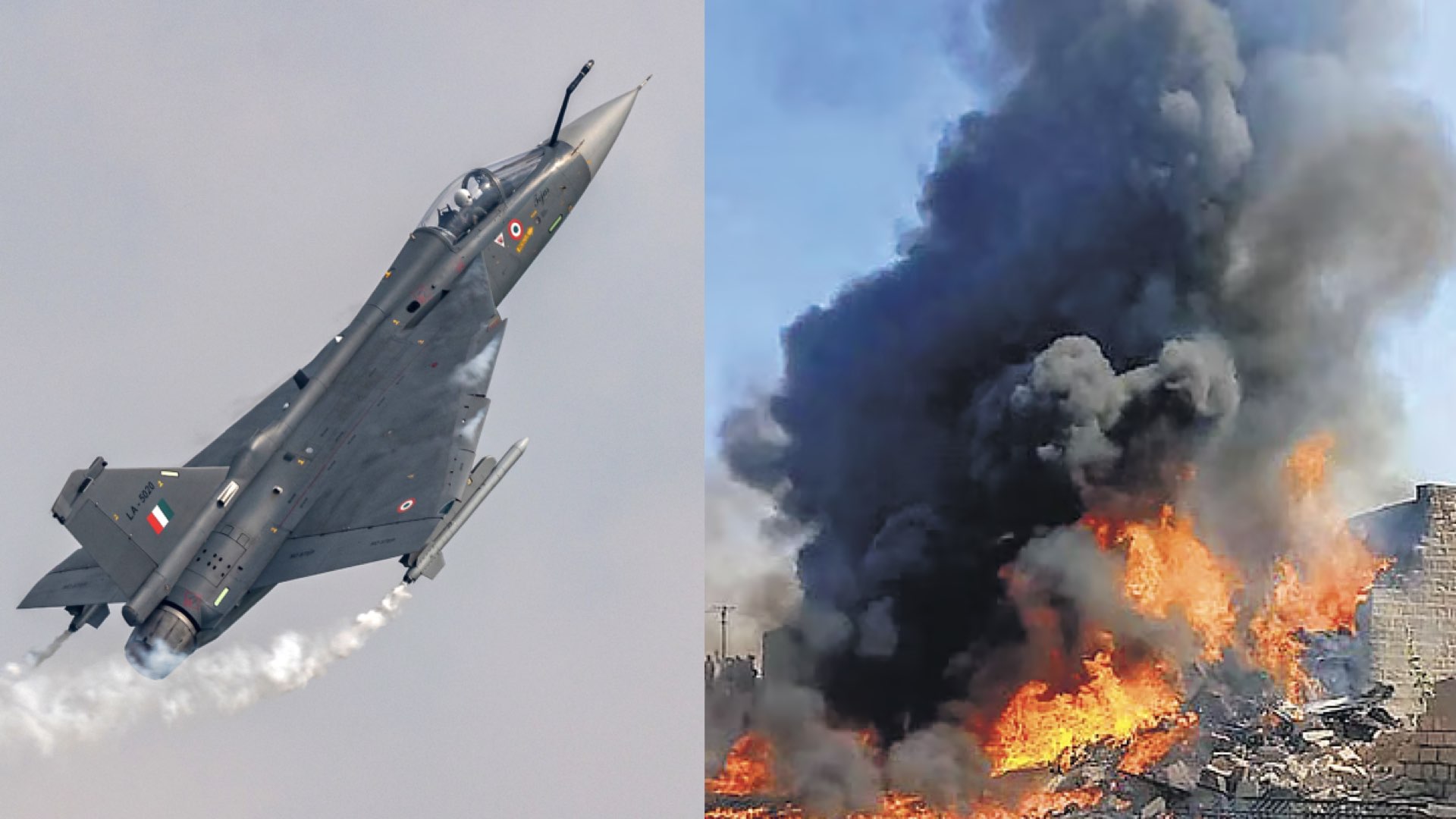
Wonder where India is heading (ofcourse apart from RFIs, delays, reconstructed GQSRs and requirements when a decent platform is built, union labor strikes, Ladki chachi yojnas, Top military leadership and scientists falling for honeytraps, opposition claming Desh Ko Bech Dala, and so forth).