~By Shamita Rishab
Room 469 at Vayu Bhawan does not look like a battlefield. But a quiet contest for India’s next-generation fighter trainer is being decided there. From two directorates at Air Headquarters, the IAF has just told the world what it wants for the next decade of pilot training.
The Ministry of Defence put out a call in mid-2026 for Jet Trainer Aircraft for Stage III (F) and associated equipment. The ask is large. The IAF wants approximately 150 aircraft. Vendors have until 5 October 2026 to respond. The formal RFP is expected only by December 2027.
This is not a minor procurement update. It is the opening move in replacing the Hawk 132, a fleet that has trained IAF fighter pilots since the last decade. The stakes go beyond hardware. They touch how India trains pilots for the Su-30MKI, the Rafale, the Tejas Mk2, and eventually the AMCA.
What the IAF Actually Wants
The IAF’s wishlist reads like it was assembled by pilots who have flown every mistake out of the old syllabus. It expects fly-by-wire controls. It wants aircraft that recover on their own from high-Alpha departures, hands and legs off the stick. It hopes for full aerobatic capability without dangerous departure tendencies.
The cockpit expectations go further. Night operations. Visual targeting after dark. Glass cockpits with configurable HOTAS. Embedded virtual avionics and EW suites that simulate threats without live ordnance. A networked, full-motion 360-degree dome simulator tied into a Live Virtual Construct architecture.
Then come the futuristic asks. AI-modelled predictive maintenance. Hot-arming and refuelling inside 30 minutes. Engine changes within a single hour. Holographic debrief projection for reviewing sorties from any angle. These are not baseline requirements. They read as differentiators, designed to separate serious next-generation platforms from legacy trainers wearing new paint.
Weapons carriage matters too. The IAF expects real hardpoints, internal or podded guns, and genuine air-to-ground ordnance options. This is not simulation-only training. The IAF wants a platform that can teach weapons employment for real.
The Foreign Field
The response window closes only in October. But three aircraft stand out as the most likely foreign respondents, based on fit against what the IAF expects and each OEM’s recent trainer-market activity. Leonardo’s M-346 leads on maturity. It already carries an Embedded Tactical Training System that maps closely onto what the IAF wants for virtual EW simulation. Italy runs it in frontline training today. Its weakness sits in weapons carriage, which trails a true lead-in fighter trainer.
South Korea’s T-50 and TA-50 answer that gap directly. The TA-50 variant carries real hardpoints, a gun, and air-to-ground weapons. It has export history in the Philippines and Indonesia. But Seoul is also a live competitor across other Indian defence programmes right now. That overlap could complicate their bid.
Boeing and Saab’s T-7A Red Hawk brings the newest design and the boldest avionics pitch. At Farnborough this month, it was marketed as fourth and fifth-generation ready, sixth-generation enabled. That branding fits what the IAF wants on open architecture and embedded avionics well. But the aircraft has no foreign operator yet. Its transfer-of-technology depth remains unproven outside the United States.
The Indian Option
Here is where the story gets interesting for domestic industry. HAL is not showing up to this fight with the existing twin-seat Tejas trainer. That aircraft is a different animal. It exists to convert pilots already assigned to Tejas squadrons. Twenty-nine of them are baked into the 2025 Mk1A order alone. It was never built to train IAF pilots headed for the Su-30MKI, the Mirage, or the Rafale.
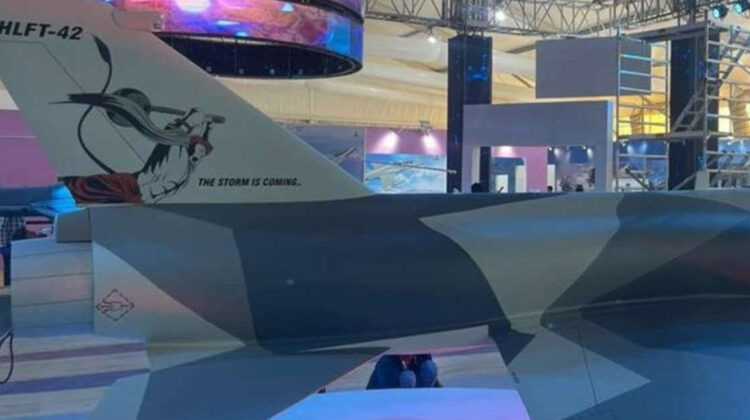
Another domestic contender is the HAL HLFT-42. Unveiled first at Aero India 2023, it is a purpose-built Lead-In Fighter Trainer. HAL designed it as a dual-role aircraft, capable of both training and genuine combat missions. Its 16.5-tonne maximum take-off weight puts it in a different class from the existing Tejas trainer entirely.
On paper, the HLFT-42 checks boxes the foreign competitors struggle with. It promises supersonic performance and quadraplex fly-by-wire control. As a genuine combat-capable jet, it could outperform the M-346 on weapons training. Under DAP-2020’s procurement categorization, a compliant Buy (Indian) offering also earns automatic priority over foreign alternatives.
That priority carries real weight in the evaluation process. Category preference is not a tiebreaker. It sits ahead of price and often ahead of raw technical superiority. If HAL can field a compliant HLFT-42, category alone hands it an edge no foreign OEM can match through specifications.
But priority does not build airframes. The HLFT-42 remains under development. It has not flown as a combat-configured trainer. It has not accumulated fleet hours anywhere. Every competing foreign design already has service history behind it, in at least one air force. The mid way could be a Tejas based LIFT but then “Engine”.
Why the Timeline Is the Real Story
The IAF has set an aggressive clock. RFP issue is targeted for December 2027. Full delivery must complete within 60 months of contract signature. That means an aircraft entering serial production and reaching IAF squadrons inside roughly nine years from RFP to final delivery, if the schedule holds.
For a mature design like the M-346 or T-50, that timeline is workable. Production lines already exist. Certification data already sits with regulators. For the HLFT-42, the same window demands compressed flight testing, certification, and production ramp-up, all inside a schedule that has already claimed casualties in HAL’s trainer history. Had there been no issues with LCA tejas Mk1A, we could have discussed Tejas based LIFT in great details here.
The HJT-36 Sitara offers a cautionary precedent. So does the cancelled HJT-39 CAT programme, an earlier attempt at exactly this concept. Both illustrate how ambitious indigenous trainer timelines have slipped before. The HLFT-42’s backers will need to show this project breaks that pattern, not repeats it.
What to Watch Next
The October 2026 deadline will produce the first real signal. Vendor responses will reveal who is serious, who is testing the waters, and who is positioning for a later Buy & Make partnership instead of a direct sale. HAL’s own submission, if made through the HLFT-42, will need firm dates attached to it, not aspirational milestones.
Watch the indigenous content declarations closely too. The IAF has asked vendors for specific figures on overall indigenous content and on material manufactured in India. Foreign vendors chasing the DAP-2020 category ladder will need credible Indian partnerships to compete with a domestic offering on category terms alone.
The most consequential outcome may not be which aircraft wins. It may be whether the RFP timeline survives contact with reality. India has run this experiment before, with Stage II and Stage III trainers alike. The requirements are rarely the hard part. The delivery has been.
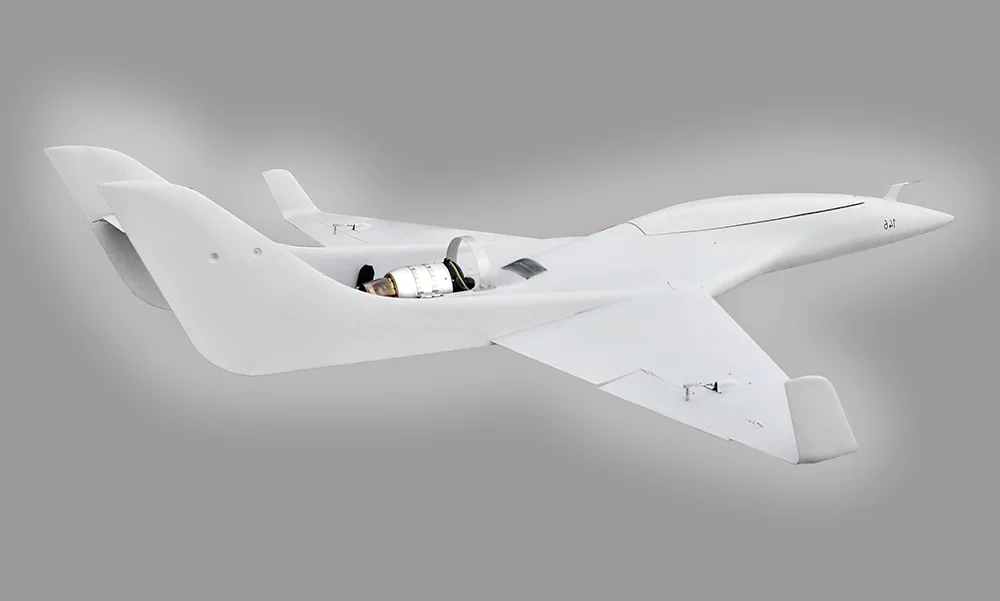
A major error in this article is the claim that HLFT-42 is a contender. HLFT-42 as an aircraft does not exist, not even on paper (no pdr/cdr/aon/ccs). Just a Plastic polymer model exists. There is no HLFT42. No Engine for HLFT42. And the deadline in the industry for providing a proof of “proven” plane is of next year december.
Closest Indian option would be LCA Sport (which also does not actually exist). Even the LCA aircraft would be much more expensive than Boeing T7, which I think has a STRONG chance of winning the contract, despite the fact that T7 has some shortcommings as far as supercruise is concerned. License manufacturing with TATAs after republicans are out of the whitehouse.
Lets not even ponder on the fact that Indians should he ASHAMED of the fact that Ice Cream vendors have a more stable and supportive military aviation ecosystem when it comes to manufacturing REAL aircrafts, not just PPT slides and plastic models. KAAN, Hurjet, gokbey, the entire bayraktar lineup, the new ICBMs, Stealth cruise missles, their LCHz list goes on.