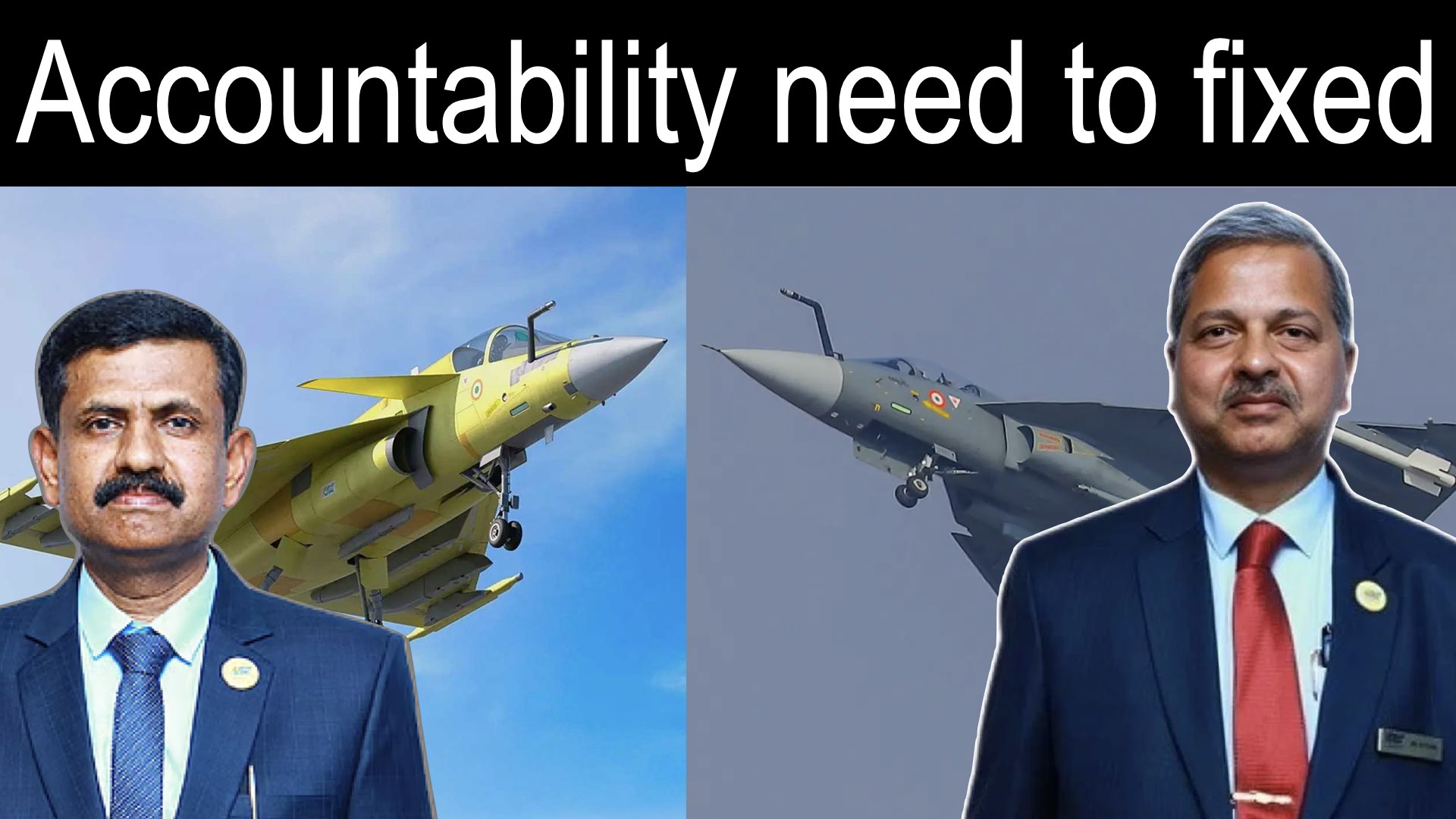
On one hand, HAL states that five aircraft are “fully ready for delivery”, while an additional nine have been built and flown, pending engine deliveries from GE. It further assures stakeholders that engine supply outlook is positive and that delivery guidance for the current financial year will be met.
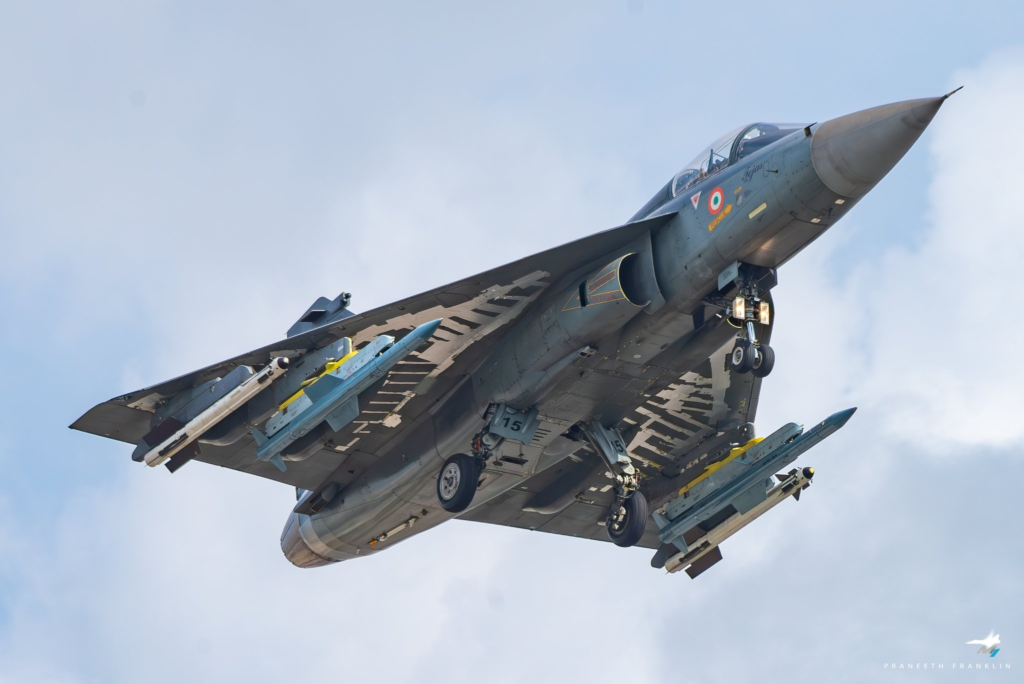
However, the wording used by HAL is revealing.
The aircraft, according to the release, are “incorporating major contracted capabilities as per the contracted specifications”, while design and development issues are still being “addressed in an expedited manner.” At the same time, HAL insists the jets are ready for delivery.
This creates a fundamental and uncomfortable question:
Is HAL proposing to deliver aircraft that meet only major contracted capabilities rather than the full contracted configuration?
If the aircraft is truly ready, then all contracted capabilities should already be integrated and validated. If not, then the definition of “ready for delivery” itself becomes questionable especially for a frontline combat aircraft meant for the Indian Air Force.
This ambiguity cannot be brushed aside as a communication issue. It goes directly to programme governance, contractual compliance, and operational readiness.
Accountability, therefore, must be clearly fixed. The responsibility cannot remain diffused across suppliers or external dependencies alone. The HAL CMD and the LCA programme leadership within HAL must publicly clarify:
- What capabilities are present today
- What capabilities are pending
- And whether the IAF is being asked to accept aircraft short of the originally contracted standard
HAL needs to be backed when it delivers but scrutinised harder when it does not. Transparency and accountability are not optional for a programme of this national importance.


I would like to bring to your attention a few points as I feel you will be able to understand and may present better picture to your audience.
Regarding the HAL TEJAS controversy, and overall policy what many people may miss appreciating.
First of all HAL is not the design authority for the Tejas, it’s software or any equipment on it.
ADA designs the aircraft/ modifications and various other DRDO labs design the indigenous components avionics weapon packages etc.
All of this is tested and qualified by the said design teams at NFTC with the help of ASTE and final qualification is done by CEMILAC.
Only after qualification can any component be put on a serial aircraft. This is where HAL comes in as manufacturer; ‘lead integrator’ is a misnomer. Based on given finalised certified component drawing list, HAL then proceeds to manufacture or subcontract for the components. Once all components are at hand from all sources HAL proceeds to ‘integrate’ assemble everything into an airframe. Flight test is done by HAL pilots and then acceptance test is done by IAF pilots.
HAL can only put in what the customer has ordered/ specified/ accepted.
What has actually gone wrong is project management. The IAF/ MoD have failed to put in place a project manager whose job it would be to keep track of the complete picture and manage technological and manufacturing readiness and timelines.
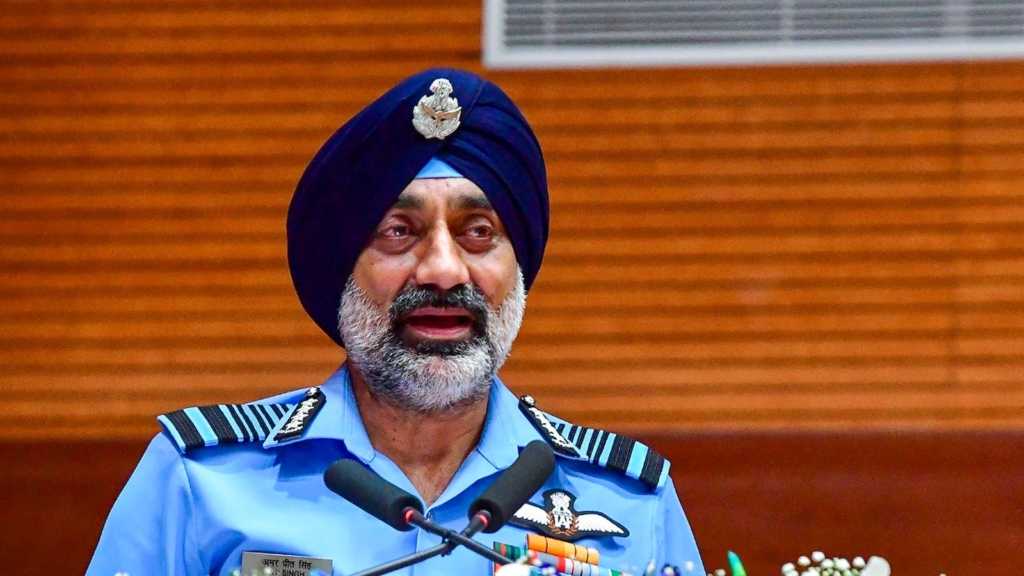
The IAF chief voicing displeasure means he was promised something by somebody which did not get delivered.
What it also means is that the IAF chief was unaware of actual status and feasibility of timelines before placing the order.
The second is obviously more disconcerting if the chief or the IAF are not fully aware of ground realities of such an important project.
Orders have been placed with actual qualification in an uncertain distant future.
Imagine PS05, Elta 2032, Elta 2052, Uttam 1st iteration, Uttam matured. These are not plug and play. Every change requires some redesign full cycle of retest integration qualification certification. Plus the integration of all weapons. Even CCIP CCRP of dumb weapons with new radar has to be qualified let alone BVR missiles.
So it begs the question why was an order placed for a configuration that was uncertified and work under progress. Either you wait for certification of Uttam, ew pod , astra etc and then place the order, or place order for FOC configuration aircraft to be upgraded once final configuration fully baked.
MoD/ GoI owns IAF,DRDO,HAL.
Who owns the Tejas project as a whole?
Did they not know that engine had gone out of production or that radar ew astra have not been qualified/certified.
Public chastisement of HAL etc is easy because the chairman is govt appointed. If he openly tells the facts he will be out of a job next day. He can only say yes sir.
Only a MoD/ IAF project manager who has complete information from all agencies internal and external would be able to come up with what is feasible and what is not.
Such a person unfortunately does not seem to exist.
Same company delivered whole sukhoi fleet.No noise.
Same company involved in DARIN.
Same company delivers ALH and has 15 LSP LCH ready before govt places order.
Btw HAL is the design authority for the helicopters alh lch luh iirc.
This is not supposed to be a defence of HAL rather a deep look at root causes.
Who is the Tejas program manager at MoD or IAF?
Who is coordinating between ADA LRDE ARDE HAL SAMTEL GE ELBIT etc at govt level?
Does HAL choose the configuration or does the IAF/MoD?
HAL for sure has its problems but does the buck stop at HAL?
The govt has decide to go private rest all is noise and poor program management.
As you might have noticed cement companies are now making ‘indigenous’ MALE drones. Don’t be naive.
HAL is just telling lies. Nobody to fix responsibility and chalta hai.
They only take orders but does not deliver. I feel like nobody is bothered to hold HAL responsible for long long delay.
I like your reply. HAL has no accountability and only looks at taking the orders. HAL focuses on early contract and advanced. About meeting timeliness of project, the feel MoD is their sub office and extension will be taken for granted.
When, QRs r promulgated, it clearly gives the mandatory requirements. Consequent to that all all other contractual obligations starts.
It’s high time, we make HAL accountable and show doors to those unable to deliver the products.
final notes:
Look at all the integration work done successfully with su-30. same IAF HAL DRDO no profit angle.no noise.
Like it or not politics and profit have entered the Indian defense sphere.
Retired chiefs joining politics. Contract soldiers to save on pensions.
PSUs being slowly killed off. (When was the last recapitalisation of OFB factories? The most capable aerospace company being knowingly kept away from the most important aerospace project.)
Public money spent on R&D used to generate private profits.(What percentage of products offered by Indian companies comes from their own R&D and not from DRDO and not from foreign designs/components?)
Public private partnerships are important at component level such as Samtel or AMP where focused competencies are being built.
By going private at platform level in search of export revenue we will end up nirbhar on private monopolies duopolies.
Defence preparedness mindset and priorities of our planners and policymakers is amply demonstrated by the Rafale saga.
What our BJP regime of GOI is also turning out be to like the past regime ? If so then SHAME…..
So it seems, the truth now , lobbying for the few favoured private player at the cost of public money.
( Our hard earn Tax Money )
Why not put / place it all under one project roof supervision and make it accountable.
Is the theme Vikshit Bharat
I.think ADA.is only.responsibe for the.delay due to non availability of the engine
ADA to be accountable
The article is well written. Yet, it has not talked about IAF’s atrocity. It keeps shifting the goal posts whenever some latest missile or radar shows potential. Did they do that for aircraft suppliers abroad? Of course not. Because, only HAL can be taken for ride. Even the present delay in induction of 5 tejas is squarely because of IAF. They don’t have the decency to come forward and announce at Media that only they are responsible for the delay!😐
there is smelling of a big scam on Teja. The air chief had given an interview that he is not satisfied with HAL management and progress of these aircraft. why no one took it seriously. we can see why government is going ahead with Rafael aircraft in a big way. France will make money and we will do contractor job. Our babus at HAL and MOD must be taken to task by PMO including political head Mr Rajnath Singh.
Why can’t we have another capable Defence Minister like late Mohan Parrikar? It seems the HAL has again gone into same morase as during Man Mohan Singh. Managing Defence Ministry is highly intelligent & visionary work. Politician like present dispensation is incapable to handle the Multifaceted highly technical decision. The IAS sitting in the MOD are super Intelligent people,they are extremely expert in influencing the mindset of Minister with their own thoughts. Otherwise make in India wouldn’t have been changed to purchase from outside. Manohar Parrikar was one who set indigenous over Imports. India was doing tremendously well. The Prime Minister is very busy man, he has millions of Problems to solve, he is a votary of Indigenous product for India,but he seems to be influenced by the import brigades in MOD.
HAL needs complete Overhaul. DRDO working has become sluggish, it seems indecisive attitude has engulfed. PMO has to give more importance to the decision making Management there. Capable Managers are needed, more authority must be given to them,with targetted Research. We again need another Kalam at the helm.