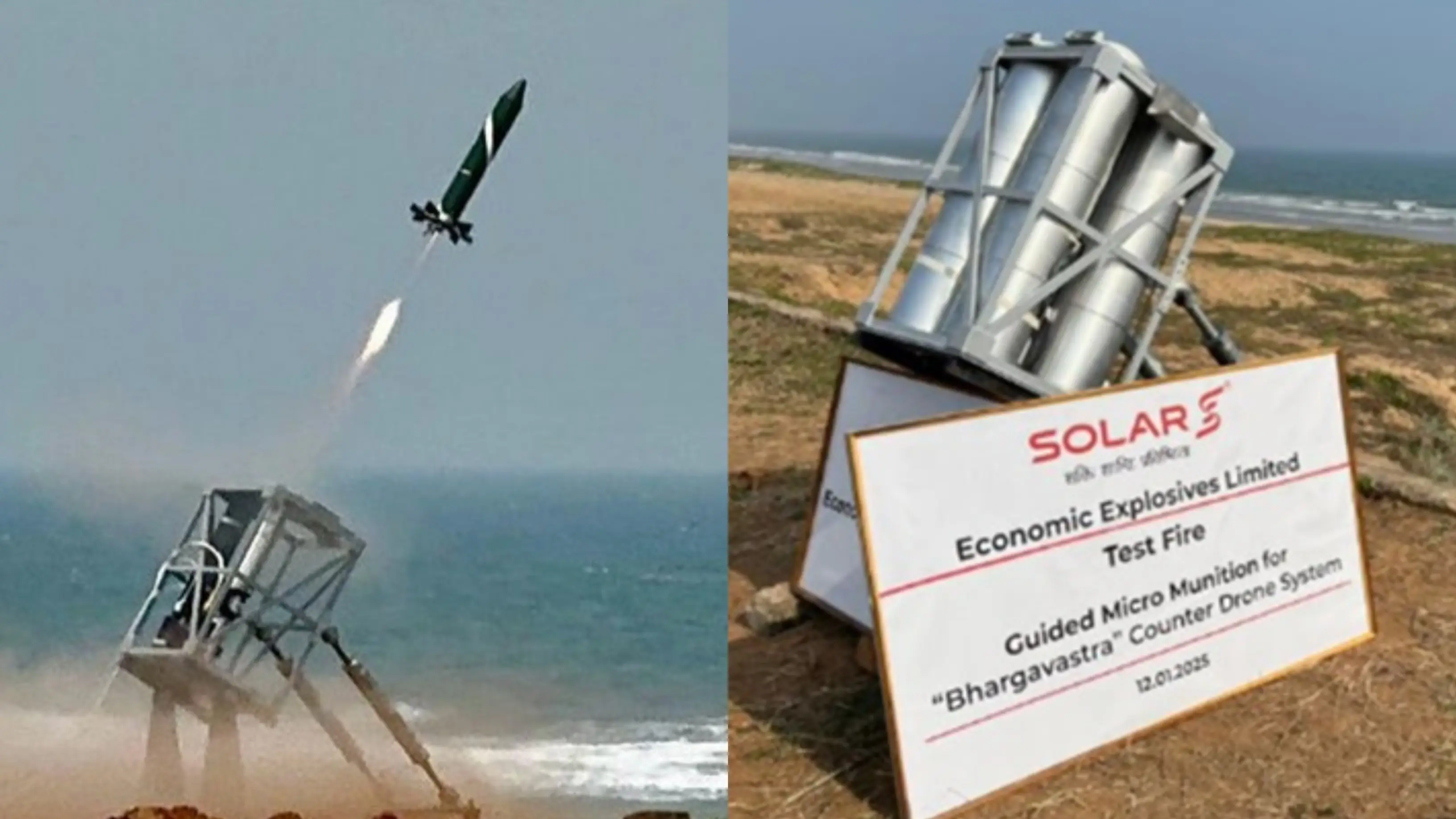
India has begun building a joint defence Counter-Unmanned Aerial System, or C-UAS, grid to address the growing drone threat. This initiative reflects changing battlefield realities where cheap unmanned systems increasingly challenge traditional air defence. A recent ANI report outlined how this grid aims to integrate detection, tracking, and interception capabilities across services. While the intent is sound, the effectiveness of this grid will ultimately depend on how well it balances cost, scale, and response speed.
Modern conflicts no longer revolve only around high-end aircraft or precision missiles. Instead, inexpensive drones now shape tactical outcomes. These systems are easy to launch, difficult to track in large numbers, and costly to counter using legacy weapons. Therefore, any credible C-UAS architecture must address this imbalance directly.
What the Current C-UAS Grid Focuses On
The proposed joint grid relies primarily on existing air defence assets. These include L-70 and ZU-23 air defence guns, laser-based systems, and soft-kill electronic warfare solutions. Together, these elements create a layered defensive posture against hostile drones. Soft-kill systems attempt to jam or spoof control links, while laser systems aim to damage sensors or airframes. Guns act as a final kinetic barrier.
However, this structure still leaves a critical gap. Autonomous drones, especially swarm systems, often operate without external control links. In such cases, jamming becomes ineffective, and guns alone struggle against saturation attacks.
Lessons from Ukraine: Cost Matters More Than Ever
The war in Ukraine highlighted a crucial lesson for modern air defence planners. Using expensive surface-to-air missiles against cheap drones is not sustainable. Systems like Vampire demonstrated a far more efficient approach. Vampire employs laser-guided 70 mm rockets, delivering precision at a fraction of the cost of traditional missiles.
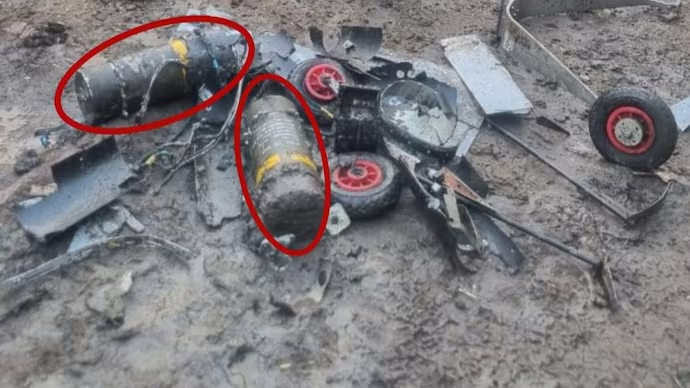
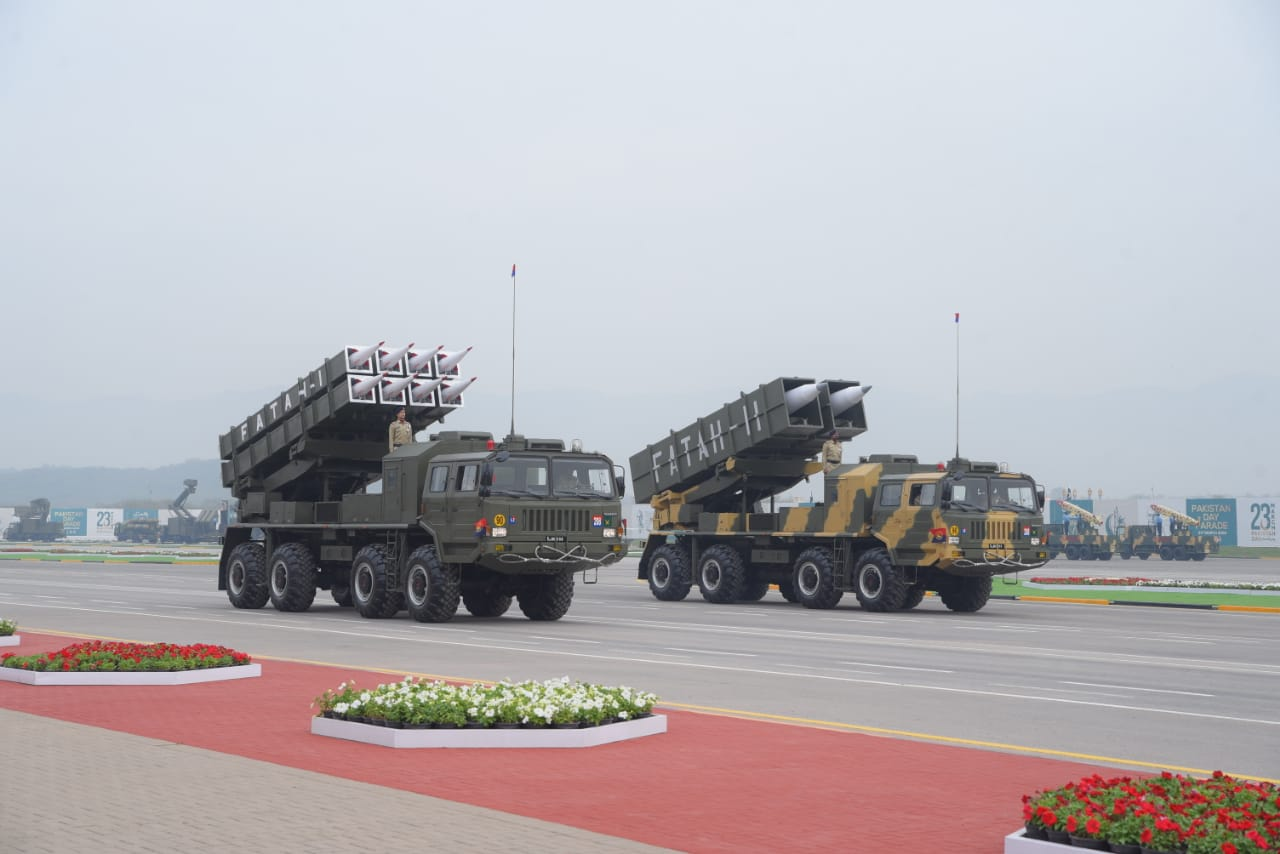
No military can afford to intercept every low-cost UAV with systems like Akash, SPYDER, or VSHORAD. Many hostile drones use simple engines comparable to civilian motorcycles. The YIHA-III drone exemplifies this trend. It is cheap, expendable, and designed for mass deployment rather than survivability.
Operation Sindoor and the YIHA-III Challenge
During Operation Sindoor, Pakistan deployed YIHA-III drones in significant numbers. Indian air defence guns successfully shot down most of these platforms. However, a few penetrations forced the use of costlier missile systems. This imbalance clearly benefits the attacker over time.
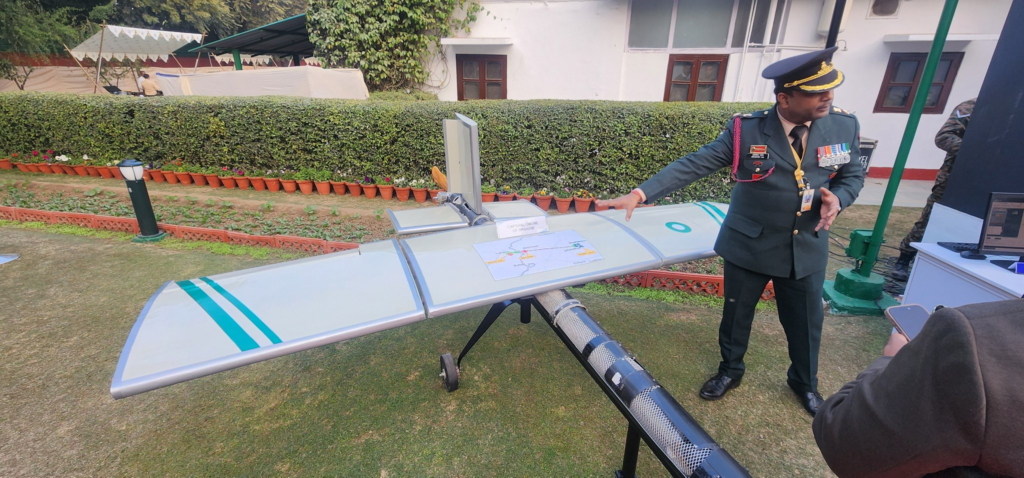
In any future conflict, adversaries will deliberately increase drone numbers to overwhelm defences. Saturation, not precision, will drive their strategy. This reality explains why India is now moving toward a joint C-UAS grid. Yet, without an affordable kinetic interceptor layer, the grid remains incomplete.
The Critical Vulnerability in the Existing Grid
A C-UAS grid that relies mainly on soft-kill measures and guns carries an inherent vulnerability. Autonomous drones cannot be spoofed easily. Swarm drones resist jamming by design. Guns, while effective, struggle to cope with coordinated multi-axis attacks. This combination creates gaps that adversaries can exploit.
To close this gap, the grid requires a rapid-fire, low-cost, kinetic micro-missile system. That requirement is already met by an indigenous solution.
Bhargavastra: The Missing Layer in India’s C-UAS Architecture
Bhargavastra offers precisely what the current grid lacks. Developed by Solar Defence and Aerospace Limited, this system represents the world’s first guided micro-missile counter-drone solution. Its design philosophy focuses on defeating modern drone threats without resorting to expensive surface-to-air missiles.
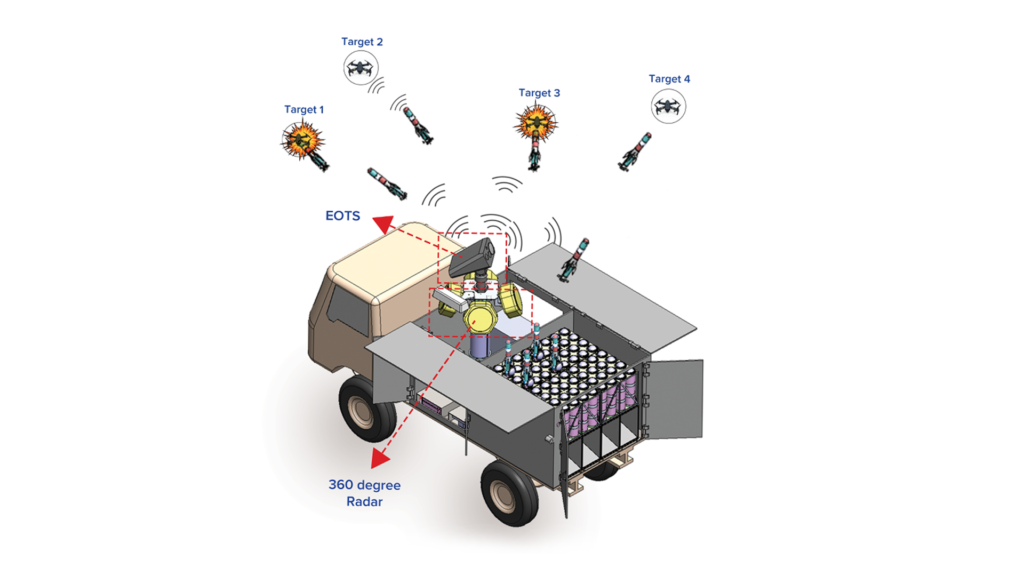
Bhargavastra employs both guided and unguided micro-missiles. These weapons target loitering munitions and weaponized drone swarms that cannot be jammed or spoofed. As a result, kinetic interception becomes the only reliable option.
Multi-Layered Defence at Fractional Cost
Bhargavastra operates using a two-layer engagement concept. The first layer uses unguided micro-rockets to neutralize drone swarms within a 20-meter radius. The second layer deploys precision-guided micro-missiles to intercept evasive or high-value aerial targets. The system offers an engagement range of up to 2.5 kilometers, which perfectly complements guns and soft-kill systems.
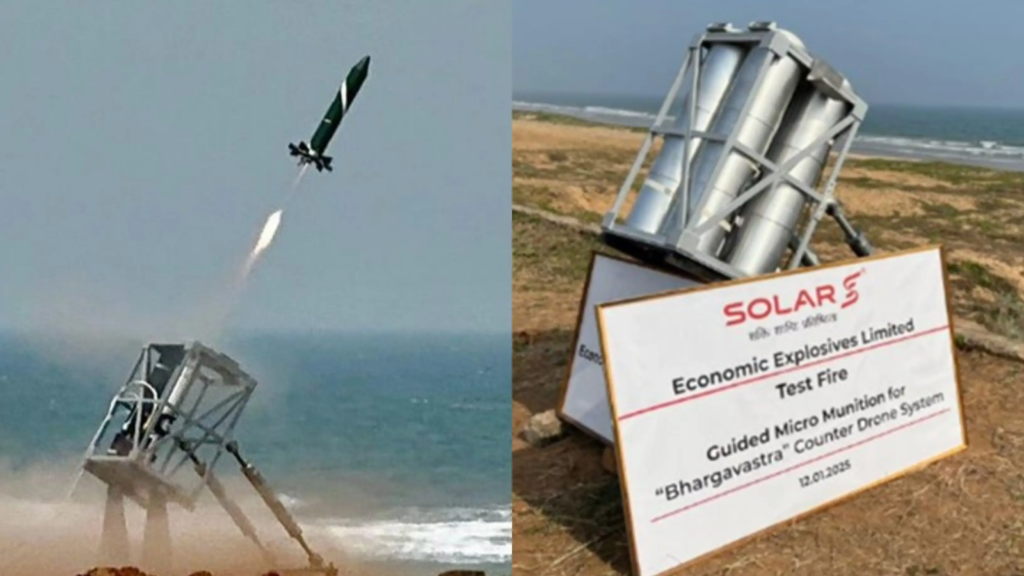
By filling this range bracket, Bhargavastra prevents the premature use of costly missiles. This restores cost efficiency and preserves high-end interceptors for genuine threats.
Fully Indigenous and Grid-Ready by Design
Every component of Bhargavastra is developed in India, including sensors, launchers, and strike mechanisms. The system uses an open architecture, allowing seamless integration of radar, electro-optical, and radio-frequency sensors. This flexibility enables mission-specific customization and smooth integration into a joint defence grid.
Bhargavastra naturally aligns with layered air defence principles. It enhances interoperability rather than complicating command structures.
Mobility, Coverage, and High-Altitude Capability
Bhargavastra mounts easily on mobile platforms and can be deployed rapidly across diverse terrain. The system remains operational at altitudes up to 5,000 meters, making it suitable for both plains and mountainous borders. Its C4I-enabled command center detects medium-sized UAVs at 10 kilometers and very small drones at 6 kilometers.
Each launcher carries 64 micro-missiles arranged in 8×8 cassettes. This configuration allows multiple launches within seconds and provides full 360-degree coverage against saturation attacks.
Why Bhargavastra Is a Natural Fit for the Joint Grid
India’s joint defence C-UAS grid is an essential step forward. However, grids without balance invite exploitation. Without Bhargavastra, the system remains vulnerable to mass drone attacks. With Bhargavastra, the grid gains depth, resilience, and economic sustainability.
Most importantly, it restores cost asymmetry in India’s favor. In future drone-centric conflicts, that advantage will matter more than any single platform.
Well planned , but like this defence system , working , uas system , at kinetic us us system, just like space station , but to be moved from , one place to to another, place , magnetic equipment to attract enemy. uas and destroy , means , which should swallow drones and make it ineffective in the dust bin is to be made , which should be kept very secret , which should not available social media or other network .9
what will be the cost of these intercetors according to you