Disclaimer:
This article has been authored by aerospace engineering student Wang Xi (王西), and the views, opinions, and analyses expressed herein are solely her own. We are grateful for her valuable contribution and perspective on this subject.Jet engine technology remains one of the most fascinating and complex fields within aerospace engineering. China’s journey in aero-engine development, with its successes, challenges, and technological milestones, is an important area of study for students, researchers, and aviation enthusiasts alike. This article is presented as an independent academic contribution intended to encourage discussion and understanding of aerospace technologies.
- Foreword: The Strategic Imperative of the "Chinese Heart"
- Part I: The Prologue – Ground Zero (1900–1953)
- Part II: The Pioneer Era – Soviet Turbojet Transplantation (1954–1970s)
- Part III: The Hybrid Decade – Western Detours & Russian Crutches (1980–2005)
- Part IV: The Breakthrough Era – WS-10 "Taihang" & Its Iterations (2005–2020)
- Part V: The Flagship Era – 5th-Gen & High-Bypass Power (2014–2026)
- Part VI: The Civilian & Rotary Branch – A Parallel Revolution
- Part VII: Comparative Analysis – Where Does China Stand?
- Part VIII: Conclusion – From Reverse-Engineering to Reinvention
- Appendix A: Engine Specifications Table
Foreword: The Strategic Imperative of the “Chinese Heart”
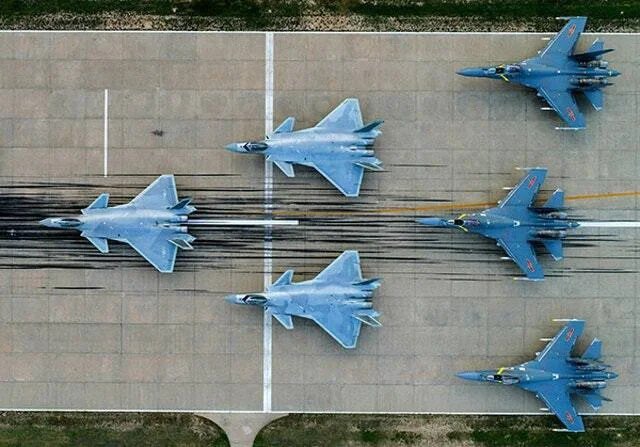
For over seven decades, the People’s Liberation Army Air Force (PLAAF) has been defined by a single vulnerability: its engines. From the Korean War to the Taiwan Strait standoffs, Chinese pilots flew aircraft powered by foreign hearts. The first Soviet, then Russian, and occasionally British or American-derived reverse-engineered cores. The engine was always the bottleneck, the “Achilles’ heel” of China’s otherwise impressive airframe designs.
This case study traces the extraordinary journey of how China transformed from a nation that could barely manufacture a piston engine using hand files and oil stones into one that now produces WS-15 turbofans with 3D-printed single-crystal turbine blades, matching the thrust-to-weight ratio of America’s F-119. It is a story of stolen blueprints and patient reverse-engineering, of humiliating failures and spectacular breakthroughs, of Soviet mentors and Russian tensions, and ultimately, of a determined climb toward technological self-sufficiency.
The Chinese engine program followed a strict four-step ladder: Clone (Soviet designs), License-build & Debug (British/Russian engines), Cross-pollinate cores (American core + Russian chassis), and finally, Over-engineer with advanced materials (WS-15/20). By 2026, WS-15 and WS-20 have zero operational reliance on Russian supply chains. The “case study” proves that reverse-engineering is not an endpoint—it is a textbook that China has now rewritten in its own alloy.
Part I: The Prologue – Ground Zero (1900–1953)
1.1 The Cost of Dependency
When the People’s Republic of China was established in 1949, its aviation industry was virtually nonexistent. The country had no indigenous aircraft design capability, no modern foundries for high-temperature alloys, and no trained engineers with jet propulsion experience. The PLAAF operated a motley collection of captured Japanese aircraft, Soviet lend-lease fighters, and whatever could be salvaged from the Chinese Civil War.
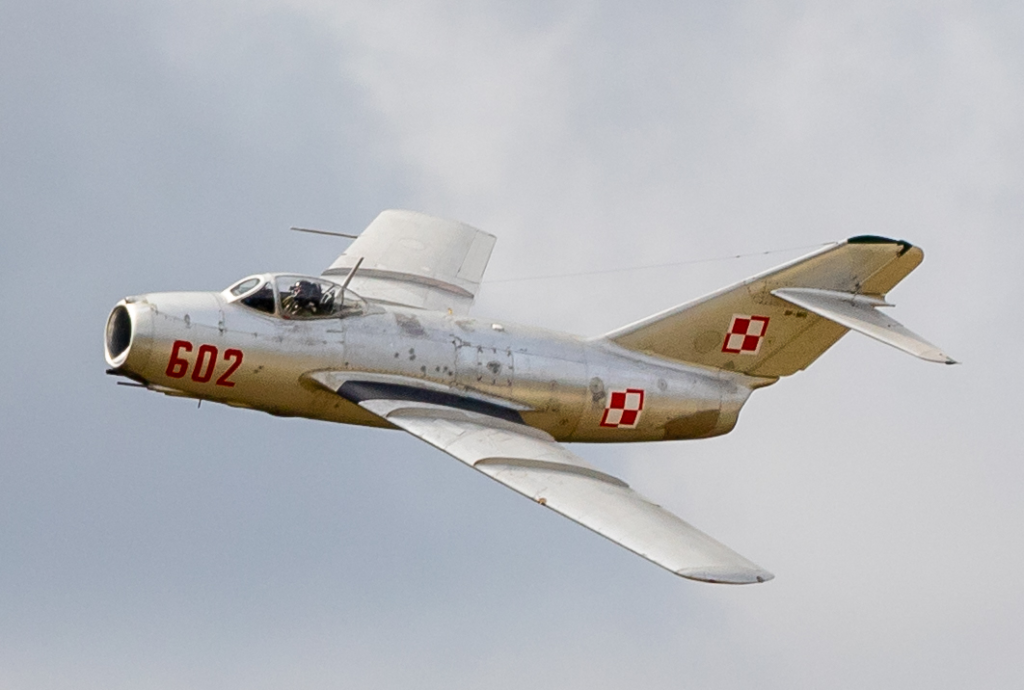
The Korean War (1950–1953) exposed this vulnerability brutally. Chinese MiG-15 pilots flew against American F-86 Sabres, but every engine, every airframe, and every spare part came from the Soviet Union. When supply lines were disrupted, entire squadrons were grounded. This dependency was not merely inconvenient. It was a national security crisis.
1.2 The Soviet Lifeline
In the early 1950s, Stalin’s Soviet Union provided the fledgling PRC with technical assistance as part of the Sino-Soviet alliance . The USSR transferred licenses, expert support, and technical documentation to produce aircraft like the MiG-15, MiG-17, and MiG-19, along with bombers. They also transferred avionics, navigation systems, autopilots, radars, and air-to-air missiles like the K-5 and K-13, training Chinese engineers in the process .
By 1959, China had produced hundreds of fighters and established a solid R&D infrastructure with thousands of engineers . The foundation was laid, but it was a foundation built entirely on borrowed knowledge.
Part II: The Pioneer Era – Soviet Turbojet Transplantation (1954–1970s)
2.1 The M-11 Miracle: Seven Months, Three Days
Timeline: January 1954 – August 16, 1954
The story of China’s aero-engine industry begins with the M-11, a Soviet-designed piston engine. In January 1954, the Central People’s Government’s Second Ministry of Machine Building formally approved the task for the State-Owned 331 Factory (now China Aero-Engine South) to trial-produce the M-11 engine, with a deadline set for the third quarter of 1955 .
The Challenge: The M-11 had 567 types of parts totaling 2,684 components . Trial production required the design and manufacture of 3,121 specialized tooling items, fixtures, cutting tools, gauges, and jigs . At the time, the factory lacked optical curve grinders, wire-cutting machine tools, and proper electroplating baths .
The Human Element: The story of engineer Luo Guangyuan captures the era's spirit. One day, while crossing the Yangtze River, Luo grew impatient with the slow ferry and urged the boatman to hurry. The boatman retorted, "If you're in such a rush, take an airplane!" . Stung by the comment, Luo resolved to build domestic engines so China would never need to rely on foreign aircraft for speed.
The “Earthly” Tools: The workers used incredibly primitive methods:
- Files and oil stones to shape metal blocks into templates
- A spittoon placed inside a large vat, with boiling water poured outside the spittoon to heat an electroplating bath, because no proper tank existed
- A single book on electroplating, bought from a used bookstore, as their only technical reference
The Breakthrough: On July 26, 1954, the final batch of components was completed. Assembly workers worked for three consecutive days and nights to complete the engine . At 5:39 AM on August 16, 1954, the M-11 engine successfully completed its 200-hour long-term operational test . The national inspection committee approved mass production.
Significance: From approval to successful trial production, China’s first aero-engine took just seven months and three days . Two months later, the factory posted a red-letter announcement. The applause, as one account notes, “was like a surging tide, flying out of the remote mountain valley and straight into the clouds” .
2.2 The WP Series: Clones That Taught a Nation
Building on the M-11 success, China’s engine industry moved into turbojets.
2.2.1 WP-5 (VK-1F Derivative)
The WP-5 was a direct copy of the Soviet Klimov VK-1F, which itself was a reverse-engineered development of the British Rolls-Royce Nene . It powered the Shenyang J-5, China’s first jet-powered interceptor, which made its maiden flight in 1956 . The WP-5 produced 7,600 lbf of thrust .
2.2.2 WP-6 & WP-7 (RD-9B / R-11F-300 Derivatives)
The WP-6 and WP-7 were clones of the Soviet Tumansky RD-9B and R-11F-300 engines, respectively . They powered the J-6 and J-7 fighters, Chinese copies of the MiG-19 and MiG-21. These engines were reliable by the standards of the era but had military lifespans under 100 hours and were completely obsolete by the 1980s. They served their purpose: teaching Chinese workers mass-production techniques.
The Lesson: Cloning taught assembly, foundry work, and basic quality control. But it taught nothing about design, material science, or the physics of combustion.
2.3 The WS-6 “Dead-End”: When Ambition Exceeded Metallurgy
Timeline: 1970s – 1983
In the 1970s, China attempted its first “indigenous” design—the WS-6. It was an ambitious high-performance turbofan meant to power a new generation of fighters. The design targets were aggressive, but China lacked the fundamental material science to realize them.
The Failure: Turbine blades melted. Compressor discs cracked. Without single-crystal alloys, powder metallurgy, or advanced cooling designs, the WS-6 was doomed from the start. The project was canceled in 1983.
The Lesson: Design independence is impossible without material science independence. You cannot draw an engine on paper if you cannot build it in metal. This failure would haunt Chinese engineers for two decades and drive the strategic decisions of the hybrid era that followed.
Part III: The Hybrid Decade – Western Detours & Russian Crutches (1980–2005)
3.1 The British Intervention: WS-9 “Qinling” and the Spey Legacy
Timeline: Acquired 1975; production struggled until 1995
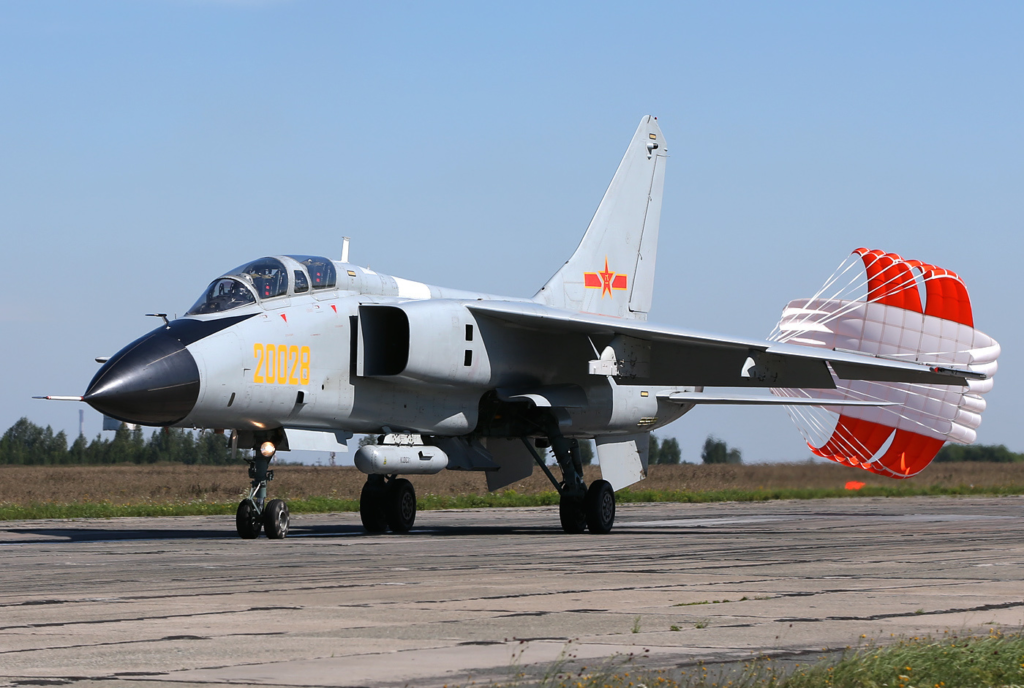
After the Sino-Soviet split in 1960, China looked westward for technology. In 1975, China acquired a license to produce the Rolls-Royce Spey 202 civil/military turbofan, designated domestically as the WS-9 “Qinling” . The Spey was a mature, reliable engine that powered the British Buccaneer and Phantom variants.
The Struggle: Reverse-engineering and producing the Spey under license proved far more difficult than anticipated. It took nearly 20 years to bring the WS-9 into reliable production, with the engine eventually powering the JH-7 “Flying Leopard” fighter-bomber.
The Critical Gain: The Spey introduced China to air-film cooling technology and precision casting methods that had never appeared in Soviet designs. It taught Chinese engineers about thermal barrier coatings, complex internal cooling passages, and the importance of manufacturing consistency. The WS-9 program was a “university” for a generation of Chinese metallurgists.
3.2 The AL-31F Dependency: A Strategic Vulnerability
Timeline: 1992 – 2015
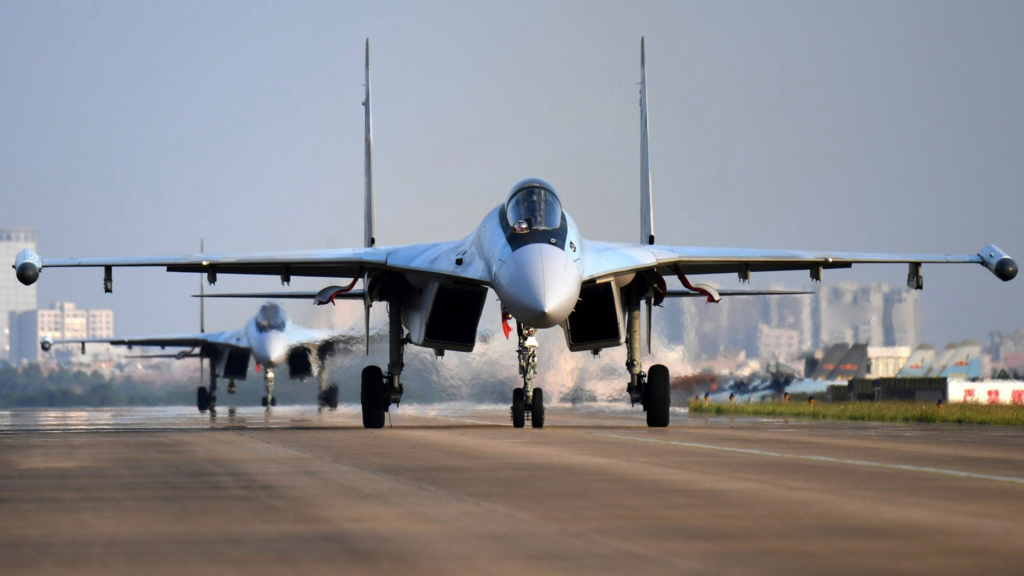
After the Cold War ended, Russia was desperate for cash. In 1992, Moscow agreed to sell the Su-27SK “Flanker” to China, along with its powerful AL-31F turbofan engine. The AL-31F was a quantum leap over anything China had produced—generating 122–135 kN of thrust with a thrust-to-weight ratio of approximately 8.2 .
The Scale of Dependency: China imported over 1,000 AL-31Fs over the next two decades . The engine powered the J-10, J-11, J-15 carrier fighter, and even the early J-20 prototypes. Without Russian engines, China’s entire fighter modernization program would have stalled.
The Vulnerability: Russia was wary of supplying engines more powerful than the AL-31, which powered its own Su-27s . When China expressed interest in the Su-35’s AL-41F1S (117S) engine, which generated 142 kN. Russia refused to export the engine alone, insisting on the sale of complete Su-35 fighters . This “engine blockade” forced China to accelerate its domestic programs.
3.3 The CFM56 Core Heist: The Secret Origin of the WS-10
Timeline: 1980s – 1987
In the 1980s, China acquired the CFM56-2 civilian turbofan engine, a joint US-French design used on Boeing 737s. The CFM56’s core (high-pressure compressor + combustor) was derived from the American F101 engine, which powered the B-1B bomber.
The Reverse-Engineering Feat: Chinese engineers successfully reverse-engineered this core, recognizing that it offered far better performance than anything available from the Soviet Union. The CFM56 core became the basis for the WS-10 “Taihang” project, officially initiated in 1987 .
The Russian Marriage: However, the CFM56 core was designed for civilian airliners, not high-G fighter maneuvers. To adapt it to a fighter airframe, Chinese engineers needed expertise they lacked. They turned to the AL-31F, copying its bearing layout, accessory gearbox, and FADEC (Full Authority Digital Engine Control) architecture . The WS-10 was thus a hybrid: an American core mated to a Russian chassis, all wrapped in Chinese manufacturing.
This “cross-pollination” strategy was brilliant but risky. It produced an engine that combined the best of both worlds but it also inherited the vulnerabilities of both.
Part IV: The Breakthrough Era – WS-10 “Taihang” & Its Iterations (2005–2020)
4.1 WS-10A: The “Unreliable” First Build
Timeline: Certified 2005; entered service 2008
The WS-10A was certified in 2005 and began entering service on the J-11B in 2008 . The early results were disastrous.
The Crisis: Initial lifespan was just 30–40 hours before major maintenance was required . Flameouts were common. The engine was underpowered compared to the AL-31F, and its reliability was so poor that pilots reportedly preferred Russian engines for combat missions.
The Cause: The WS-10A suffered from:
- Poor single-crystal blade quality, leading to turbine creep
- Manufacturing inconsistencies in the compressor
- FADEC software bugs that caused control instability
- Inadequate thermal barrier coatings
The Fallout: The PLAAF was forced to continue importing AL-31Fs, and the WS-10 program was nearly canceled. However, Chinese leadership made a strategic decision: fix the WS-10 or abandon any hope of engine self-sufficiency.
4.2 WS-10B: The Fix That Saved a Fighter Fleet
Timeline: Introduced ~2015
The WS-10B represented a complete re-engineering of the WS-10A. Key improvements included:
- Single-crystal turbine blades of indigenous design, manufactured using improved foundry techniques
- Duralumin fan casings that reduced weight
- Improved FADEC logic that smoothed throttle response
- Enhanced thermal barrier coatings that allowed higher turbine inlet temperatures
Performance: The WS-10B generated approximately 132–135 kN of thrust, with a thrust-to-weight ratio of about 9.28 . Lifespan was raised to 1,500 hours, still far below American standards, but a massive improvement over the 30-hour WS-10A.
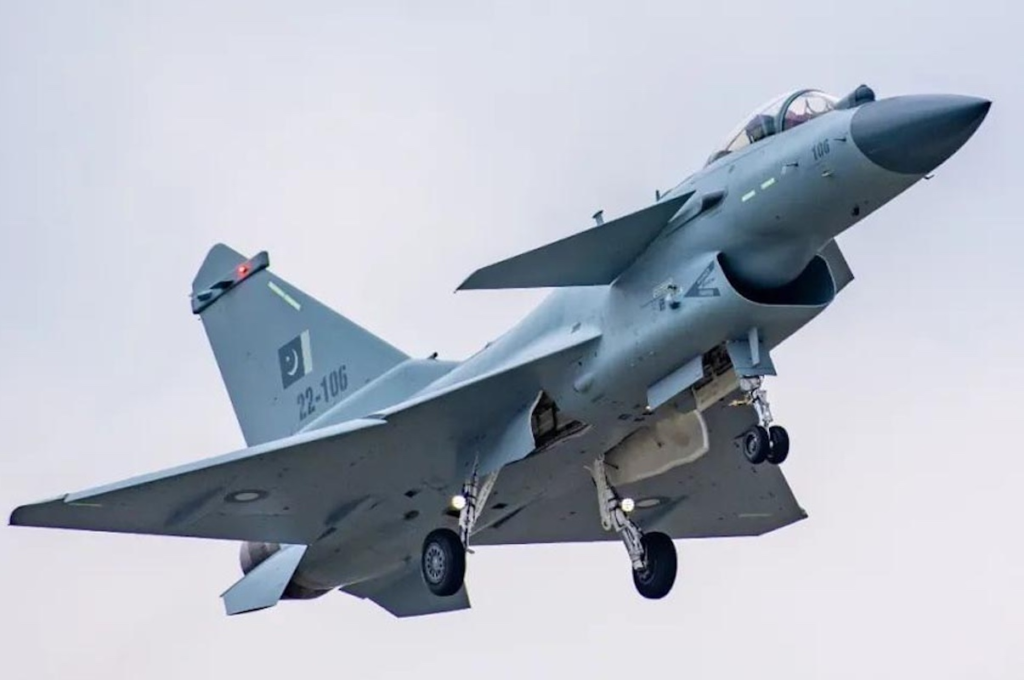
Deployment: The WS-10B powered the J-10C, J-16, and late-model J-11Bs. By 2016, the PLAAF began phasing out Russian engines on these platforms .
4.3 WS-10C: Stealth, Power, and Maturity
Timeline: Deployed on J-20 in 2021
The WS-10C was the final major iteration of the Taihang lineage, designed specifically to bridge the gap until the WS-15 was ready for the J-20.
Key Features:
- Serrated low-observable (LO) nozzles that reduced infrared and radar signatures
- Thrust increased to approximately 147 kN
- Full digital engine control with improved reliability
Performance: The WS-10C achieved a thrust-to-weight ratio of approximately 10.0, matching Russia’s Saturn 117S engine (used on the Su-35) . While still behind America’s F119, the WS-10C allowed the J-20 to achieve limited supercruise capability (supersonic cruise without afterburners).
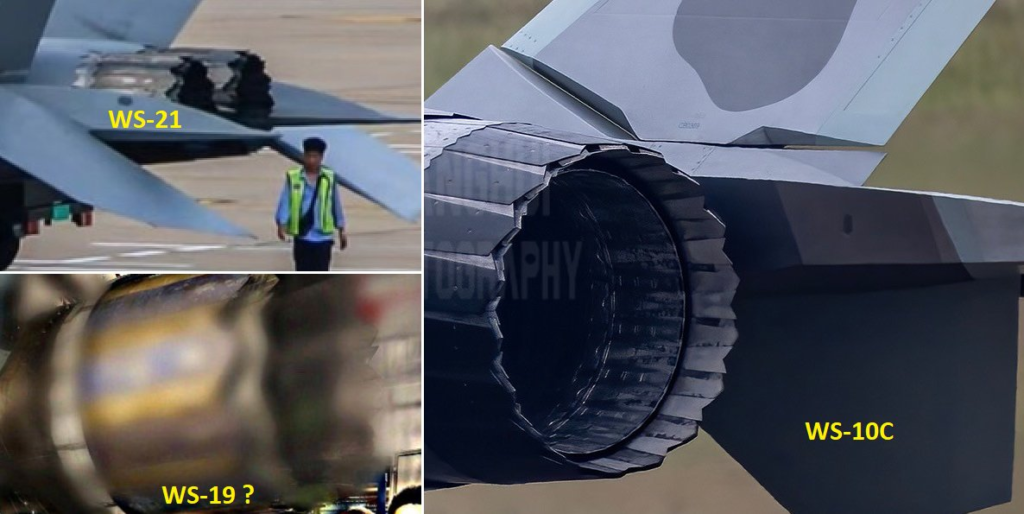
Status: By 2023, the WS-10C achieved full operational maturity, with AECC confirming that both the WS-10 and WS-15 were in serial production following finalization of material verifications .
4.4 The Safety Net: WS-18 and the D-30 Clone
Timeline: R&D started 2009; certified ~2019
While the WS-10 series solved the fighter engine problem, China still had a massive dependency on Russian D-30KP-2 engines for its transport and bomber fleet—specifically the H-6K bomber and early Y-20A transport.
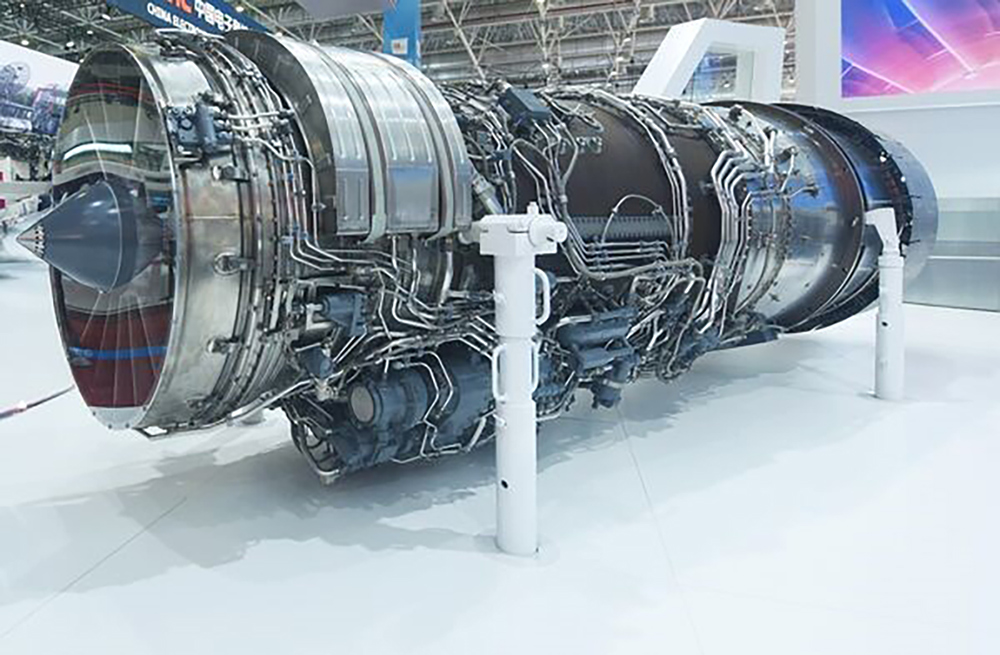
The Solution: The WS-18 is a direct, reverse-engineered copy of the Soloviev D-30KP-2, produced domestically with digitized manufacturing techniques . It produces approximately 103–132 kN of thrust with a thrust-to-weight ratio of about 6.17 .
Strategic Significance: The WS-18 was not a technological leap. It was an insurance policy, a “drop-in” replacement that would keep China’s heavy aircraft flying even if Russian supplies were cut off. By 2019, the WS-18 was certified and began replacing D-30s on the H-6K and Y-20A .
The Limitation: The WS-18 still lagged Western engines in fuel efficiency and lifespan. It was a “good enough” solution, not a world-class one.
Part V: The Flagship Era – 5th-Gen & High-Bypass Power (2014–2026)
5.1 WS-20: Unleashing the Y-20B’s Full Potential
Timeline:
- 2014: Tested on Il-76 flying testbed
- 2020: Maiden flight on Y-20B
- 2023: Initial Operational Capability (IOC)
- 2026: Full combat readiness declared
The WS-20 represents a fundamental design shift: a high-bypass turbofan derived from the WS-10’s core, scaled up for transport aircraft . The WS-20 is the engine that finally unlocks the Y-20B’s full strategic potential.
Design Philosophy: Unlike the WS-18, which was a D-30 copy, the WS-20 uses the same gas-generator core as the WS-10 but with a significantly enlarged fan and a bypass ratio of approximately 8:1 . This mirrors the American “core scaling” strategy—the same core that powers an F-16 can be enlarged to power a C-17.
Performance: The WS-20 generates approximately 140–160 kN of thrust, with a thrust-to-weight ratio of about 8.49 . This is comparable to the American F117-PW-100 (which powers the C-17) .
The Y-20B Upgrade: With WS-20 engines, the Y-20B achieves a 66-ton payload capacity—enough to carry a main battle tank. The improved fuel efficiency extends range significantly and reduces operating costs.
Strategic Impact: The WS-20 enables the Y-20B to serve as a platform for aerial refueling tankers, early warning aircraft, and even strategic bombers. It transforms the Y-20 from a “good enough” transport into a world-class strategic airlifter.
5.2 WS-15 “Emei”: The Crown Jewel of Chinese Propulsion
Timeline:
- Late 1990s: Project initiation
- 2022: First flight on J-20 prototype
- 2023: Entered low-rate initial production (LRIP)
- 2025: Mass production confirmed
- 2026: Achieving full operational capability
The WS-15 “Emei” is the engine that Chinese engineers dreamed of for thirty years, a true fifth-generation powerplant for the J-20 stealth fighter .
The Soviet Blueprint: The WS-15’s core design was heavily influenced by the Soviet R-79-300 engine, which was developed for the Yak-141 VTOL fighter in the 1980s . In the 1990s, Russia sold these blueprints to China, recognizing that the R-79 was obsolete for Russian needs but valuable for Chinese development.
The Indigenous Overhaul: The WS-15 is not merely a copy of the R-79. It represents a complete re-engineering with Chinese proprietary technology:
- 3D-printed single-crystal turbine blades that reduce weight by 25% while meeting 10-ton load requirements
- Powder metallurgy discs that can withstand higher temperatures and stresses
- Variable inlet guide vanes for optimized airflow at all speeds
- “Shark skin” aerodynamic structures to reduce drag and improve efficiency
- Advanced thermal barrier coatings that allow higher turbine inlet temperatures
Performance: The WS-15 generates approximately 150–180 kN of thrust with a thrust-to-weight ratio of approximately 11.1 . This surpasses the American F119 (which powers the F-22) in thrust-to-weight ratio, though the F119’s lifespan of 6,800 hours is still significantly better than the WS-15’s estimated 3,600 hours .
The Leap: With the WS-15, the J-20 finally achieves its intended performance envelope: sustained supersonic cruise (supercruise) at Mach 1.8, superior high-altitude maneuverability, and a combat radius that challenges American air superiority in the Pacific.
Production: In March 2023, AECC confirmed that the WS-15 was in serial production following the finalization of material verifications . By 2026, the WS-15-equipped J-20 has achieved full combat readiness, making China the second nation (after the United States) to field a fifth-generation fighter with a truly indigenous engine.
5.3 WS-19 & Next-Generation Developments
While the WS-15 grabs headlines, China is also developing the WS-19, a medium-thrust engine for unmanned aircraft and light fighters . The WS-19 generates approximately 97.9 kN of thrust with a thrust-to-weight ratio approaching 10.0 .
Future Horizons: Chinese engineers are already working on sixth-generation engine concepts, targeting a thrust-to-weight ratio of 15 or higher . The focus is on variable-cycle engines that can dynamically adjust their bypass ratio for optimal performance across subsonic, supersonic, and hypersonic regimes .
The 600kg Thrust-Class Breakthrough: In May 2026, China successfully flight-tested the F406, a 600kg-thrust-class turbofan engine with complete independent intellectual property rights . The engine can operate at 15 kilometers altitude and speeds above Mach 0.8, with long endurance and high reliability . This engine—developed in just one year from ignition to pre-flight testing, fills a crucial gap in the unmanned and general aviation sectors .
Part VI: The Civilian & Rotary Branch – A Parallel Revolution
6.1 “Yulong” (WZ-10): The First Indigenous Turboshaft
Timeline: 1984 – 2013
While China was struggling with turbojets, a parallel effort was underway to develop a turboshaft engine for helicopters. In 1984, the “Yulong” (WZ-10) turboshaft engine officially began pre-research, but a secret file shows that the project actually started in 1981 under the code name “Project 40” (40号机) .
The “Project 40” Story: The code name reflected the initial weight target 4 tons. China envisioned a dedicated attack helicopter weighing 4 tons, and the engine was sized accordingly . However, the eventual Z-10 attack helicopter proved larger, and the engine designation changed to “Yulong.”
The Computation Challenge: In the 1980s, the research institute had virtually no computing power. Engineers had to travel to advanced computing centers in other cities, often starting in the middle of the night to line up for machine time . Once they secured machine time, they stayed in the computer room all day—eating meals there because the computers couldn’t be stopped. The computational data was stored on paper tape, which engineers carried back in woven bamboo baskets, then manually compared and analyzed .
The Achievement: The Yulong engine completed design finalization in December 2013 and won the National Science and Technology Progress Award, First Prize the highest national-level award ever won by a standalone aero-engine project in China . The achievement demonstrated China’s capability to “catch up with world advanced engine technology” .
6.2 AES100: Civil Certification and the Path to Commercial Aviation
Timeline: August 2024
In August 2024, China’s first 1,000kW-class advanced civilian turboshaft engine, the AES100, received its type certificate from the Civil Aviation Administration of China (CAAC) . The AES100 is the first Chinese civil aero-engine developed strictly in accordance with international airworthiness standards, with complete independent intellectual property rights .
The Certification Hurdle: To earn CAAC certification, the AES100 had to pass an exhaustive series of tests:
- 3,000-hour “first overhaul life” test
- Engine icing tests
- Blade containment tests (ensuring blades don’t penetrate the casing if they break)
- High-altitude platform fuel icing tests
- Acceleration/deceleration testing across the entire flight envelope
The team broke through dozens of key core technologies during this process, filling many gaps in Chinese civil aero-engine technology .
The Product Line: The AES100 is part of a broader civilian engine family:
- AEP100: 900kW turboprop for logistics and short-haul passenger aircraft
- AEP500: 5,000kW turboprop for medium cargo/passenger aircraft
- AEF100: Turbofan for business jets and unmanned weather observation
- KP12: 120kg-thrust-class turbojet for multi-role unmanned aerial vehicles (UAVs)
The success of AES100 demonstrates that China can now compete in the global commercial engine market, at least in the turboshaft and turboprop segments.
6.3 The 600kg Thrust-Class Breakthrough
Timeline: May 2026
The F406 600kg-thrust-class turbofan engine completed its first flight test on a meteorological UAV in Inner Mongolia in May 2026 . The engine is designed for high-altitude (15km), high-speed (Mach 0.8+) operations with long endurance and high reliability .
Speed of Development: The team used advanced simulation technology and design-manufacturing coordination to shorten the development cycle significantly. From first ignition to pre-flight test readiness took just one year .
Future Applications: The F406 is intended for:
- High-altitude inspection UAVs
- Relay communications UAVs
- Long-endurance high-altitude meteorological UAVs
- Future business jet derivatives
Part VII: Comparative Analysis – Where Does China Stand?
7.1 Thrust, Lifespan, and Thermal Efficiency
| Engine | Thrust (kN) | Thrust/Weight | Lifespan (hours) | Status |
|---|---|---|---|---|
| WS-10B | 132 | ~9.3 | ~1,500 | In service |
| WS-10C | 147 | ~10.0 | ~2,000 | In service |
| WS-15 | 150-180 | ~11.1 | ~3,600 | Entering service |
| AL-31F | 122 | ~8.2 | ~1,500 | Russian |
| F119 (US) | 156 | ~10.0 | ~6,800 | US in service |
| F135 (US) | 191 | ~11.5 | ~8,000 | US in service |
Observations:
- Thrust: WS-15 matches F119 in thrust and exceeds AL-31F significantly.
- Thrust-to-Weight: WS-15 surpasses F119 on paper, though real-world performance may vary.
- Lifespan: This remains China’s Achilles’ heel. WS-15’s 3,600-hour lifespan is half that of F119 and less than half of F135. Chinese engines require more frequent overhauls, increasing lifecycle costs and reducing operational availability.
- Reliability: While early WS-10s had catastrophic failure rates, WS-15 appears to have been developed with reliability as a top priority. Reports suggest China deliberately delayed WS-15 service entry to avoid the “WS-10 disaster” .
7.2 The Manufacturing Bottleneck: Five-Axis Machines and Superalloys
Despite significant design achievements, China still faces manufacturing challenges.
Machine Tool Dependency: China still relies heavily on imported five-axis and seven-axis machine tools from Germany, Italy, and South Korea . These machines are essential for manufacturing complex turbine blades and casings with the required precision. Export controls on these machines remain a bottleneck.
Superalloy Supply Chain: In March 2023, an AECC official confirmed that while China had overcome all technical bottlenecks for the WS-10 and WS-15, increasing “the flow of the supply chain” for these engines remained a priority . This suggests that manufacturing capacity, not just technology, is a constraint.
The Industrial Base: China has invested heavily in building a domestic superalloy industry, with firms like the Chengdu Aerospace Superalloy Technology Company making significant advances . However, the scale of production needed to equip China’s massive air force still exceeds domestic capacity.
The Optimization Problem: According to a 2018 CSIS report, China “has not been able to optimize the manufacturing process, despite attempts to exfiltrate this information” . Reverse-engineering a design is one thing; reverse-engineering the process the metallurgical heat treatments, the precise machining feeds and speeds, the quality control procedures is far harder.
Part VIII: Conclusion – From Reverse-Engineering to Reinvention
China’s aero-engine journey can be summarized in four distinct phases:
Phase 1: The Clone Era (1954-1975)
China copied Soviet piston and turbojet engines, learning basic manufacturing and assembly. The M-11, WP-5, WP-6, and WP-7 were all direct clones of Soviet designs. This phase taught China “how to build,” but not “how to design.”
Phase 2: The Hybrid Era (1975-2005)
China acquired Western engines (Rolls-Royce Spey, CFM56) and Russian engines (AL-31F, D-30), then reverse-engineered and cross-bred them. The WS-9 (Spey) taught cooling technology. The WS-10 (CFM56 core + AL-31F chassis) taught integration. This phase taught China “how to design” by combining borrowed components.
Phase 3: The Iterative Era (2005-2020)
China fixed its flawed designs through relentless iteration. The WS-10 went from a 30-hour disaster (WS-10A) to a reliable 2,000-hour engine (WS-10C) through improved metallurgy, FADEC updates, and manufacturing process optimization. The WS-18 provided a domestic backup for heavy aircraft. This phase taught China “how to improve.”
Phase 4: The Indigenous Era (2020-2026)
China designed and built truly indigenous engines: the WS-20 for transport, the WS-15 for fighters, the AES100 for civilian helicopters. These engines incorporate proprietary alloys, 3D-printed components, and design philosophies that owe little to foreign donors. This phase demonstrates that China has learned “how to innovate.”
The Bottom Line
China is no longer a nation that copies engines. It is a nation that learned from copying, then surpassed its teachers. The WS-15 matches America’s F119 in thrust-to-weight ratio, though it lags in lifespan. The WS-20 transforms the Y-20B into a world-class strategic airlifter. The AES100 proves that China can compete in civilian markets.
The remaining gaps—manufacturing optimization, supply chain scaling, lifespan extension—are narrowing. In 2018, analysts estimated China was 50 years behind the US in engine technology . By 2026, that gap has shrunk to perhaps 15-20 years in some areas, and parity in others.
The Chinese engine program is the most ambitious and fastest-moving technology catch-up effort in modern aerospace history. It has consumed billions of dollars, thousands of engineer-years, and the patience of multiple generations. But in 2026, the results are undeniable: the Dragon’s combustion chamber is finally burning with indigenous fire.
Appendix A: Engine Specifications Table
| Engine | Type | Thrust (kN) | Bypass Ratio | Thrust/Weight | Application | Status |
|---|---|---|---|---|---|---|
| M-11 | Piston | N/A | N/A | N/A | Training | Retired |
| WP-5 | Turbojet | 34 | 0 | N/A | J-5 | Retired |
| WP-6 | Turbojet | 41 | 0 | N/A | J-6 | Retired |
| WP-7 | Turbojet | 60 | 0 | N/A | J-7 | Retired |
| WS-9 | Turbofan | 91 | 0.6 | ~5.0 | JH-7 | In service |
| WS-10A | Turbofan | 130 | 0.8 | ~8.9 | J-11B | Retired |
| WS-10B | Turbofan | 135 | 0.8 | ~9.3 | J-10C, J-16 | In service |
| WS-10C | Turbofan | 147 | 0.8 | ~10.0 | J-20 (early) | In service |
| WS-18 | Turbofan | 103-132 | 2.4 | ~6.2 | H-6K, Y-20A | In service |
| WS-20 | Turbofan | 140-160 | ~8.0 | ~8.5 | Y-20B | Entering service |
| WS-15 | Turbofan | 150-180 | 0.6 | ~11.1 | J-20 | Entering service |
| WS-19 | Turbofan | 98 | 0.7 | ~10.0 | UAVs, light fighters | Development |
| AES100 | Turboshaft | 1000kW | N/A | N/A | Civil helicopters | Certified |
| F406 | Turbofan | 6 | N/A | ~6.1 | High-altitude UAVs | Flight-t |

Doesn’t western standards for calculating thrust to weight ratio are different and more strict then the Chinese one?
“Aren’t Western standards for calculating thrust-to-weight ratio a little different than the Chinese ones?”
Why don’t you guys have a “delete” feature😭😭😭 I certainly justify my username.
This is a propaganda article. No noteworthy new information was cited by the author.