The world of defence procurement is often filled with rumours, leaks, and anonymous claims. Most disappear within days. Some, however, refuse to go away because they are backed by enough documentation to raise legitimate questions.
One such case involves reports that India acquired approximately 100 Belarusian-made loitering munitions, commonly referred to as kamikaze drones. The discussion gained traction after Belarusian opposition investigative group BELPOL published documents alleging a procurement involving an Indian company and a Belarusian manufacturer.
The story became even more interesting when publicly available information from the Indian side appeared to align with several details contained in those documents.
Before jumping to conclusions, it is important to separate what is known from what is being inferred.
What We Know
BELPOL published documents claiming that an Indian company, SMPP Ammunition Pvt. Ltd., procured approximately 100 units of the Belarusian “Mirotvorets” or “Peacemaker” loitering munition.
The published material reportedly contained details relating to quantities, timelines, technical specifications, pricing information, and acceptance procedures. This was significantly more detailed than a typical internet rumour and therefore attracted attention from defence observers.
Separately, SMPP has publicly stated that it has delivered 100 UAVs or loitering munition systems to the Indian Army.
This disclosure is important because the quantity publicly mentioned by SMPP matches the quantity mentioned in the BELPOL documents.
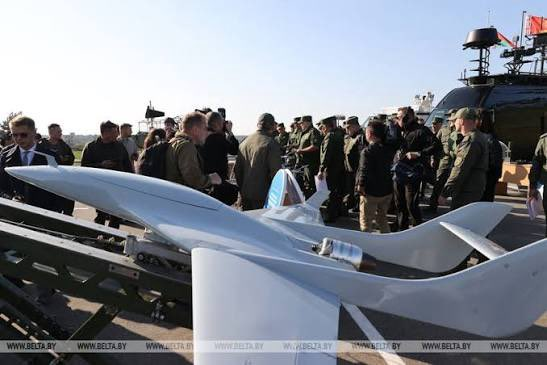
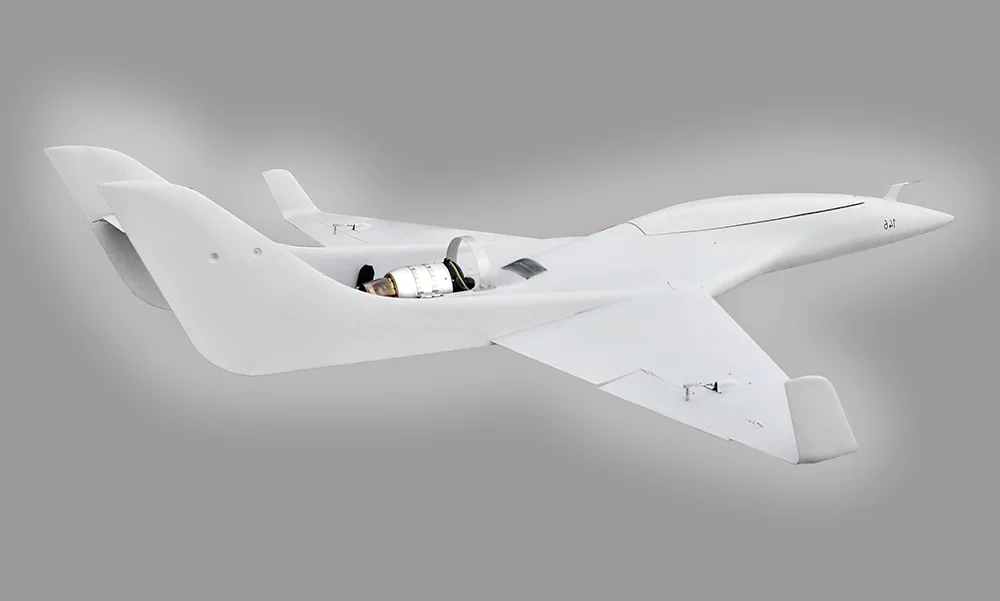
In addition, open-source imagery and promotional material released by SMPP show a loitering munition system that many observers have noted bears a strong resemblance to the Belarusian Mirotvorets design described in the leaked documents.
These are facts that can be independently observed and discussed.
What We Do Not Know
There has been no official statement from the Indian Ministry of Defence confirming the procurement of Belarusian Mirotvorets loitering munitions.
Similarly, there has been no public confirmation from Belarusian authorities acknowledging such a sale.
No official announcement has explicitly linked the UAVs delivered by SMPP to the system described in the BELPOL documents.
As a result, any direct connection between the two remains unconfirmed in the public domain.
Where The Evidence Appears To Point
This is where analysis begins.
When investigators encounter multiple independent data points that align, they do not automatically treat them as proof. However, they also do not ignore them.
In this case, several observations stand out.
First, the quantity mentioned in the BELPOL documents and the quantity publicly disclosed by SMPP are identical: 100 systems.
Second, the timelines discussed in various reports appear broadly consistent.
Third, the external configuration of the UAV displayed by SMPP appears remarkably similar to the Belarusian system described in the leaked documentation.
Individually, each of these observations may be explained away.
Taken together, they naturally raise questions.
This does not mean the case is conclusively proven. What it means is that the available evidence appears to point in a particular direction.
Why Such A Procurement Would Not Be Surprising
Even if the reports ultimately prove accurate, such a procurement would not be unusual.
The war in Ukraine has transformed global perceptions of loitering munitions. These systems have demonstrated an ability to destroy artillery, air-defence systems, command posts, and logistics assets at relatively low cost.
As a result, militaries around the world are racing to acquire, test, and develop their own loitering munition capabilities.
India is no exception.
The Indian armed forces have shown increasing interest in armed drones, loitering munitions, autonomous systems, and long-range precision strike capabilities. Domestic manufacturers are developing indigenous solutions while the armed forces continue evaluating foreign systems and technologies.
A limited procurement of a foreign loitering munition for evaluation, capability enhancement, or technology benchmarking would therefore fit within broader global trends.
The Real Story
The most important aspect of this discussion may not be whether one specific Belarusian system was acquired.
The larger story is that loitering munitions have become an essential battlefield capability.
Every major military power is investing in them. India is doing the same.
Whether through indigenous development, foreign procurement, licensed production, or technology partnerships, the demand for these systems will continue to grow.
As things stand today, the publicly available evidence does not provide official confirmation that the UAVs delivered by SMPP are the same systems referenced in the BELPOL documents.
However, the quantity match, the reported timelines, and the apparent design similarities make the question difficult to dismiss.
The evidence is not yet conclusive.
But it is certainly substantial enough to warrant serious attention.